
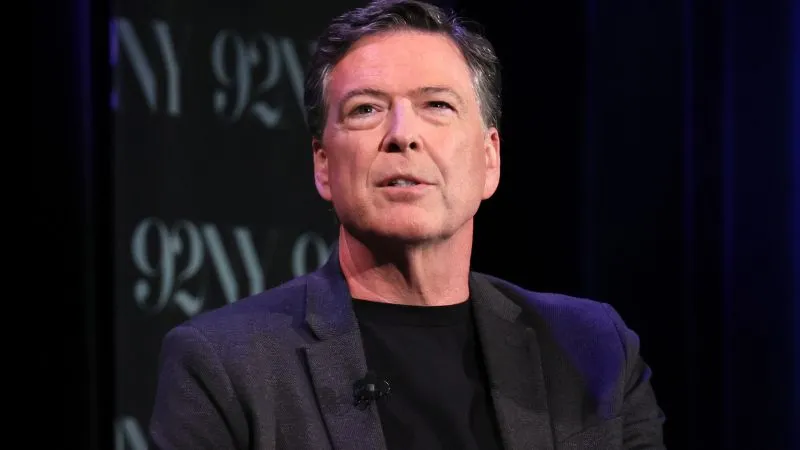
James Comey faces a second indictment over a social media post that allegedly threatened President Trump, raising significant questions about the motivations behind this prosecution. The indictment comes from the Eastern District of North Carolina and includes charges of making a threat against the president and transmitting a threat in interstate commerce.
The controversy began when Comey posted a photo of seashells on social media, arranged to spell ’86 47′. The number 86 is slang for getting rid of something, while 47 refers to Trump’s current term as the 47th president. This seemingly innocuous post has escalated into serious legal trouble, as officials argue that a reasonable recipient would interpret it as a threat.
That context matters because it highlights the delicate balance between free speech and perceived threats. Comey contends he did not realize the numbers could be associated with violence and removed the post on the same day. His defense hinges on First Amendment protections, which complicate the narrative surrounding this indictment.
This is not Comey’s first encounter with legal troubles; his first indictment was dismissed due to the improper appointment of the prosecutor. Now, with acting Attorney General Todd Blanche—a known Trump loyalist—overseeing this case, many view it as part of a broader effort by the Trump administration to prosecute political opponents.
Key facts surrounding the indictment:
- Comey was previously fired by Trump in May 2017 amid an investigation into potential ties between Russia and Trump’s campaign.
- The Justice Department secured this indictment under Blanche’s leadership, raising eyebrows about its motivations.
- Comey has publicly stated he is innocent and believes in an independent federal judiciary.
Legal experts are divided on whether this case will hold up in court. Eugene Volokh, a law professor, argues that “This is clearly not a punishable threat,” suggesting that proving intent will be challenging for prosecutors. Yet, Todd Blanche asserts that intent can be demonstrated through various means—such as witness testimonies or documentary evidence.
As this case unfolds, uncertainties linger regarding its implications for political discourse in America. Will it set a precedent for how social media interactions are interpreted legally? Or will it merely highlight the contentious landscape of political prosecutions? Comey’s daughter, Maurene Comey, is also pursuing her own legal battle against the Justice Department for her firing, adding another layer to this complex narrative.
The outcome of this latest indictment could have far-reaching effects—not just for Comey but for broader discussions on free speech and political accountability in America.