
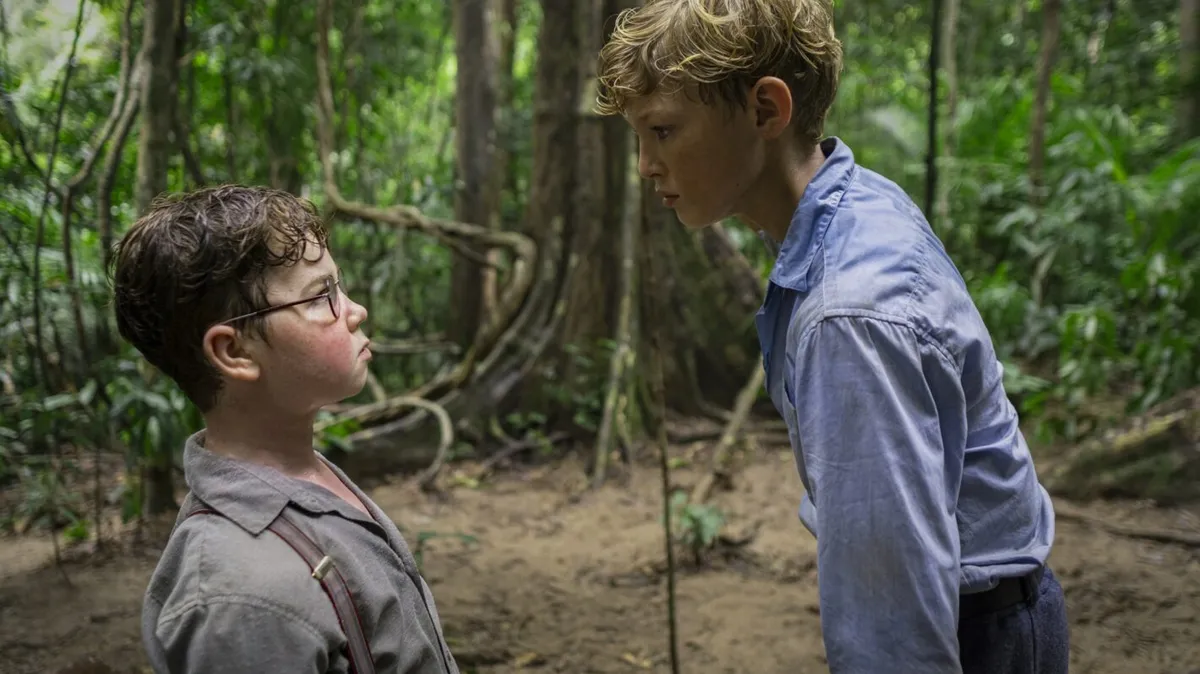
The new Netflix adaptation of ‘Lord of the Flies’ premiered on May 4, 2026, and it delves into the chaotic descent into savagery faced by British boys stranded on a tropical island after a plane crash. Directed by Marc Munden and written by Jack Thorne, this four-part series emphasizes how fragile civilization can be when stripped away from societal norms.
This adaptation draws from William Golding’s original novel published in 1954, retaining its World War II backdrop while exploring themes that resonate even today: tyranny, violence, and democracy’s vulnerability. But what causes this chaos? The story illustrates that when young boys, aged under twelve, are left to their own devices without adult supervision, primal instincts can quickly take over.
Key elements of the adaptation:
- The series follows British boys who find themselves isolated on a tropical island.
- Filming took place in Malaysia over five months from July to December 2024.
- Flashbacks reveal the boys’ lives before the crash, adding depth to their characters.
In this version, characters like Ralph and Piggy—portrayed by Winston Sawyers and David McKenna respectively—exhibit traits that highlight their struggle for power and survival. Ralph emerges as a natural leader but grapples with uncertainty. Meanwhile, Jack embodies a more savage approach, showcasing how quickly order can devolve into chaos. As Marc Munden stated, “It can’t help but be chaos when you’ve got 36 boys under the age of 12.” This stark portrayal raises questions about human nature: Are we inherently civilized or savagely primal?
The adaptation does not modernize or gender-swap the original story; rather, it aims to reflect contemporary issues through its lens. As Jack Thorne noted, “Playing it nice — it’s boring,” suggesting that true drama arises from conflict and moral dilemmas faced by the characters.
Quotes from key figures:
David McKenna remarked, “We’ve advanced socially or we’ve advanced technologically, but those issues are still there.” This highlights that despite progress, fundamental human challenges persist. and Marc Munden added insight into character dynamics: “The idea was that this drag becomes sort of perverted in some sort of way and becomes like another form of armor.” This reflects how characters adapt to their harsh environment.
The series concludes with a chilling reminder of what happens when civilization crumbles—horror emerges from collective survival instincts leading to brutality. While it remains uncertain if there will be any follow-up content or sequels to this adaptation, its impact is clear: it forces viewers to confront uncomfortable truths about humanity’s darker impulses and our fragile social constructs.