
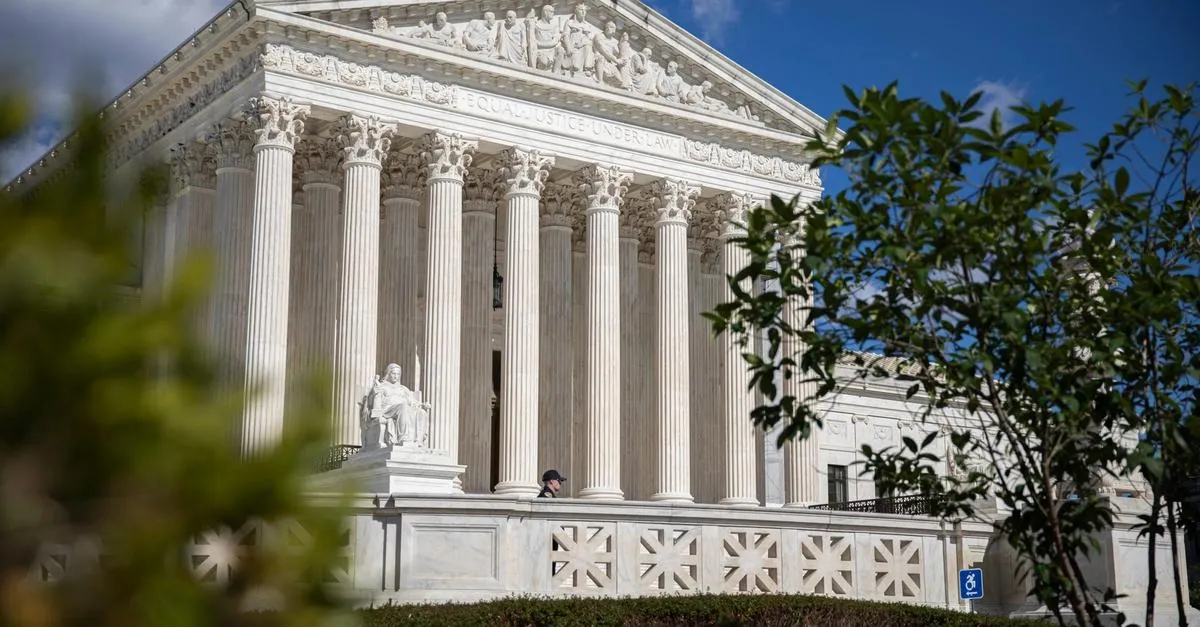
On May 5, 2026, Justice Samuel Alito sharply rebuked Justice Ketanji Brown Jackson’s dissent regarding a significant Supreme Court ruling on redistricting. This ruling struck down Louisiana’s congressional map, allowing the state to draw a new one ahead of the upcoming elections.
The Supreme Court’s decision came with a 6-3 vote. The majority opinion enables Louisiana to bypass the usual 32-day waiting period before certifying a ruling, expediting the process considerably. This decision is particularly crucial as it allows Louisiana to create a new congressional map in time for the 2026 elections.
That context matters because it sets the stage for how states might approach redistricting moving forward. The new map is expected to favor Republicans, who currently hold four of Louisiana’s six congressional seats. This shift raises questions about representation and fairness in electoral processes.
Justice Ketanji Brown Jackson stood alone in her dissent, arguing that the court’s ruling has ‘spawned chaos in the State of Louisiana.’ Her concerns reflect broader implications regarding voter representation and adherence to the Voting Rights Act. Yet, Alito dismissed her dissent as ‘baseless and insulting,’ indicating a stark ideological divide within the court.
The implications of this ruling extend beyond Louisiana. It could have broader repercussions across the country regarding how states interpret redistricting laws under the Voting Rights Act. In fact, recent changes have significantly narrowed Section 2 of this act, allowing states to justify partisan advantages when faced with accusations of diluting minority votes.
As Louisiana prepares for its May 16 primary election, lawsuits have emerged challenging the postponement related to this new congressional map. The Louisiana Legislature plans to hear public comments on a proposed map that would include one majority-Black district, reflecting ongoing tensions around representation and electoral equity.
In this evolving landscape, Alito’s comments highlight not just a disagreement over legal interpretations but also an ideological battle concerning voting rights and representation in America. As both justices continue to navigate these contentious issues, their differing perspectives will likely shape future court decisions.