
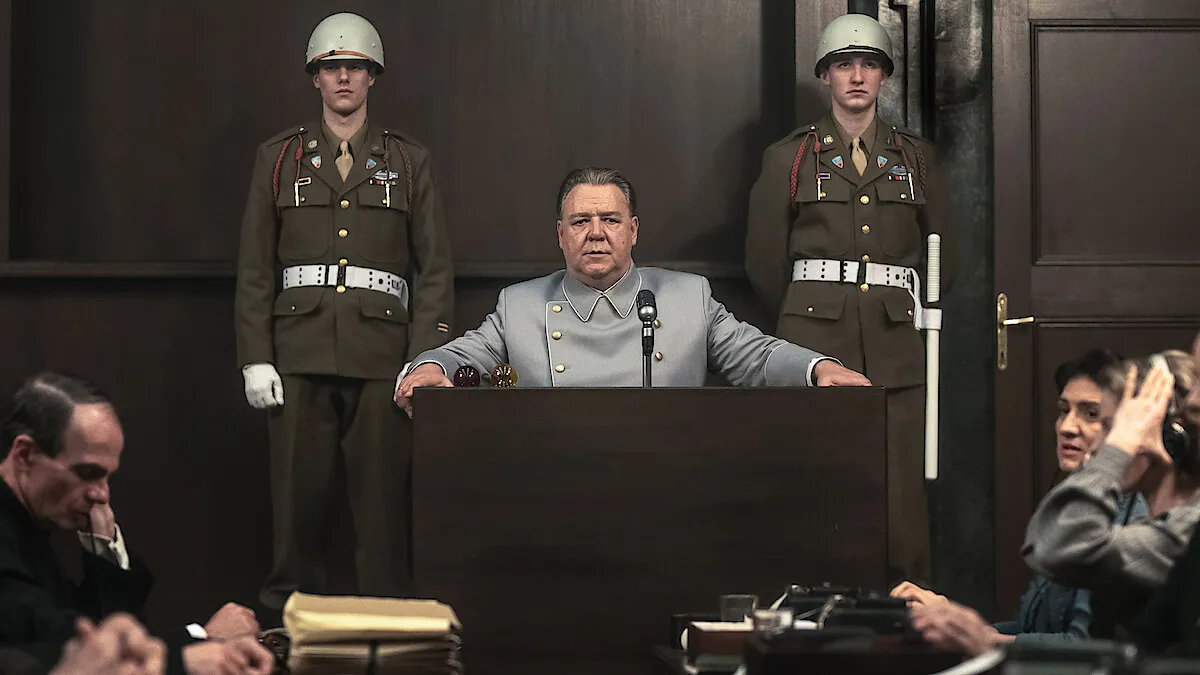
Nuremberg Trials Come to Life in New Film
The upcoming film Nuremberg, set to premiere on Netflix on March 7, 2026, brings to the forefront the harrowing legacy of the Nuremberg Trials, where 22 Nazi leaders were held accountable for their crimes against humanity. Directed by James Vanderbilt, the film has already garnered attention, having made $46 million theatrically before its transition to premium video on demand (PVOD) in December.
The narrative centers around US Army psychiatrist Douglas Kelley, portrayed by Rami Malek, who evaluates Nazi prisoners prior to the trials. This unique perspective offers an intimate look at the psychological dimensions of the defendants, including the infamous Hermann Göring, played by Russell Crowe. The film’s runtime is 2 hours and 29 minutes, allowing for a comprehensive exploration of this pivotal moment in history.
The Nuremberg Trials, which took place from November 1945 to October 1946, marked a significant milestone as the first instance where an international tribunal held enemy leaders accountable for genocide and war crimes. This historical context adds depth to the film, as it seeks to portray not only the events leading up to the trials but also the moral and ethical dilemmas faced by those involved.
Critics have responded positively to Nuremberg, with the film currently holding a 71% score on Rotten Tomatoes and a 7.4/10 rating on IMDb. These figures reflect a strong reception from audiences and critics alike, indicating a successful portrayal of such a complex and sensitive subject matter.
As the film approaches its release date, observers are keen to see how it will handle the delicate themes surrounding the trials and the individuals involved. The quote from historian R.G. Collingwood, “The only clue to what man can do is what man has done,” resonates deeply with the film’s exploration of human capacity for both good and evil.
While the film has made significant strides in its theatrical run, details remain unconfirmed regarding its potential impact on public discourse surrounding the Nuremberg Trials and their relevance to contemporary issues of justice and accountability.
With a talented cast and a compelling narrative, Nuremberg promises to be a thought-provoking addition to the canon of films addressing historical injustices. As audiences prepare for its release, the anticipation builds around how this cinematic retelling will contribute to the ongoing conversation about the legacy of the trials and their implications for future generations.