
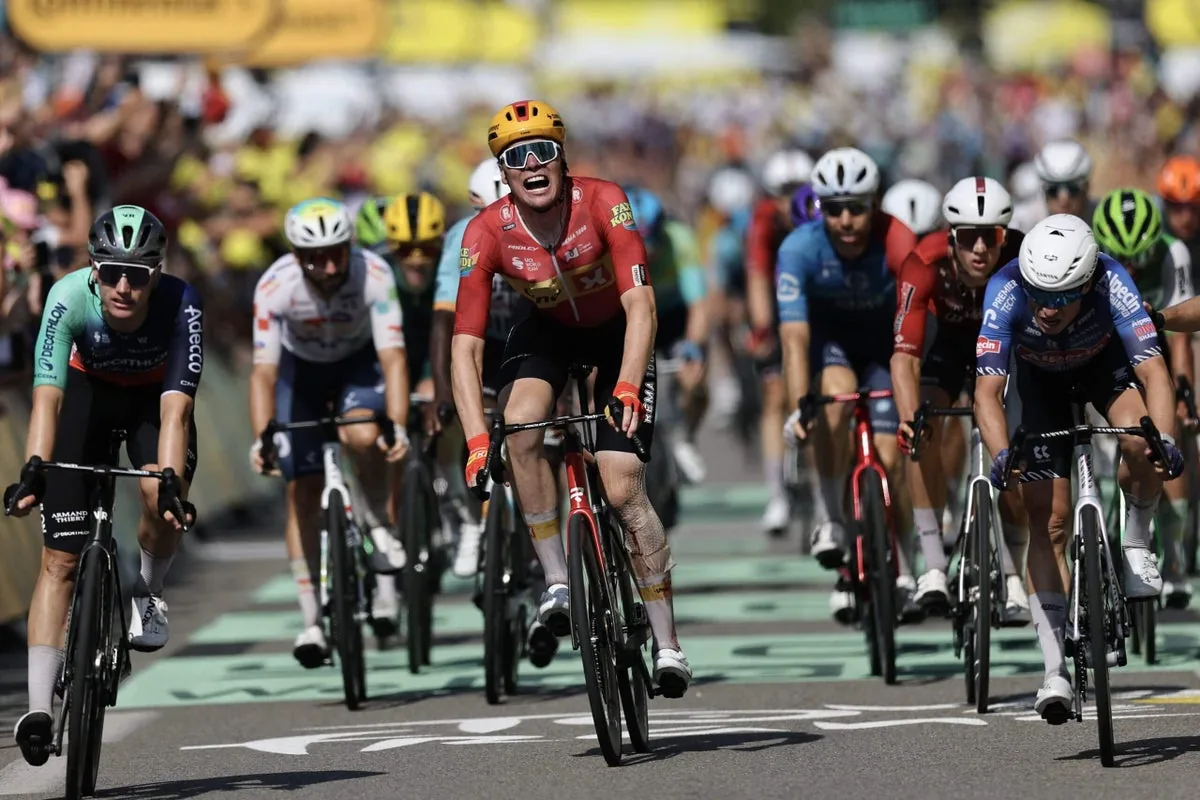
Wærenskjold Claims Historic Stage Victory
Søren Wærenskjold, a Norwegian sprinter, secured victory in the 11th stage of the Tour de France, culminating in a frenzied sprint into Nevers. This stage marked the fastest road stage in the race’s history, with an average speed of 50.9 kilometers per hour. The win is Wærenskjold’s first success in the Tour de France and comes five days after his teammate Torsten Træen exited the race.
Wærenskjold expressed the significance of the win, stating it was his biggest victory to date. He mentioned feeling tired at the start but found renewed energy in the final moments of the stage. The rapid pace of the stage was a notable feature, with the peloton maintaining high speeds throughout the day.
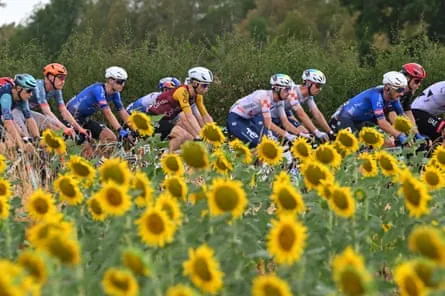
The stage, which began in Vichy, was largely flat with two minor climbs. A four-man breakaway formed early in the race, including Julian Alaphilippe, but their advantage never exceeded 90 seconds. The breakaway was eventually reeled in by the peloton with approximately 5 to 6 kilometers remaining, setting the stage for the bunch sprint.
Peloton Navigates Record-Breaking Pace
The Tour de France has seen several records fall this year, including Tadej Pogacar‘s record-breaking climb of the Col du Tourmalet. Pogacar, the race leader, described a moment of concern during the stage when he nearly crashed after running over a loose bottle. Despite the incident, he managed to maintain his focus and finish the stage without further issues.
The high average speed of the stage meant there was little nervousness within the peloton, according to Marc Reef, sports director for Team Visma | Lease a Bike. He noted that their rider, Jonas Vingegaard, was well-positioned and surrounded by teammates throughout the stage. Team Visma | Lease a Bike riders completed the stage safely, despite the intense pace.
The stage also saw Tom Pidcock continue his participation in the Tour, finishing with the peloton in Nevers despite a crash on the previous day. Pidcock attributed his earlier crash to efforts to avoid melting tarmac in extreme heat. The UAE Emirates XRG team, led by Pogacar, maintained its strong presence in the race, with rivals acknowledging Pogacar’s current strength.
Strategic Sprint to the Finish
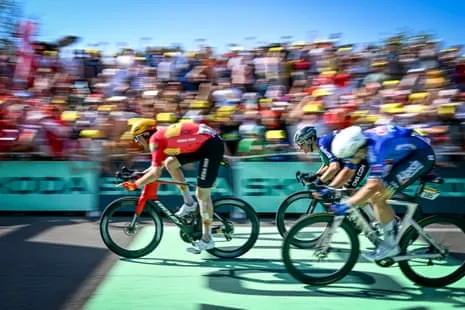
The final kilometers into Nevers saw the sprinters’ teams preparing for the decisive sprint. Cees Bol of Decathlon launched an early move with approximately 600 meters to go, creating a significant gap. Wærenskjold capitalized on an opening on the right side of the road, moving into Bol’s slipstream before powering past him.
Olav Kooij and Jasper Philipsen attempted to close the gap in the final meters, but Wærenskjold held on for the victory. Philipsen was initially relegated from third place after the stage due to deviating from his line, but this decision was later reversed. Wærenskjold’s win also earned Uno-X the most combative rider prize for Anthon Charmig‘s efforts in the breakaway, marking a successful day for the team.
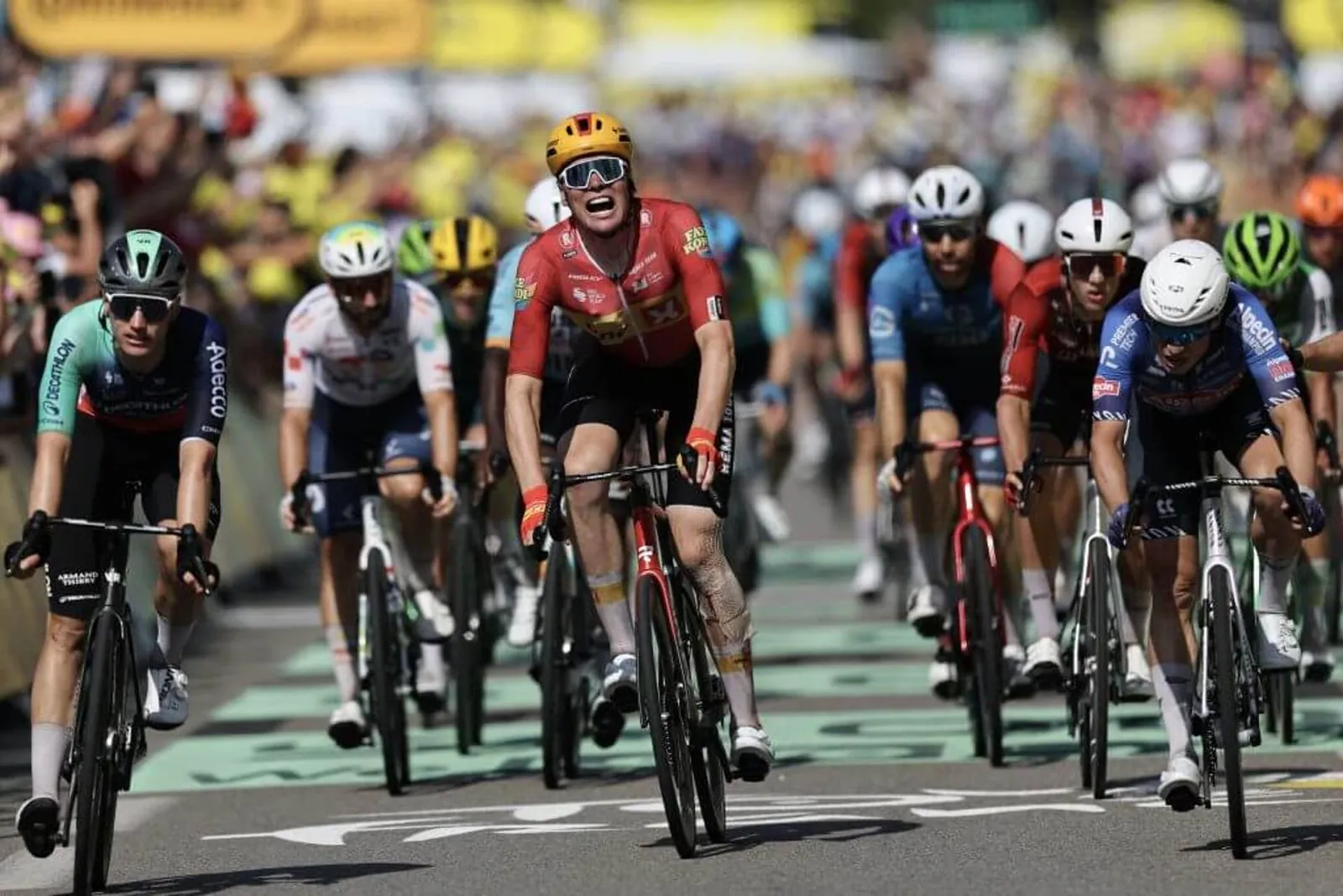
The Norwegian rider’s performance was particularly notable given he had finished last in the previous stage due to a hand injury from a crash. This historic stage, the fastest in the Tour de France‘s 123-year history, highlights the evolving nature of cycling with advancements in technology and race strategies contributing to faster speeds.
Source: theguardian.com