
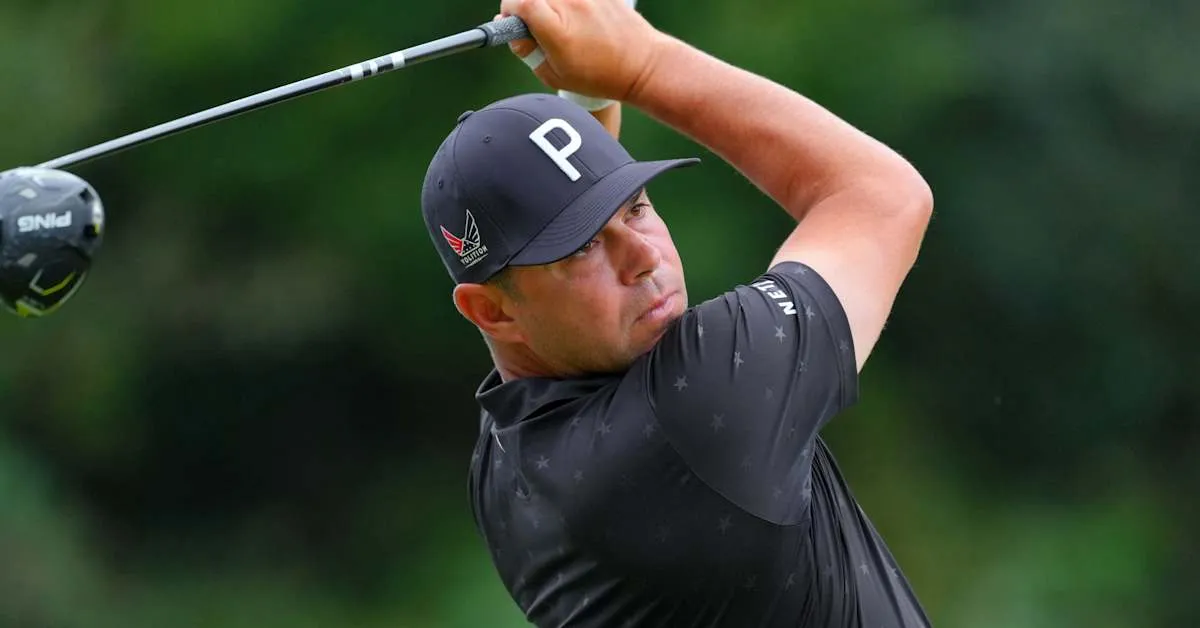
Gary Woodland opens up about his mental health journey
Gary Woodland, the 2019 U.S. Open champion, has publicly shared his battle with PTSD following surgery to remove a brain lesion in 2023. The 41-year-old golfer revealed his struggles during a recent interview, stating, “I can’t waste energy anymore hiding this, and I’m blessed with a lot of support out here on the TOUR.” This candid admission marks a significant moment in his career, as he aims to raise awareness about mental health issues in sports.
Woodland made his return to the PGA Tour in 2024 after a challenging recovery period. However, he faced significant anxiety while competing at the 2025 Procore Championship, where he experienced fear that affected his performance. “But inside, I feel like I’m dying, and I feel like I’m living a lie,” Woodland expressed, highlighting the internal struggles he has faced while trying to compete at a high level.
During that championship, Woodland’s caddie played a crucial role in helping him manage his anxiety by providing him with sunglasses to help him cope with the overwhelming situation. This support from his team underscores the importance of camaraderie in professional sports, especially when dealing with mental health challenges.
In light of his experiences, Woodland commended the PGA Tour for implementing extra security protocols to help him feel safer on the course. He stated, “In an ideal world I’m probably not playing,” reflecting the ongoing challenges he faces as he navigates his mental health while competing.
Woodland has achieved four victories in professional golf, but his journey has been far from easy. His desire to help others by sharing his story is evident as he continues to advocate for mental health awareness. “I want to help people, too. I realize now I’ve got to help myself first – and hopefully this is the first step in doing that,” he said, emphasizing the importance of self-care in the healing process.
As Woodland continues his career, he hopes that by speaking out, he can inspire others who may be facing similar struggles. His openness about PTSD and the support he has received from the golf community could pave the way for more athletes to address their mental health challenges.
With the golf world rallying around him, Woodland’s journey serves as a reminder of the importance of mental health in sports. As he moves forward, his story may encourage others to seek help and share their experiences, fostering a more supportive environment for athletes everywhere.