
What the data shows
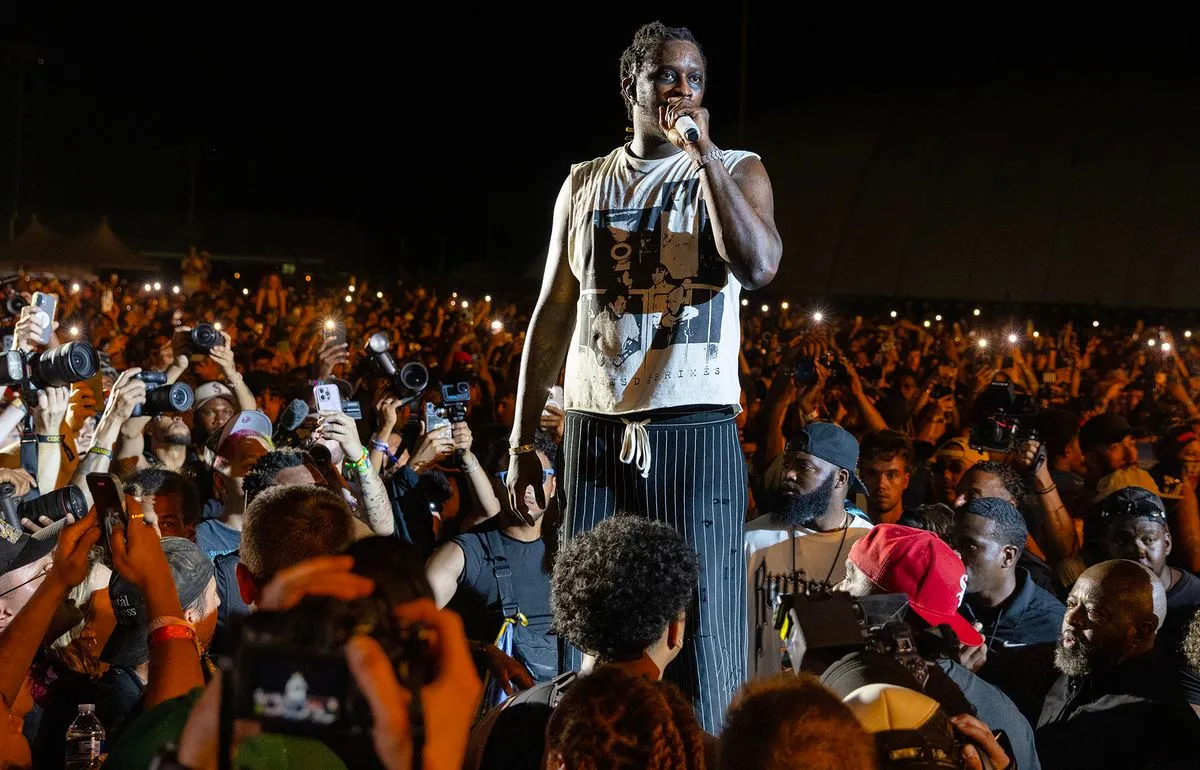
The question of whether rap lyrics should be admissible as evidence in court has gained renewed attention, particularly following Travis Scott’s recent filing at the U.S. Supreme Court. This legal move comes in the wake of a controversial case involving James Broadnax, who was sentenced to death for the murders of Stephen Swan and Matthew Butler in 2008. Broadnax’s trial featured over 40 pages of his handwritten lyrics, which prosecutors argued demonstrated a dangerous attitude towards his victims. Scott’s involvement in this legal discourse underscores the broader implications for artists and their creative expressions.
Broadnax’s lawyers have argued that the use of his lyrics in court exploited racial stereotypes commonly associated with rap music and the Black community, transforming his artistic expression into what they termed a “death warrant.” This case exemplifies the precarious position many artists find themselves in, where their creative works can be weaponized against them in legal settings. The ongoing debate raises significant questions about artistic freedom and the potential consequences of using lyrics as evidence.
In a related cultural context, Kanye West recently released an album titled “Bully,” which features Travis Scott. The music video for the track “Father” was directed by Bianca Censori, further intertwining the narratives of these influential artists. West’s own reflections on his past actions, stating, “I’m not asking for sympathy, or a free pass, though I aspire to earn your forgiveness,” highlight the complex relationship between personal accountability and artistic expression.
Meanwhile, Travis Scott continues to maintain a prominent public presence. He was recently spotted at the 2024 NBA Finals, showcasing unreleased Jordan CJ1 T-Rexx sneakers, which feature a striking two-tone green and black color scheme. The standout design element of these sneakers is the reverse Swoosh logo on the sides, which has garnered attention among sneaker enthusiasts. However, details remain unconfirmed regarding whether this particular colorway will be released to the public.
The intersection of music, culture, and law is becoming increasingly relevant as artists like Travis Scott navigate their careers in a landscape where their words can have serious legal ramifications. The implications of the Broadnax case and Scott’s Supreme Court brief may set a precedent for how rap lyrics are treated in courtrooms across the United States.
As this debate continues to unfold, it remains to be seen how the legal system will respond to the concerns raised by artists and advocates regarding the use of creative works as evidence. The outcome of Scott’s legal efforts may influence not only future court cases but also the broader conversation about the role of artistic expression in society.
In summary, Travis Scott’s involvement in the legal discussions surrounding rap lyrics highlights a critical cultural issue that resonates deeply within the music industry and beyond. As artists strive to express themselves authentically, the stakes remain high, and the legal landscape continues to evolve.