
Reaction from the field
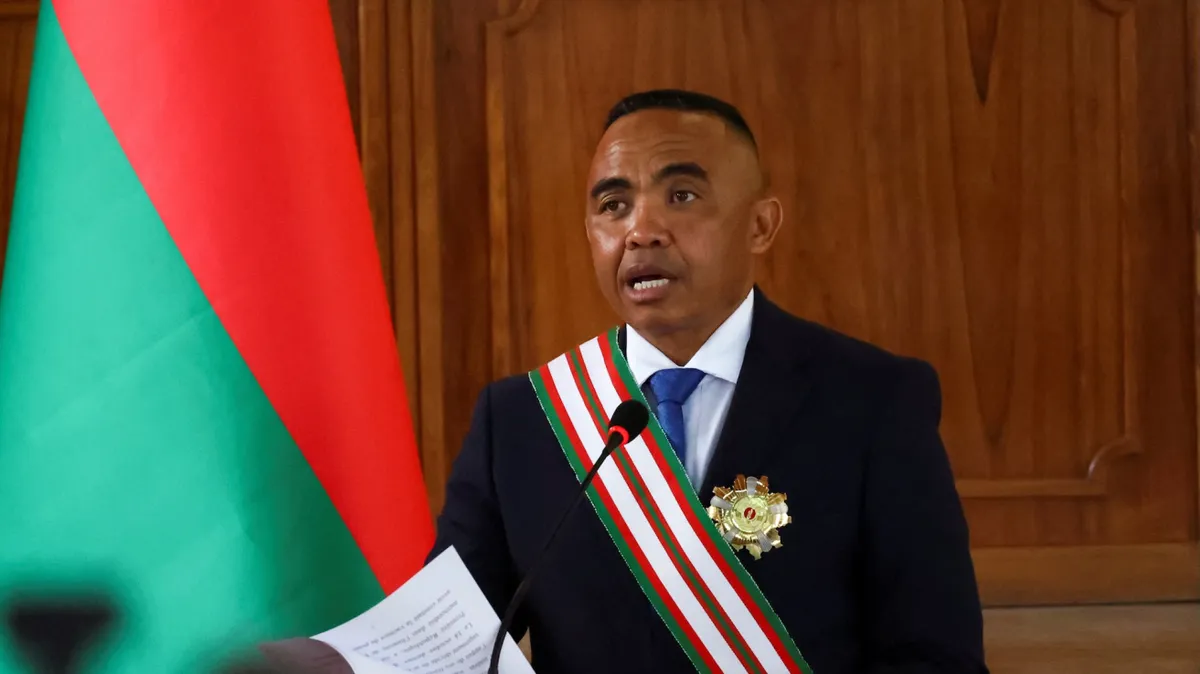
The recent events surrounding coups in Madagascar and Argentina have raised critical questions about governance and the fragility of democracy. In Madagascar, Colonel Michael Randrianirina seized power on October 12, 2025, by deposing President Andry Rajoelina. This move, while supported by the High Constitutional Court, was met with mixed reactions from international bodies. The African Union (AU) promptly suspended Madagascar, citing an unconstitutional change of government, while the Southern African Development Community (SADC) refrained from taking similar action, highlighting the complexities of regional politics.
Randrianirina’s ascent to power has sparked promises of restoring a democratic civilian government within 18 to 24 months. However, the term ‘coupvolution’ has been used to describe this transfer of power, indicating a blend of popular revolution and military intervention. This situation underscores the delicate balance between military influence and civilian governance in Madagascar.
Simultaneously, in Argentina, thousands marched in Buenos Aires to commemorate the 50th anniversary of the last military coup, which led to a dark period in the nation’s history known as the ‘Dirty War.’ This national holiday honors the estimated 30,000 people who were disappeared during that dictatorship, reflecting a collective memory that continues to shape Argentine society. The march serves as a poignant reminder of the past and a call to vigilance against the potential return of authoritarianism.
Justice Elena Kagan’s remarks during a U.S. Supreme Court oral argument have also brought the issue of coups into the American legal discourse. She posed a hypothetical scenario regarding a president ordering the military to stage a coup, questioning the implications of presidential immunity in such a context. Kagan’s inquiry highlights the ongoing debates about the limits of executive power and the rule of law, resonating with the concerns raised by recent events in Madagascar and Argentina.
The historical context of these coups is crucial for understanding their implications. In Argentina, the legacy of military rule and the struggle for human rights continue to influence political discourse. The public’s response to the anniversary of the coup reflects a deep-seated commitment to democracy and accountability, as citizens remember the atrocities committed during the dictatorship.
As the situation unfolds in Madagascar, the dialogue process to restore civilian rule is expected to be inclusive, as emphasized by various stakeholders. However, the effectiveness of this process remains uncertain, and the international community will be closely monitoring developments. The contrasting responses from regional organizations also raise questions about the effectiveness of collective security measures in addressing unconstitutional changes of government.
In both cases, the societal impact of these coups is profound. They not only affect the political landscape but also resonate with the historical narratives of oppression and resistance. The public’s engagement in commemorative events in Argentina and the cautious optimism for democratic restoration in Madagascar reflect a broader global struggle for human rights and democratic governance.
As we look ahead, the implications of these coups will continue to unfold, with potential repercussions for regional stability and international relations. Details remain unconfirmed regarding the long-term outcomes of Randrianirina’s promises in Madagascar and the ongoing societal reflections in Argentina. The world watches closely, as the stakes for democracy and human rights remain high.