
How it unfolded
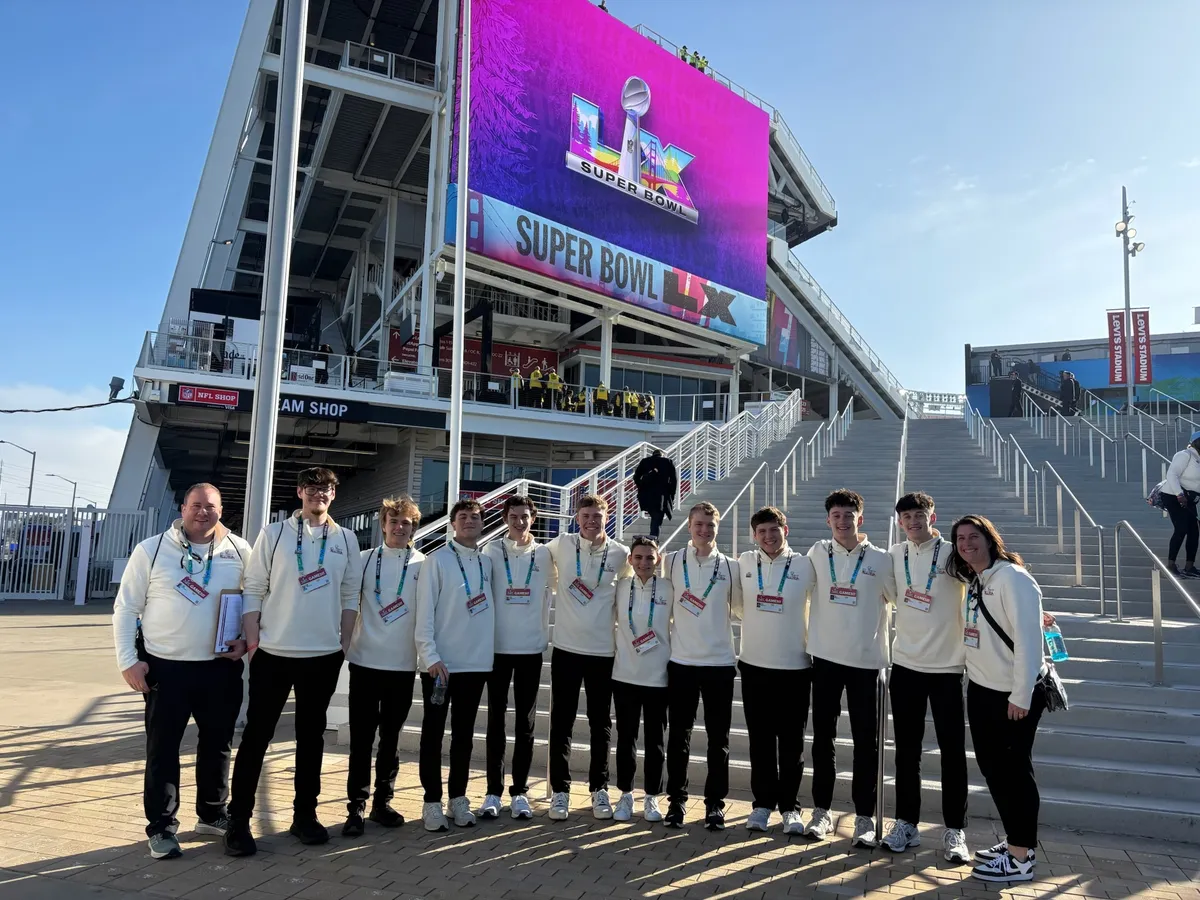
As the Super Bowl LX approached on February 10, 2026, excitement was palpable in San Francisco, California. This year’s event not only promised thrilling football action but also served as a unique educational opportunity for students. Just before the game, 14 students and two faculty members from Maryville University’s Rawlings Sport Business Management program were gearing up for a hands-on experience that would immerse them in the world of professional sports.
On the day of the event, these students partnered with Fierce Staffing at the NFL’s premier fan fest, located at the Moscone Center. Their responsibilities included supporting major sponsors such as FedEx, Snickers, and Roblox, allowing them to engage directly with industry leaders and gain invaluable insights into the sports marketing landscape. Marcie Lapehn, a faculty member, noted, “Students from the Rawlings Sport Business Management program helped bring the first-ever NFL Culture Club to life, welcoming fans, executives, and VIPs with professionalism, polish, and poise.” This statement underscores the significance of the students’ involvement in a high-profile event like the Super Bowl.
In addition to the Super Bowl festivities, another major development in the sport world emerged around the same time. The Connecticut Sun, a prominent team in the WNBA, was sold to the Fertitta family for a staggering $300 million. This sale marks a significant transition for the team, which will relocate to Houston for the 2027 season. The Connecticut Sun has a rich history, originally starting as the Orlando Miracle from 1999 to 2002 before relocating to Connecticut in 2003. The Fertitta family’s acquisition brings a new chapter to the team, reminiscent of the Houston Comets’ legacy, who dominated the WNBA by winning four consecutive titles from 1997 to 2000.
As the Connecticut Sun prepares for its move, the implications of this sale extend beyond just a change of location. The relocation signifies a strategic shift in the WNBA landscape, potentially revitalizing interest in Houston’s professional women’s basketball scene. The Fertitta family’s investment could lead to increased visibility and support for the team, which is crucial for the growth of women’s sports.
Meanwhile, the students from Maryville University were not only gaining practical experience but also building connections that could shape their future careers in sports management. Brittane Cooper, a faculty member, expressed her appreciation for the collaboration, stating, “Working with Jason and his team at the Rawlings Sport Business Management Program at Maryville University has been a pleasure. His partnership and support made a meaningful impact.” This partnership highlights the importance of educational institutions collaborating with professional organizations to create dynamic learning opportunities.
As the day of the Super Bowl unfolded, Daniel Schmidt, another faculty member, remarked, “Events like the Super Bowl provide dynamic learning opportunities.” This sentiment resonates with the broader theme of how significant sporting events can serve as platforms for education, networking, and career advancement.
Currently, the sport landscape is witnessing a blend of educational initiatives and professional transitions, with the Super Bowl serving as a backdrop for aspiring sports professionals. The sale of the Connecticut Sun and its impending relocation adds another layer of complexity and excitement to the WNBA, promising to reshape the future of women’s basketball in Houston.
As these events continue to unfold, the impact on students, teams, and the broader sports community remains to be seen. The convergence of education and professional sports at events like the Super Bowl highlights the potential for growth and innovation in the industry, paving the way for future developments that could redefine the sport landscape.