
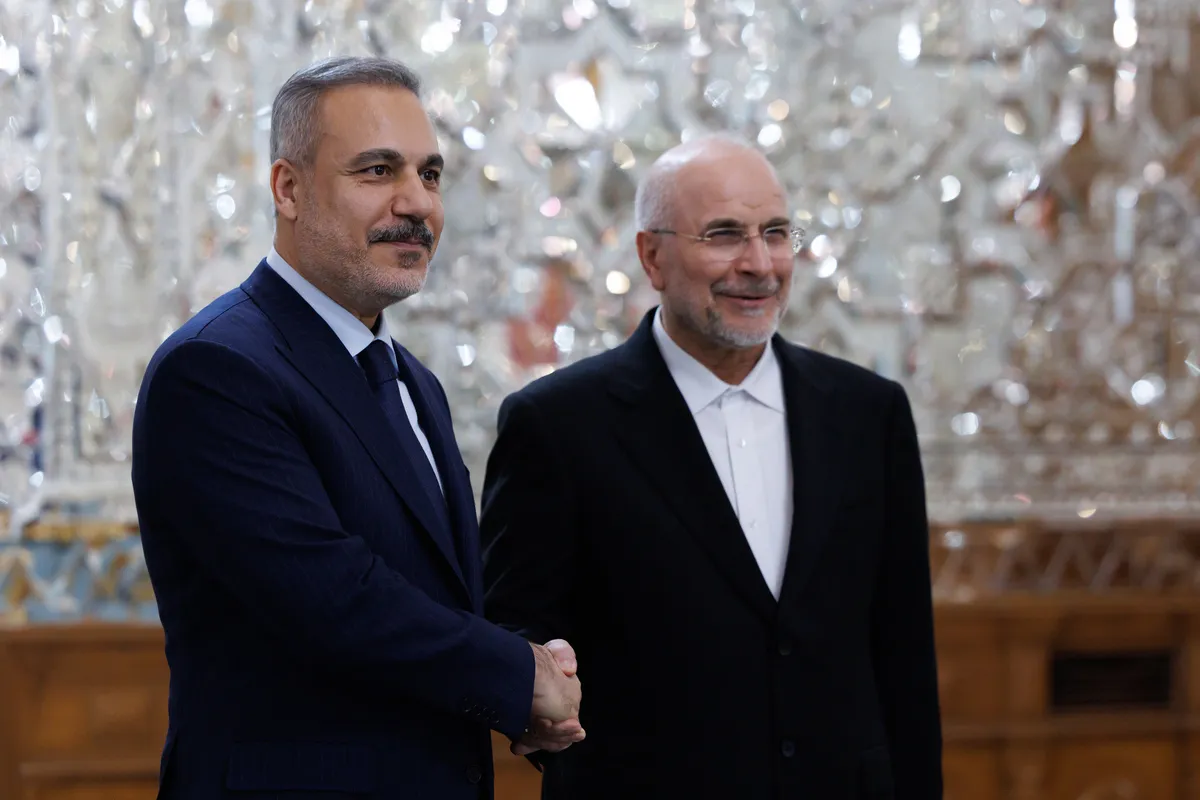
What does Mohammad Bagher Ghalibaf’s warning to the U.S. mean for Iran’s future? In a recent escalation of rhetoric, Ghalibaf, the Speaker of Iran’s Parliament, has issued stark warnings to the United States, signaling a readiness to respond militarily to perceived threats. This comes in the wake of an attack on Israel’s oil refinery, which has heightened tensions in the region.
Ghalibaf’s statements are particularly notable as they reflect Iran’s increasingly aggressive stance. He warned the U.S. against a ground invasion, threatening to set American troops “on fire” if provoked. This declaration follows Donald Trump’s comments that put Iran and Ghalibaf on notice, suggesting that the U.S. would soon determine whether Ghalibaf is willing to engage cooperatively. The situation is further complicated by Trump’s assertion that a regime change in Iran has occurred, claiming that the old guard has been replaced.
The geopolitical implications of these exchanges are significant. Oil prices have surged to $115 per barrel following the Iranian attacks, with the average gas price in the U.S. now at $3.99 per gallon. Such economic pressures are likely to influence U.S. policy decisions regarding Iran, especially as both nations navigate a complex web of military and diplomatic challenges.
Ghalibaf has also criticized Trump’s social media posts, labeling them as market manipulation aimed at escaping the “quagmire” in which America and Israel find themselves. This accusation underscores the mistrust and animosity that characterize U.S.-Iran relations, particularly in the context of military engagements and economic sanctions.
Moreover, Ghalibaf claimed that Iranian forces are prepared to attack U.S. troops and their regional partners, emphasizing that “our firing continues” and that “our determination and faith have increased.” This rhetoric signals a potential for escalation, as Iran positions itself as a formidable opponent against U.S. military presence in the region.
Details remain unconfirmed regarding the health status of Iran’s new Supreme Leader, Mojtaba Khamenei, which adds another layer of uncertainty to the situation. The leadership dynamics within Iran could significantly impact how the country responds to external threats and engages in international diplomacy.
This is the first time Iran has explicitly threatened to strike Israeli and American universities, marking a notable shift in its military posture. As tensions continue to rise, the international community watches closely to see how these developments will unfold and what they mean for regional stability.