
The recent portrayal of Donald Trump as Jesus has significant implications for the political and religious landscape in America. This trend has been highlighted by Trump’s provocative comments and actions, including a recent post on his Truth Social account where he depicted himself as Jesus. Such imagery raises questions about the intersection of faith and politics, particularly as Trump continues to assert his influence among his supporters.
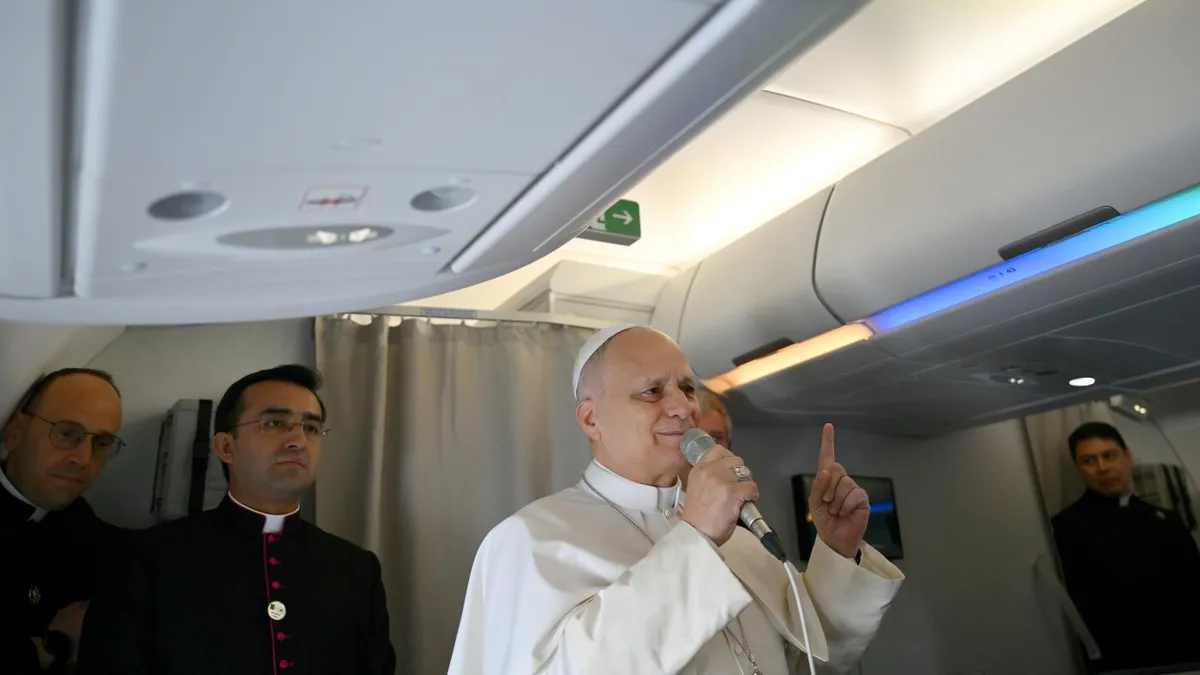
In a notable exchange, Pope Leo XIV, the first U.S.-born pope, criticized Trump, labeling him as ‘weak’ and ‘terrible for Foreign Policy.’ This criticism comes amid rising tensions related to the Iran conflict, where Pope Leo XIV has emerged as a vocal advocate for peace, emphasizing the message of the Gospel: ‘Blessed are the peacemakers.’ His stance contrasts sharply with Trump’s more aggressive rhetoric regarding Iran, where Trump has expressed concerns about nuclear weapons.
Trump’s comments about the pope have garnered support from various Italian politicians, indicating a complex relationship between U.S. politics and international religious leadership. Trump claimed that if he were not in the White House, Pope Leo XIV would not be in the Vatican, suggesting that the Vatican’s choice of an American pope was a strategic move to address his administration.
The backdrop of this controversy includes Trump’s significant support among Catholic voters, who favored him with 55% in the 2024 election. This demographic’s alignment with Trump complicates the narrative, as it intertwines religious identity with political allegiance.
Pope Leo XIV, who is set to embark on an 11-day trip to Africa starting April 13, 2026, has called for peace and reconciliation amid ongoing conflicts, including the situation in Iran. His remarks reflect a broader critique of the ‘delusion of omnipotence’ that he believes is fueling the war.
As this narrative unfolds, the portrayal of Trump as Jesus serves as a lens through which to examine the evolving dynamics between faith, politics, and international relations. The implications of this trend are profound, potentially influencing both domestic and global perceptions of leadership and morality.
Details remain unconfirmed regarding how this portrayal will impact upcoming political events and the ongoing discourse surrounding the Iran conflict. The intersection of religious imagery and political identity continues to provoke discussion and debate among scholars, political analysts, and the public alike.