
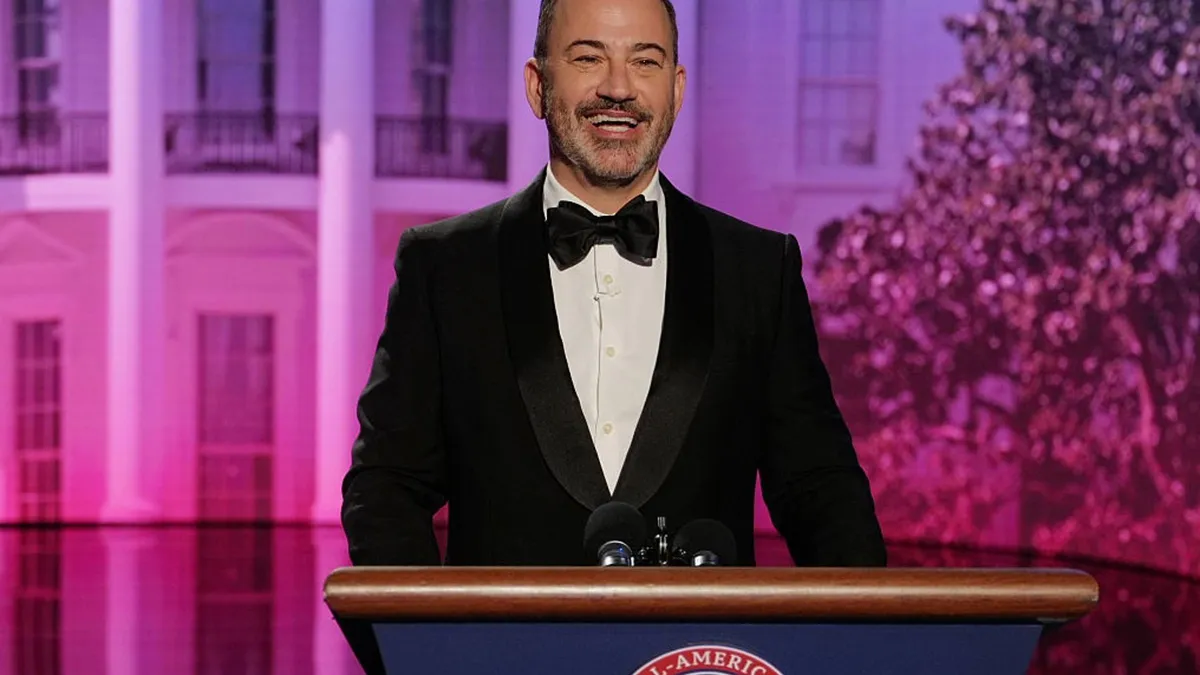
The controversy escalated as both Melania and Donald Trump demanded Jimmy Kimmel’s firing over a joke made just days before a shooting incident. Kimmel, known for his late-night comedy, made a quip about Melania Trump having a ‘glow like an expectant widow’ during a mock roast ahead of the White House Correspondents’ Dinner. This moment quickly spiraled into a significant backlash, intertwining issues of free speech, political rhetoric, and the sensitive topic of gun violence.
Before this development, many viewed the White House Correspondents’ Dinner as a lighthearted event where humor could thrive without serious repercussions. Late-night comedians often poke fun at political figures in jest, creating an atmosphere of camaraderie. However, this time was different. Just days following Kimmel’s joke, a gunman attempted to assassinate President Trump at the same event, intensifying the scrutiny on his words.
In response to the joke, Melania Trump labeled it as ‘hateful and violent rhetoric,’ while President Trump characterized it as a ‘despicable call to violence.’ Their demands for Kimmel’s firing from ABC reflected not only personal offense but also a broader concern regarding the implications of such jokes in today’s charged political climate. But what does this mean for late-night comedy?
Kimmel defended his remarks by emphasizing that they were intended as lighthearted commentary on the age difference between him and Melania—79 years old compared to her 56. He stated, ‘It was not by any stretch of the definition a call to assassination,’ arguing that he has long been an advocate against gun violence. This defense raises questions about intent versus impact in comedy: can humor be separated from its consequences?
The shooting incident involved an assailant who was arrested for attempting to assassinate President Trump. This shocking act shifted public perception dramatically. The very nature of political humor became scrutinized under the lens of safety and responsibility.
Key responses:
- Melania Trump insisted that Kimmel’s comments are intended to divide the country.
- Donald Trump condemned the joke as something ‘far beyond the pale.’
- Kimmel reiterated his stance against gun violence and clarified his intentions behind the joke.
This situation encapsulates an ongoing debate surrounding free speech in comedy—especially when intertwined with serious societal issues like gun violence. As tensions rise in political discourse, will comedians find themselves increasingly limited in their ability to joke about those in power? The ramifications of this incident could lead to greater self-censorship among comedians or provoke more pointed critiques of political figures in future performances.