
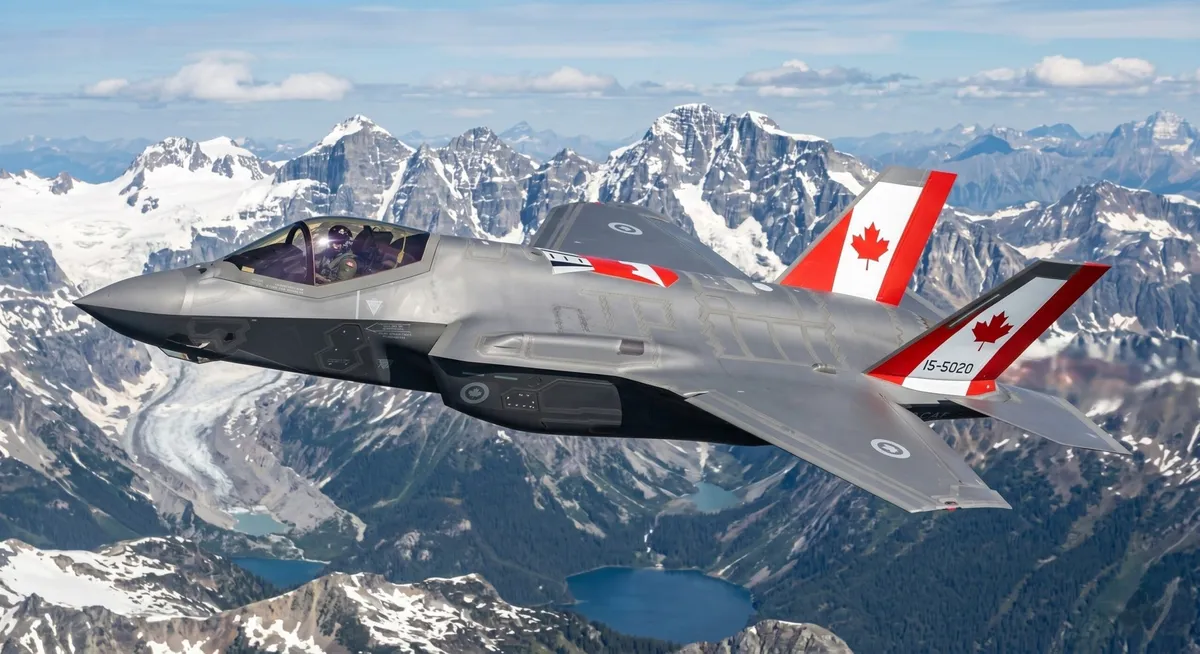
“The review of the purchase of the F-35s is continuing… We are taking the necessary time to study very, very closely the question of the fighter fleet,” stated David McGuinty, a key figure in Canada’s defense discussions. This statement comes amid growing concerns regarding Canada’s defense capabilities as it navigates a prolonged evaluation process for acquiring 88 F-35A fighter jets.
The review process, which began in March 2025, has already surpassed its initial target completion date of September 2025. Officials have not confirmed a new timeline for when a decision will be made on this significant military procurement. The delay raises questions about how well-equipped Canada will be to address escalating global threats from nations like Russia and China.
That context matters because Canada has committed to spending 19 billion CAD on this acquisition. While funding for the first 16 F-35s has been secured, additional payments for future jets have also been made. However, with other countries like Germany and Finland accelerating their own F-35 procurements, Canada risks falling behind in its defense readiness.
In light of these delays, Saab has proposed an alternative: the Gripen C. This offer includes not only assembling the aircraft within Canada but also transferring significant intellectual property—an enticing prospect that promises to create approximately 12,500 jobs in the process. As Jussi Halmetoja noted, “What it really gives you is sovereignty — your indigenous capability to take the data that you collect, and to own it.” This pitch might resonate in an era where data security is paramount.
The Royal Canadian Air Force (RCAF) operates under the auspices of the North American Aerospace Defense Command (NORAD), which emphasizes the need for modern military aircraft capable of maintaining superiority over adversaries. As Maj. Gen. Chris McKenna stated, “NORAD needs an aircraft that has overmatch over the adversaries.” The urgency for advanced capabilities cannot be overstated.
More than 110 Canadian companies have engaged in the F-35 program, securing over 3 billion CAD in contracts thus far. This involvement illustrates not only economic benefits but also a strategic investment in national defense infrastructure. Yet, as this review drags on without clear direction or resolution, stakeholders are left wondering about Canada’s commitment to maintaining a robust air defense posture.
The uncertainty surrounding both timelines and responses to Saab’s Gripen proposal leaves many questions unanswered. Will Canada ultimately choose to proceed with the F-35s or shift its focus? As discussions continue and evaluations unfold, one thing remains clear: Canada’s defense policy must adapt swiftly to meet emerging global challenges.