
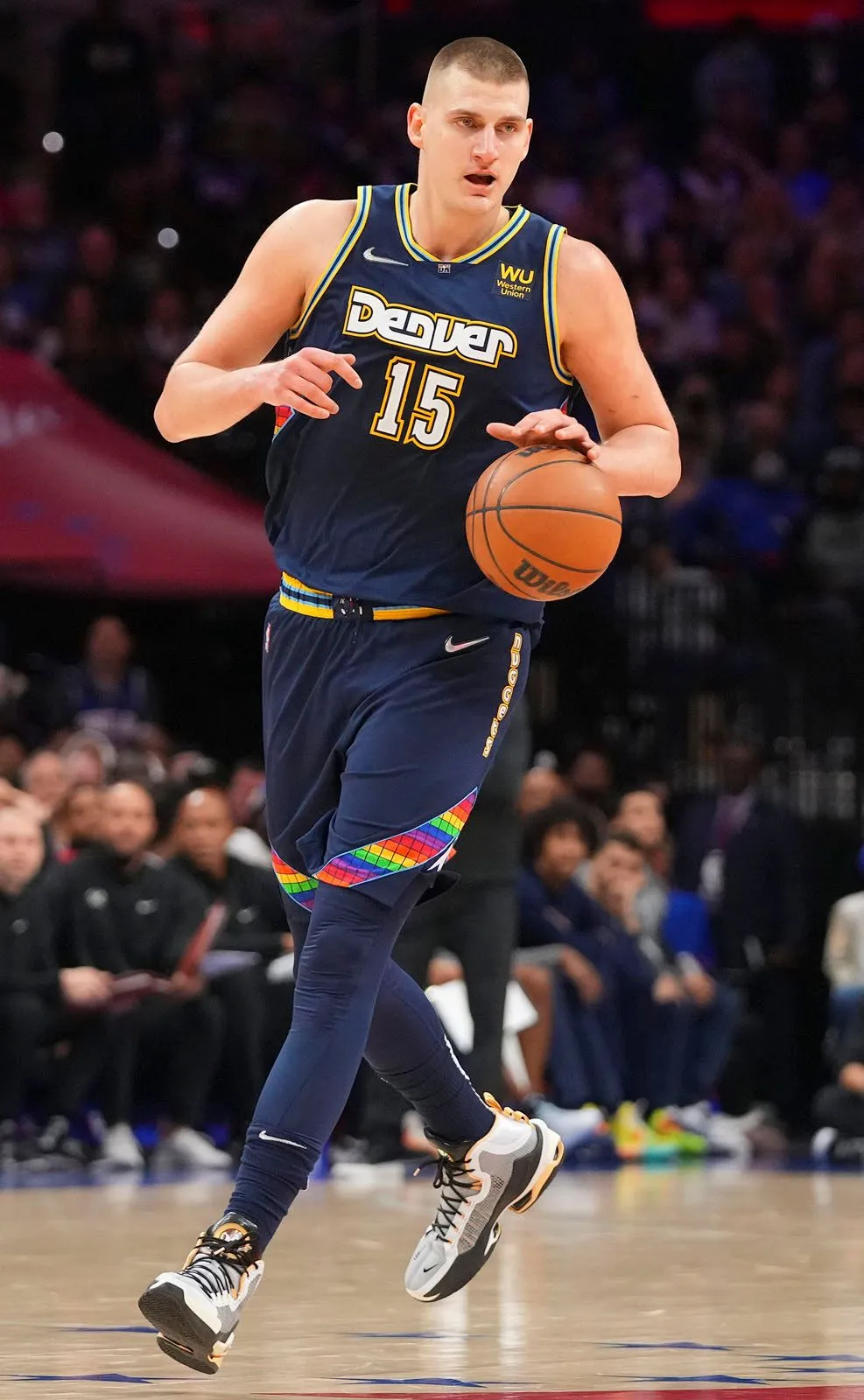
Nikola Jokic’s struggles in Game 3 against the Minnesota Timberwolves have raised significant questions about his ability to perform under playoff pressure. The Denver Nuggets lost this crucial game by a score of 113-96, and Jokic’s performance was far from stellar.
In Game 3, Jokic scored just 27 points on 26 shots, shooting a disappointing 7-of-26 from the field. His inability to find his rhythm led to a lackluster offensive display from the Nuggets, who managed only 11 points in the first quarter. This slow start set a tone that the team couldn’t overcome.
Key statistics from Game 3:
- Jokic scored 27 points but took 26 shots to do so.
- The Nuggets were outscored by the Timberwolves, who racked up a total of 113 points.
- Denver struggled offensively, scoring only 11 points in the first quarter.
- Jokic had 15 rebounds and 3 assists but missed 19 of his last 24 three-point attempts in this playoff series.
- The Timberwolves scored an impressive 68 points in the paint during this game.
This loss felt almost inevitable—like it was predetermined—right from the opening tip. As Jaden McDaniels noted, playing against Denver really motivates their team. The Nuggets now face critical decisions regarding their strategy for Game 4, especially with Aaron Gordon’s injury looming over them.
Jokic, a three-time NBA MVP, has proven himself capable of greatness before, notably winning the Larry O’Brien Trophy in 2023. Yet, questions linger about whether he can rise to the occasion when it matters most. His recent comments reflect this struggle: “If I make all the shots, then the defense is going to react. So I think that’s why I couldn’t get anybody involved.” This insight reveals a complex interplay between individual performance and team dynamics under pressure.
The Nuggets will need to regroup quickly as they prepare for Game 4. With their playoff hopes on the line and uncertainty surrounding Jokic’s performance and Gordon’s condition, every decision counts. The outcome of this series could hinge on how well they adapt and respond to these challenges in upcoming games.