
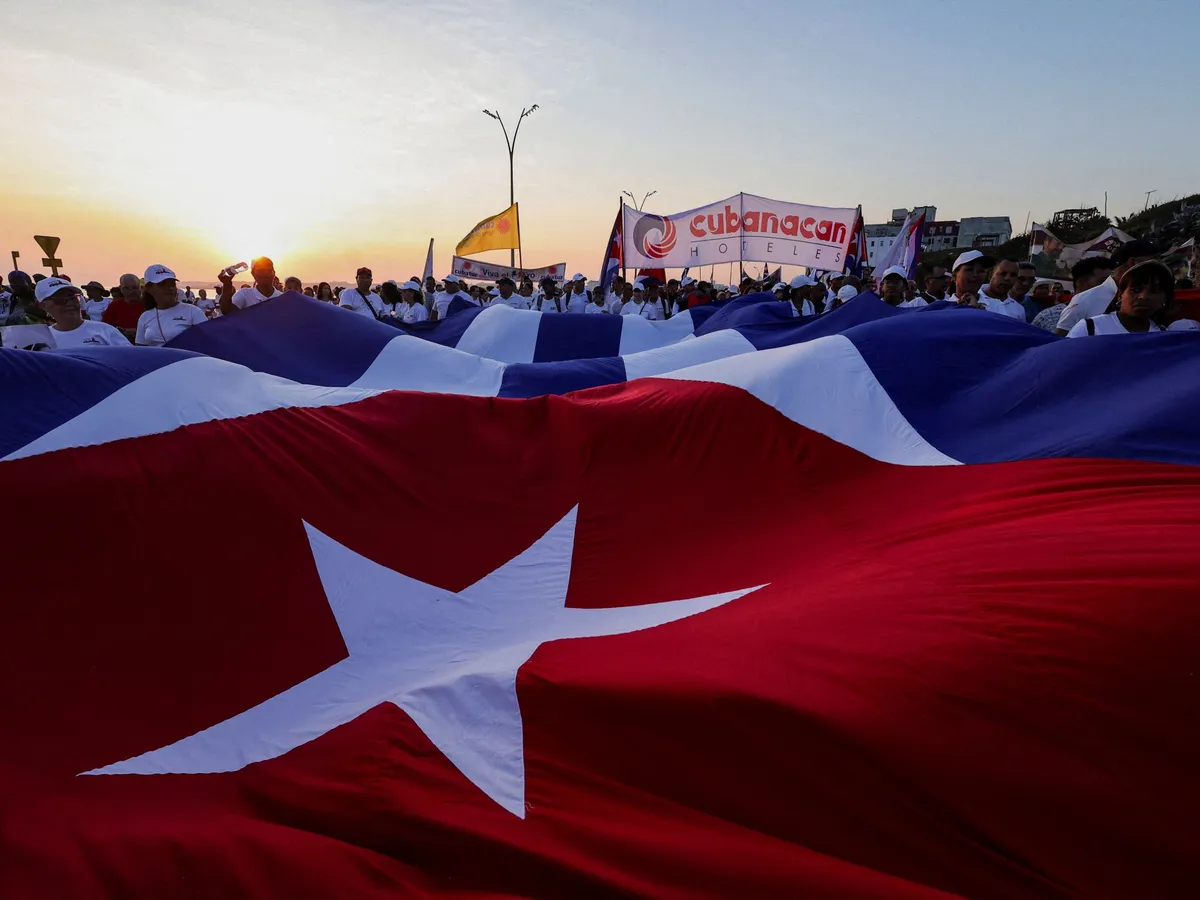
Donald Trump’s comments about Cuba, stating that “Cuba is next,” coincide with a significant escalation in US sanctions against the island on May 1, 2026. This development raises critical questions about the future of US-Cuba relations and the well-being of the Cuban people.
The Trump administration has taken a hardline stance, issuing an executive order that expands sanctions targeting individuals and groups aiding the Cuban government’s security forces. The sanctions include travel restrictions on certain officials linked to human rights abuses. This approach aligns with a long history of US foreign policy aimed at isolating the Cuban government, which many view as an unusual and extraordinary threat.
Key facts about the new sanctions:
- The Cuban government denounced the sanctions as “unilateral coercive measures” that violate international law.
- Foreign Minister Bruno Rodriguez stated that these measures are extraterritorial and infringe upon Cuba’s sovereignty.
- The sanctions have exacerbated existing economic challenges, leading to frequent power blackouts due to severe fuel shortages.
Notably, the US Senate recently blocked a resolution that would have prevented Trump from initiating military action against Cuba. The vote was a close call: 51 senators opposed the resolution while 47 supported it. This indicates a divided stance within Congress regarding military intervention in Cuba, further complicating an already tense situation.
Yet, uncertainties remain. It is unclear which specific individuals or entities are affected by these new sanctions. Furthermore, Trump’s remarks about taking over Cuba left many wondering whether he was serious or merely joking, adding ambiguity to an already fraught political landscape.
As tensions escalate, Miguel Díaz-Canel, President of Cuba, criticized the sanctions as collective punishment against his people. He emphasized that such actions only deepen economic hardships while failing to achieve their political objectives.
This complex interplay of rhetoric and policy will likely shape not only US-Cuba relations but also impact broader regional dynamics in Latin America. The ongoing situation requires careful monitoring as developments unfold in the coming weeks.