
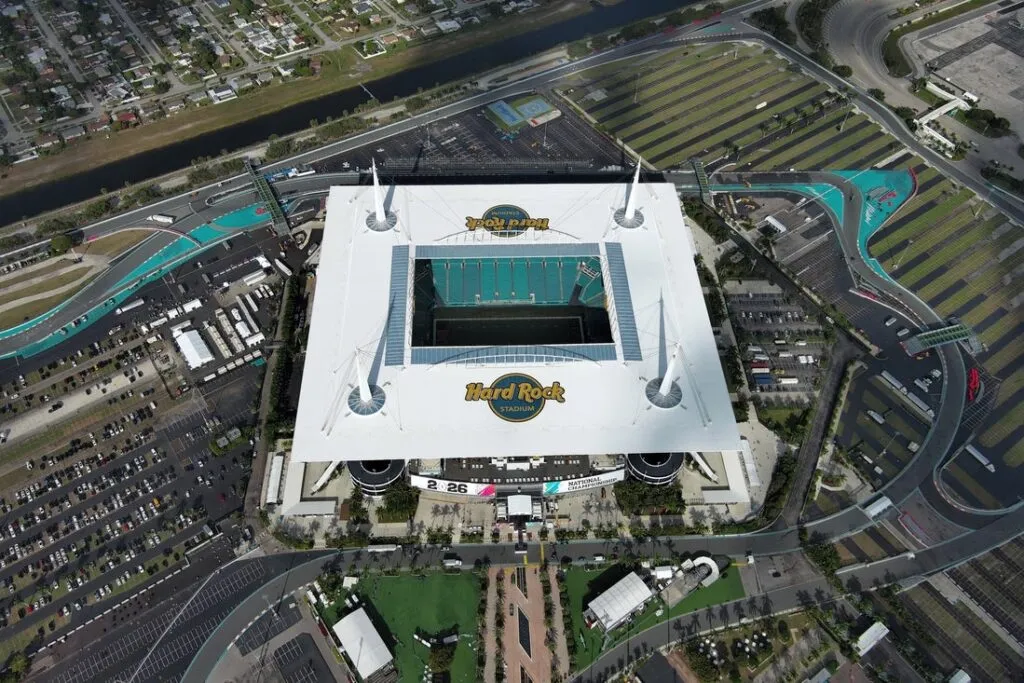
Miami’s Hard Rock Stadium has fallen out of the Super Bowl hosting rotation due to changes in the surrounding area and insufficient hospitality space. The NFL has deemed that the stadium no longer meets its strict site requirements for hosting such a high-profile event.
The last time Miami hosted a Super Bowl was in 2020, marking the city’s 11th time as a host—tied for the record with New Orleans. However, recent developments have altered the landscape around Hard Rock Stadium, which now accommodates events like the Miami Open and Formula 1 races, creating competition for resources and attention.
That context matters because it highlights how cities must continually adapt their facilities to meet evolving expectations. The NFL has specific criteria, particularly regarding hospitality areas, which are crucial for accommodating fans, sponsors, and media. Stephen Ross, owner of the Miami Dolphins, acknowledged that while Miami has a rich history of hosting Super Bowls, “Miami is not really in line for one.”
The NFL’s concerns center on the stadium’s lack of sufficient hospitality space. As events grow in scale and significance, so do their requirements. This situation poses a challenge for Ross, who is actively looking at making improvements to enhance fan experience at Hard Rock Stadium.
In recent years, Miami has successfully hosted numerous significant events. However, with its next three Super Bowls scheduled for SoFi Stadium in 2027, Mercedes-Benz Stadium in 2028, and Allegiant Stadium in 2029, it raises questions about when—or if—Miami will return to that elite hosting circle.
Ross stated candidly that “they don’t believe we meet all the requirements and demands.” This sentiment reflects not just a disappointment but also an urgent call to action for local stakeholders to invest in necessary upgrades. The shift away from traditional sports venues towards multifunctional spaces indicates a significant trend in event planning.
As Miami navigates this setback, it will need to consider both immediate fixes and long-term strategies. Enhancements could involve expanding hospitality areas or modernizing existing facilities to attract future events. After all, maintaining a competitive edge is crucial in today’s fast-evolving sports landscape.
The future of Miami as a potential Super Bowl host remains uncertain—but one thing is clear: without addressing these hospitality challenges, its chances may dwindle further.