
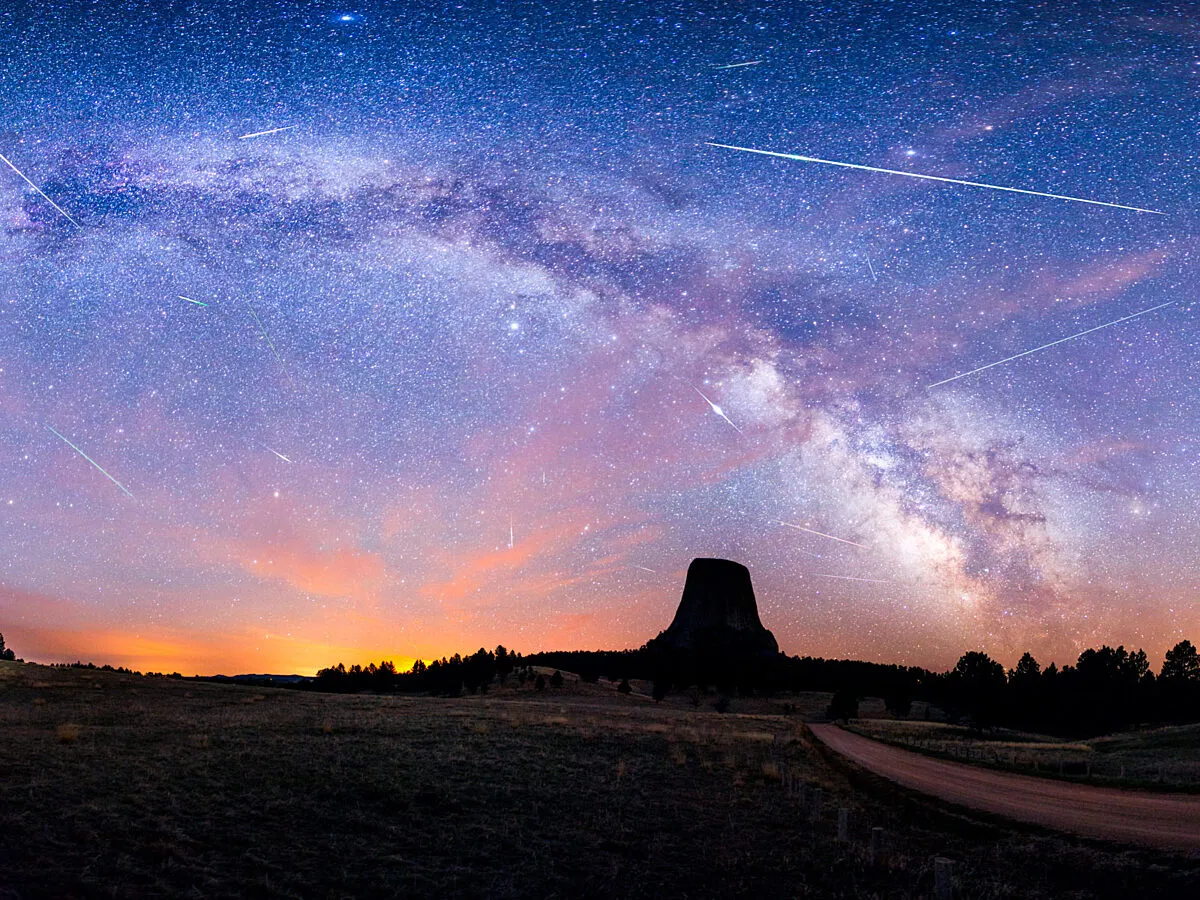
A bright moon may dim the Eta Aquarid meteor shower this year, making it harder to glimpse the celestial display in Oregon during its peak on May 6, 2026. Each year, this meteor shower captivates stargazers as Earth passes through trails of debris left behind by Halley’s Comet.
This year, however, conditions have shifted. While the Eta Aquarids typically produce up to 50 meteors per hour under ideal circumstances, observers in the Northern Hemisphere usually see only about 10 to 30 meteors per hour. With a bright moon illuminating the sky, even those numbers could dwindle.
That context matters because many enthusiasts look forward to this event for its long, lingering streaks of light—often referred to as shooting stars. The meteors travel at approximately 40 miles per second, creating brief but stunning displays against a dark backdrop. Unfortunately, with the moon’s brightness interfering, many may miss out on this annual spectacle.
Experts like Teri Gee emphasize that location plays a significant role in visibility: “The farther south you are, the better you’ll see it.” For Oregonians, mostly clear skies are expected during early hours on May 6. However, there’s a 66%-84% chance of cloud cover along the Oregon Coast that morning.
The Eta Aquarids are not just any meteor shower; they are linked directly to Halley’s Comet, which orbits our sun every 76 years. The comet has left a trail of debris that Earth intersects each spring. This year’s activity will last until May 28, giving stargazers several opportunities to catch glimpses of these celestial wonders—if conditions allow.
As Nico Adams notes about observing meteor showers: “You’re looking for bright streaks that appear in the corner of your eye for a fraction of a second.” Such fleeting moments can be exhilarating when conditions are right. But with uncertainties surrounding moonlight interference this year, many may find their stargazing plans thwarted.
Looking ahead, other meteor showers will follow suit. The Southern Delta Aquarids will be most active between July 30–31, and the Perseids will peak on August 12–13—both offering additional chances for skywatchers to enjoy shooting stars.