
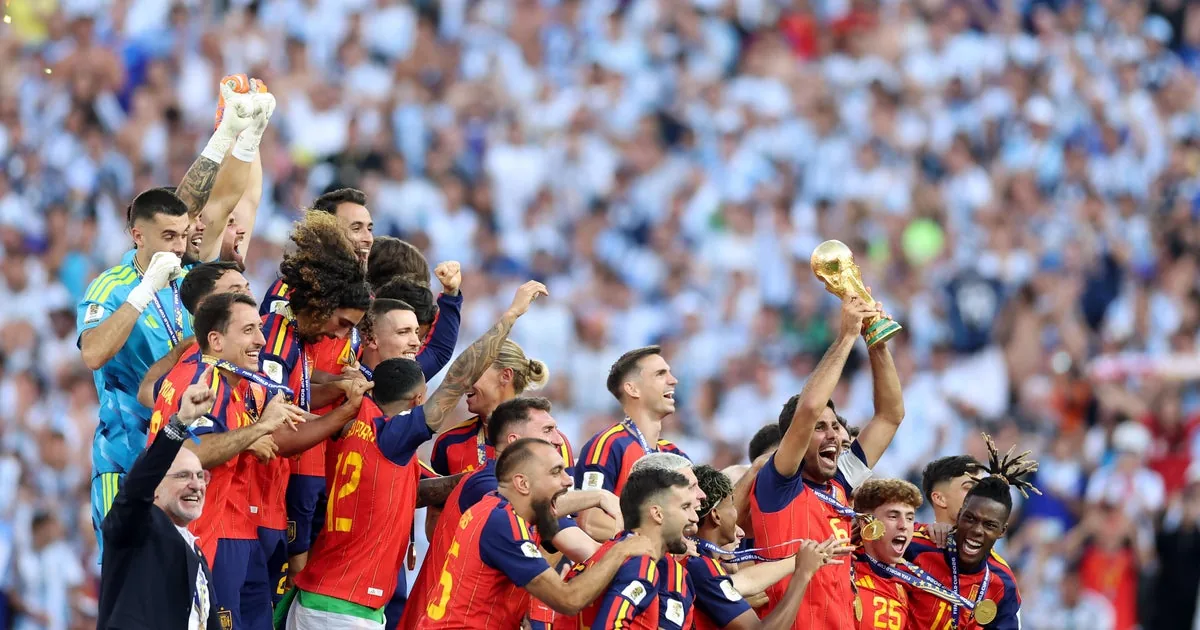
Spain claims World Cup title in extra time
Spain has secured its second World Cup title, defeating Argentina 1-0 in extra time at MetLife Stadium in New Jersey. The decisive goal came in the 106th minute from substitute Ferran Torres, breaking a deadlock that persisted through regulation time.
The match saw Spain dominate possession and offensive opportunities, outshooting Argentina 20-3 over the course of the game. Despite this pressure, Spain was unable to find the back of the net during the initial 90 minutes of play. Argentina‘s goalkeeper, Emiliano Martínez, made 12 saves, a record for a World Cup final.
The game’s intensity escalated when Argentina‘s Enzo Fernández received a second yellow card in stoppage time at the end of the second half, leading to his expulsion. This left Argentina playing with ten men for the entirety of extra time, a disadvantage that Spain capitalized on.
Torres‘s goal, his first of the tournament, came from a cross by Pedro Porro, which Nico Williams headed back into his path. Torres then struck the ball past Martínez, securing the victory for Spain.
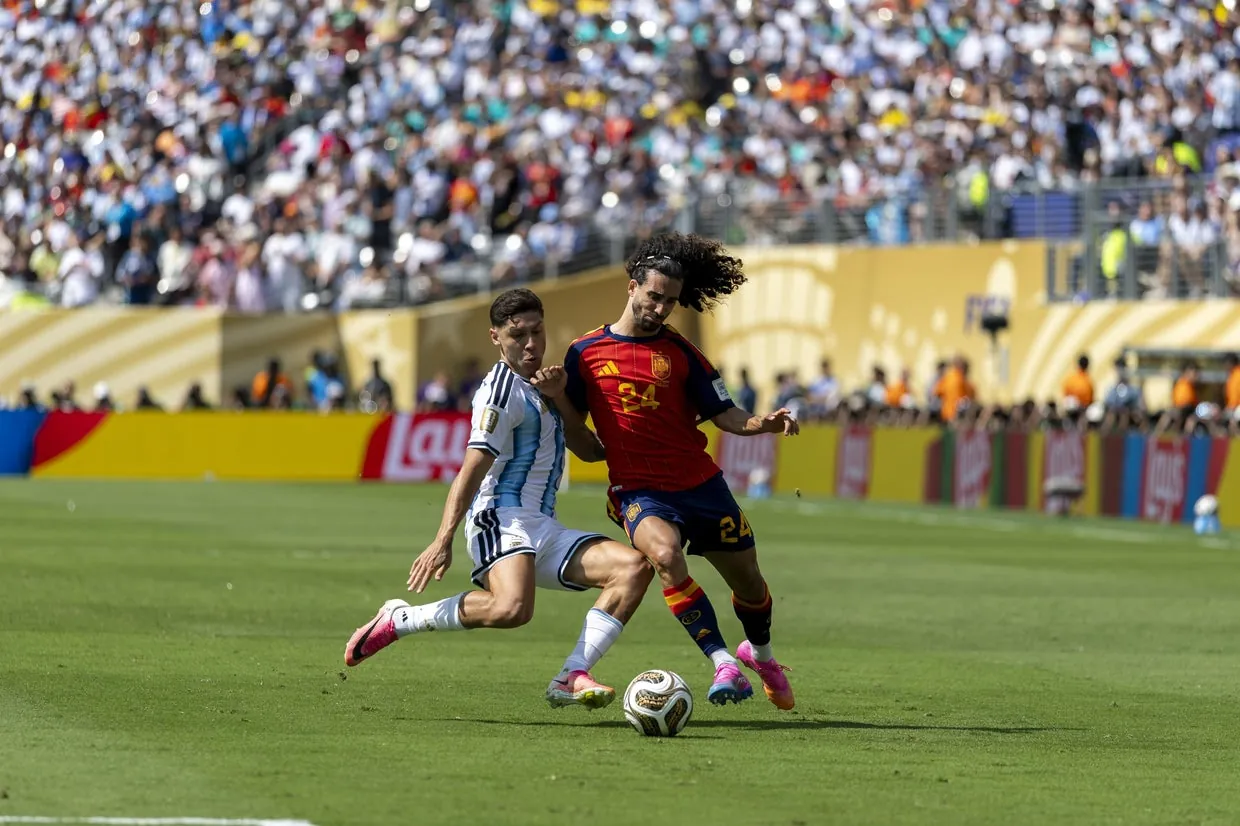
Messi’s quiet final and post-match altercations
For Argentina, the final marked a quiet performance from captain Lionel Messi, who had minimal involvement in the early stages of the match. His influence was limited, and Argentina struggled to create significant scoring chances against Spain‘s defense, which conceded only one goal throughout the entire tournament.
The match concluded with some altercations between players from both teams. After the final whistle, scuffles broke out, with Argentina‘s Nahuel Molina reportedly clashing with Spain‘s Rodri. An argument also developed between Spain‘s Eric Garcia and Argentina‘s Leandro Paredes, who was seen pushing the Barcelona defender. Thiago Almada and Gavi were also involved in a physical exchange.
Enzo Fernández‘s red card was a significant moment in the match. He received his first yellow card for dissent after appealing for a foul, and his second for a reckless challenge on Spain defender Pau Cubarsi. This incident forced Argentina to alter its tactical approach, leaving Messi isolated upfront as Spain increased its control.
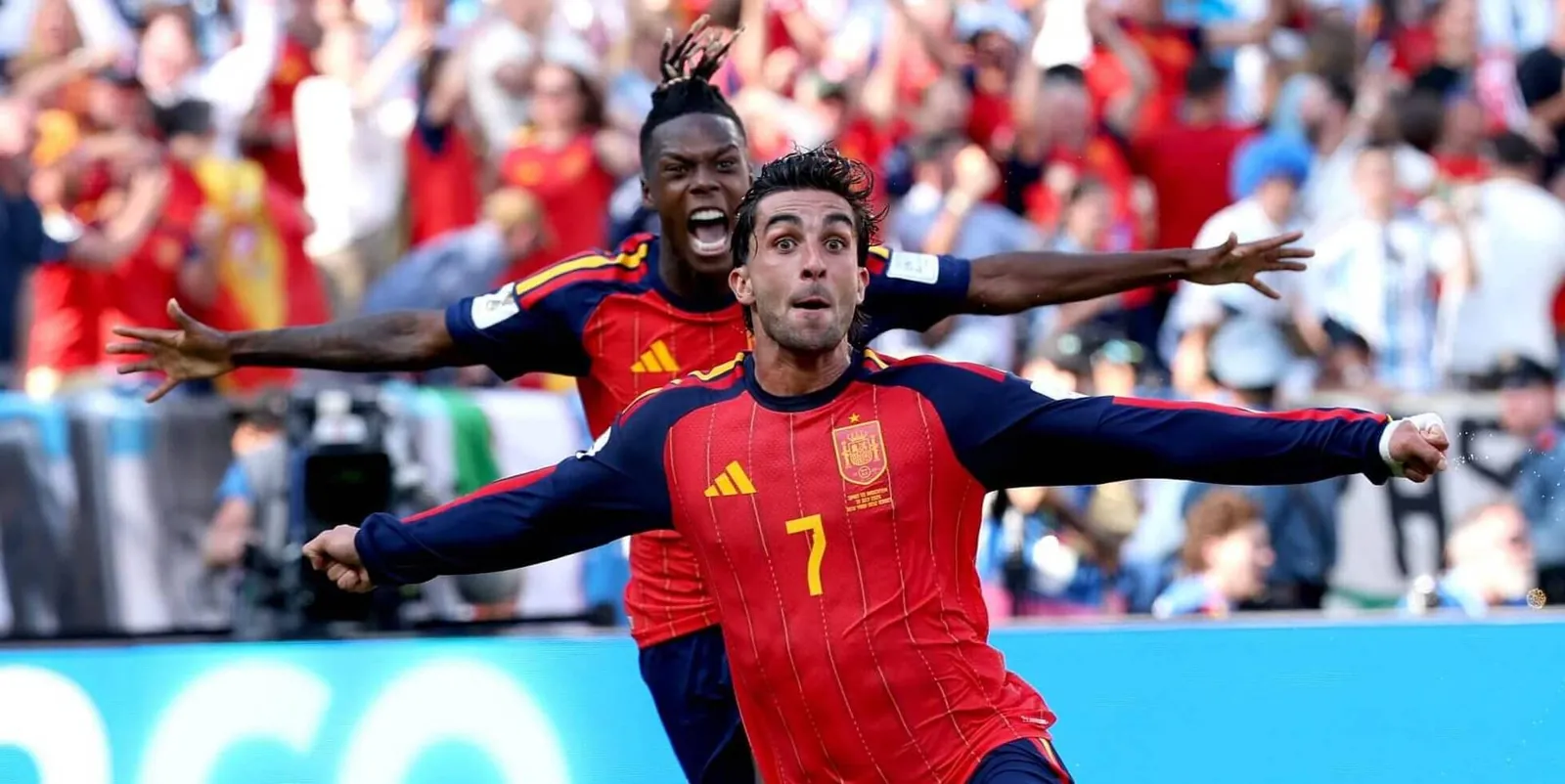
Spain’s consistent performance and historical achievement
Spain‘s victory marks their second World Cup title, with their first coming in 2010. This win also makes Spain the first nation to simultaneously hold both the men’s and women’s World Cup crowns. The team’s strong defensive record, allowing only one goal in eight matches, set a new World Cup record for the fewest goals conceded by a champion.
Under coach Luis de la Fuente, Spain has maintained an impressive unbeaten streak of 38 matches, consisting of 29 wins and nine draws. This achievement establishes them as the outright holder of the longest such streak by any European team. De la Fuente, at 65, also became the oldest coach to lead a team to a World Cup title.
The final was part of the largest FIFA World Cup in history, with matches hosted across three countries. The event concluded a 39-day tournament that saw over six million fans attend games. The final itself was preceded by a closing ceremony featuring musical performances from artists such as Post Malone and Robbie Williams, with Jennifer Hudson performing the national anthem.
The match was attended by various global figures and celebrities, including President Trump, members of the Spanish Royal Family, and Canadian Prime Minister Mark Carney. Security measures were a key focus for the event, with federal, state, and local law enforcement coordinating extensively for over a year to ensure safety.
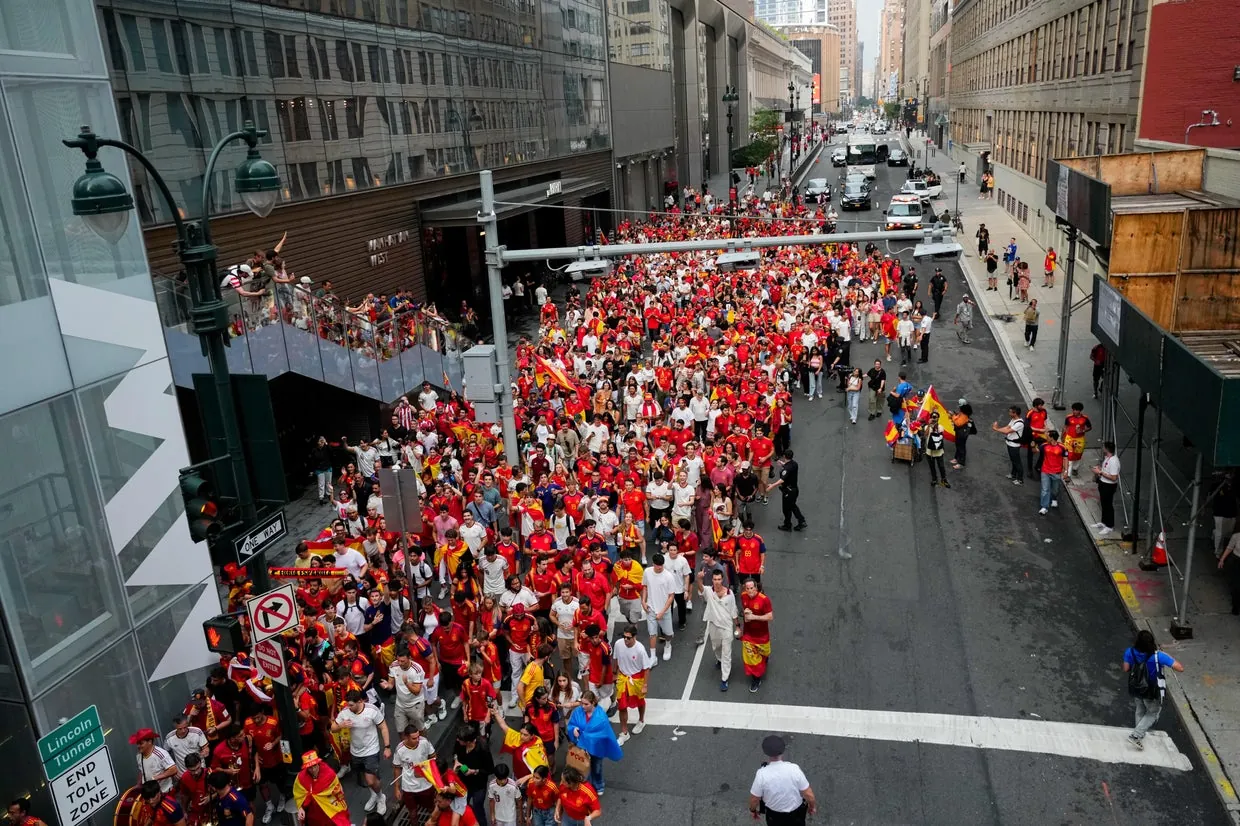
This was only the second time Spain has competed in the final, having previously won in 2010.
Source: nytimes.com