
As the World Cup concluded, the focus of the sports world shifted to college football, with the Southeastern Conference (SEC) media days commencing in Tampa. This transition from international soccer to American football was marked by the appearance of Oklahoma coach Brent Venables at the podium, signaling the unofficial start of the college football season.
The SEC has historically presented itself as the premier conference in college football, a sentiment echoed even in the WiFi password at the event: 2026IJMM, signifying “It Just Means More.” Despite this long-standing self-perception, recent seasons have seen a shift in the landscape, with the Big Ten emerging as a significant challenger.
Shifting Conference Dynamics
SEC Commissioner Greg Sankey highlighted the league’s achievements during his opening remarks, noting that SEC football remains the second most-watched sports property in the United States, trailing only the National Football League. He also pointed out the impressive average attendance for SEC football games, which stands at 80,000 fans per game, making it the highest average attendance for any sport globally.
Furthermore, Sankey mentioned that the SEC secured 13 national championships across various sports during the past school year, surpassing its previous record of 10. However, a notable omission from his remarks was the absence of a football national championship among these titles for the third consecutive season. This marks the league’s longest drought in football national championships since the period from 1999 through 2002.
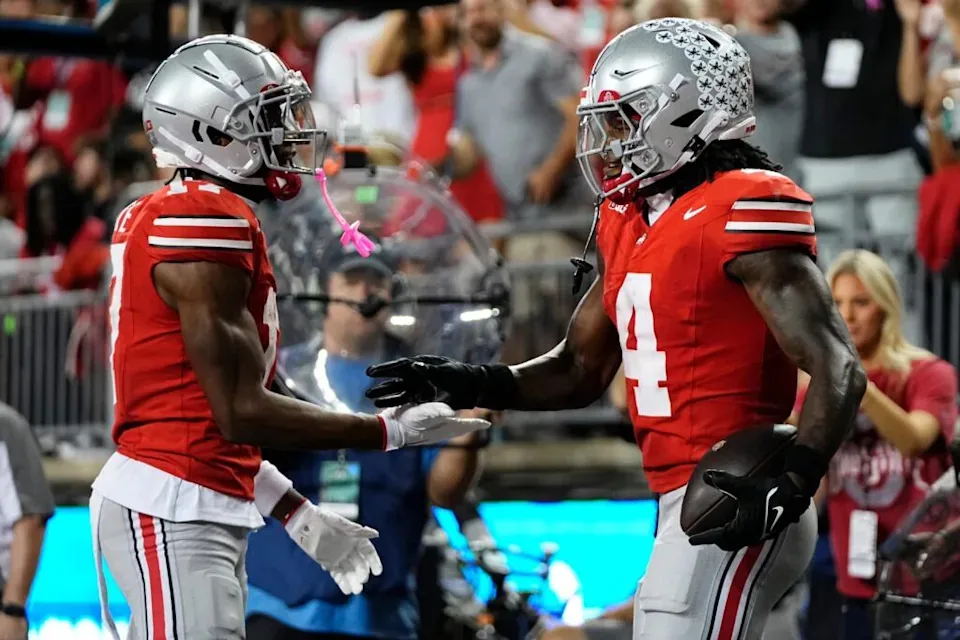
In contrast, the Big Ten has experienced a period of significant success, securing the last three national titles in football, with these championships distributed among three distinct teams. The Big Ten has also demonstrated its strength in head-to-head matchups against its conference rivals, holding a 4-0 record over the past three seasons.
Financial and Leadership Changes
The financial aspect also underscores the Big Ten’s recent ascendancy. While the SEC reported earnings exceeding $1 billion for the first time last year, the Big Ten surpassed this with $1.74 billion in revenue. This financial strength is partly attributed to a substantial media-rights deal and strategic expansion that has extended the Big Ten’s geographical reach from coast to coast.
Former Big Ten Commissioner Kevin Warren, who later moved to the Chicago Bears, was instrumental in negotiating the critical television deal and leading the westward expansion of the conference. This expansion, coupled with the on-field success of teams like Oregon, which achieved a College Football Playoff quarterfinal berth followed by a semifinal spot in its two years, has contributed to a strong foundation for the Big Ten.
The SEC’s current challenges coincide with significant changes in leadership, including the retirement of coach Nick Saban. Several traditional powerhouses within the SEC have also experienced downturns. For instance, Auburn has recorded five losing seasons and an average of 6.9 wins per year since its 2013 national title. Florida, a program that won two national titles under Urban Meyer, has seen four head coaches since, with none finishing higher than sixth nationally.
This season introduces six new head coaches within the SEC, including Alex Golesh at Auburn, Jon Sumrall at Florida, Will Stein at Kentucky, Ryan Silverfield at Arkansas, Pete Golding at Ole Miss, and Lane Kiffin at LSU. The presence of these new leaders suggests a potential shift in the league’s dynamics as it seeks to address its recent football championship drought.
Conference Rankings and Outlook
Despite the Big Ten’s recent dominance, the SEC is still considered a powerhouse in college football. Rankings for the 2026 college football season continue to place the SEC at the top, recognized for its combination of elite national championship contenders, overall depth, and the consistent challenge of its weekly games. Teams such as Georgia, Texas, LSU, Alabama, Texas A&M, Oklahoma, Ole Miss, Tennessee, Florida, Auburn, and South Carolina are all seen as having realistic aspirations for major bowl games or the expanded College Football Playoff.
The strength of the SEC is often attributed not just to its top teams but also to its competitive middle tier, where even programs coming off disappointing seasons possess significant recruiting talent. This depth makes it a conference capable of producing multiple CFP semifinalists.
The Big Ten ranks second, boasting elite teams like Ohio State, Indiana, and Oregon as national title contenders, with USC and Michigan also having the talent for deep playoff runs. However, the conference is noted for a noticeable drop-off in strength after its top programs, lacking the deep middle class seen in the SEC.
The Big 12 is positioned third, characterized by its unpredictability and depth, though it lacks a clear national title favorite. Teams like Utah, BYU, and Texas Tech are building momentum, but the conference’s overall star power is considered less than the top two. The ACC is ranked fourth, facing more questions than answers, with Miami appearing to be its primary national contender, and other programs like Clemson, Florida State, North Carolina, Louisville, and NC State having significant uncertainties entering the season.
The upcoming season will reveal whether the SEC can reclaim its football championship dominance or if the Big Ten’s recent success represents a more lasting shift in the college football landscape. The SEC continues to draw an average of 80,000 fans per game, maintaining its status as a highly attended sport.
Source: cnn.com