
Introduction
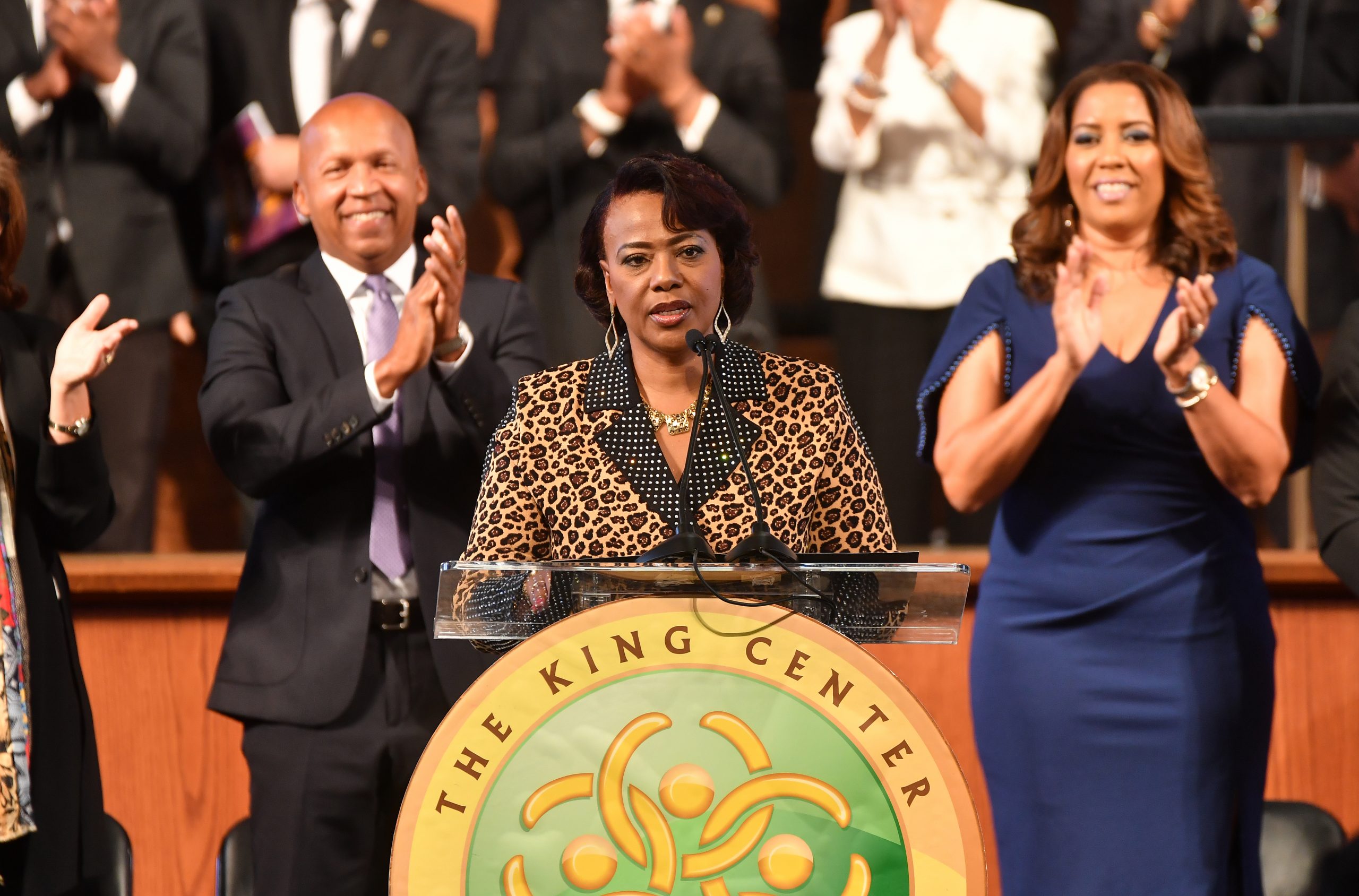
Bernice King, the youngest daughter of the legendary civil rights leader Martin Luther King Jr. and Coretta Scott King, continues to carry forward her family’s mission of advocating for justice and equality. As the CEO of The King Center in Atlanta, Bernice plays a pivotal role in promoting nonviolent activism and social change, making her a significant figure in today’s discussions on civil rights.
Current Initiatives and Advocacy
In recent months, Bernice King has emerged as a prominent voice in the ongoing fights against systemic racism, police brutality, and social injustice. In December 2022, she led a candlelight vigil to commemorate the 10-year anniversary of the Sandy Hook school shooting, emphasizing the need for stronger gun control measures. Furthermore, her public engagements often address current civil rights challenges, including voting rights and criminal justice reform.
In her capacity as CEO of The King Center, Bernice has spearheaded several educational programs aimed at enlightening the public on the principles of nonviolence taught by her father. She works diligently to ensure that Martin Luther King Jr.’s legacy lives on through workshops, community outreach, and collaboration with various organizations advocating for social justice.
Public Recognition and Honors
Bernice King has received numerous honors for her work, including being recognized by the United Nations for her advocacy efforts. She regularly speaks at conferences and forums, bringing attention to the relevance of her father’s teachings in today’s world. Additionally, she has been an active participant in commemorative events recognizing key milestones in the civil rights movement, including the annual Martin Luther King Jr. Day celebrations, which draw thousands of participants from around the nation.
Conclusion
As America continues to grapple with issues of equity and justice, Bernice King’s voice remains crucial. She not only preserves the history of the civil rights movement but also inspires a new generation to remain engaged in the fight for social justice. Her work emphasizes that the legacy of nonviolent protest is not only relevant but essential in advocating for change. As we look forward, Bernice King’s contributions will likely shape the ongoing dialogue surrounding civil rights, making her an indispensable figure in both historical and contemporary contexts.