
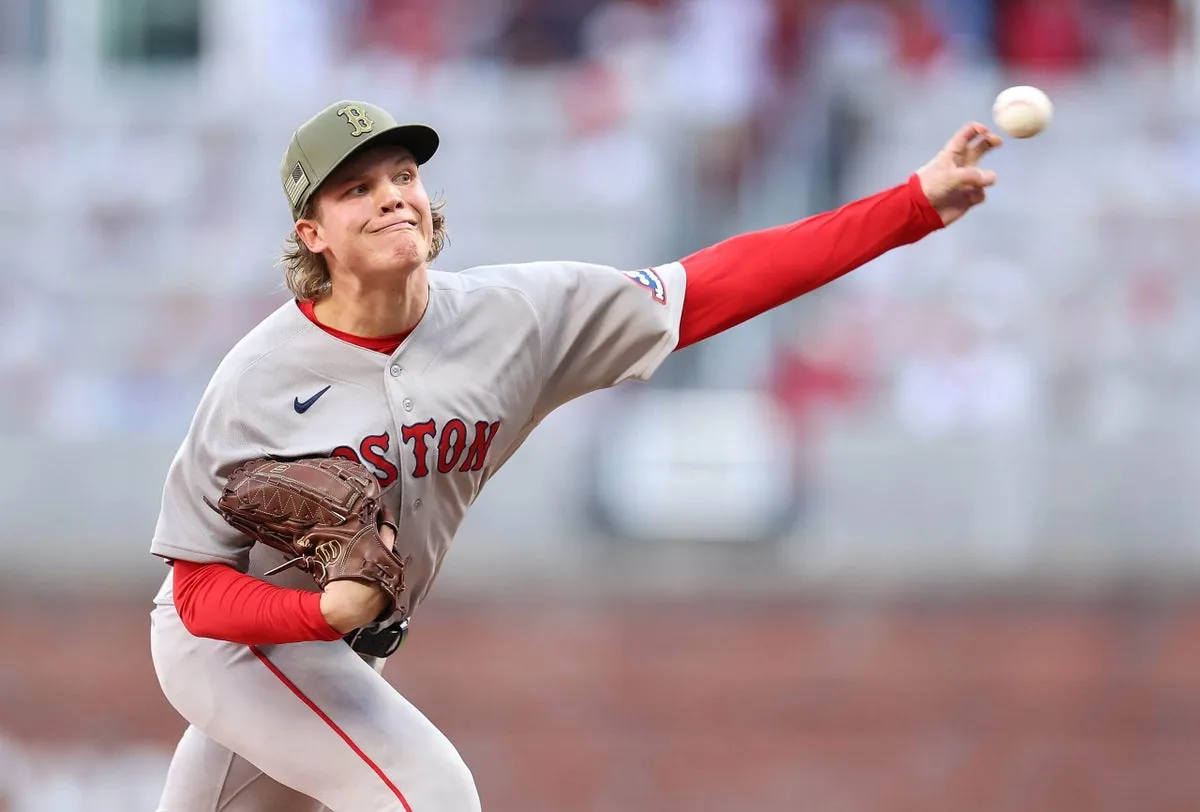
The Boston Red Sox have acquired infielder Curtis Mead from the Washington Nationals in a trade that sent left-handed pitcher Connelly Early to Washington. This move addresses Boston’s need for an additional bat, particularly one with power, by trading from an area of organizational strength.
Mead, who is now with his fourth organization, has had a notable offensive season, hitting 17 home runs. His performance this year suggests a sustainable breakout, driven by improved swing decisions and an increased ability to pull the ball in the air. He has also shown a strong plate discipline, with a low strikeout rate of 19% and a walk rate of 11%. His chase rate stands at 25.2% and his whiff rate at 17.8%, placing him among the best in the majors in these categories.
Mead’s Hitting Profile and Potential Role
Mead’s swing mechanics have evolved, with him now adopting a more upright stance at the plate, starting his hands lower, and maintaining a closed stride. This contrasts with his previous tendency to stride open and pull off the ball. His current approach focuses on hitting pitches on the inner half of the plate where he can generate significant power. This season, his pull air rate is 22.5%, which is above the league average and his career average.
The infielder’s hitting profile, characterized by his ability to pull the ball and his disciplined approach, suggests he may find Fenway Park to be an ideal environment. While his home run numbers might see a slight decrease, with an expected 14 homers in Fenway compared to his actual 17 homers this season, his batting average could potentially increase. Fenway Park is known to boost park factors for singles to 105 and doubles to 104, although right-handed homers have a park factor of just 101.
The Red Sox have indicated plans to utilize Mead at second base, though he could also see time as a designated hitter. He is considered a stronger hitter than Caleb Durbin, the Red Sox‘s third baseman, and might get some opportunities at third base depending on other roster adjustments. Mead has not exhibited a platoon split this season, maintaining an OPS over .800 against both left-handed and right-handed pitchers. Early reports suggest manager Chad Tracy is interested in keeping Durbin at third and deploying Mead at second base, which would shift Anthony Seigler into a less regular role and keep Masataka Yoshida at DH.
Early’s Development and Injury Status
In exchange for Mead, the Nationals acquired Connelly Early, a left-handed pitcher drafted by the Red Sox in the fourth round in 2024. Early’s value has increased due to improved velocity, and he currently works with six different pitches. His four-seamer sits at 94, and his sweeper has been his most effective pitch since reaching the big leagues. He also benefits from plus extension out front.
Despite his development, Early has experienced more hard contact than anticipated this year, particularly from right-handed batters. This is partly attributed to his lower arm slot and a tendency to start from the first-base side of the rubber, which causes his changeup to run back towards righties, making it susceptible to hard contact if it hangs. This has led to a significant platoon split. His changeup is graded as a 55 or better on the traditional scouting scale. The sweeper is his only pitch on which he has not allowed a home run this year, suggesting it could be a key to mitigating his issues with hard contact.
Early is currently on the injured list due to left elbow inflammation. He is scheduled to make a rehab start next week. The Nationals, with their need for young starting pitching, view this trade as a beneficial move. Paul Toboni, the Nationals‘ president of baseball operations, and several of his hires previously worked for the Red Sox, indicating a familiarity with Early’s potential.
The trade is seen as a strategic move for the Nationals, who had previously acquired Mead in a minor trade in March. In that earlier deal, they sent Boston Smith to the White Sox. Both Smith and Mead have had breakout years since that transaction.
Source: fantasy.fangraphs.com