
Introduction
The polar vortex is a significant atmospheric phenomenon that influences winter weather patterns across the Northern Hemisphere. As we approach winter 2023, forecasters are paying close attention to a potential polar vortex split, a development that could lead to severe winter weather across parts of the United States. Understanding this phenomenon is crucial for predicting cold snaps, snowstorms, and other extreme weather events that can impact daily life.
What is the Polar Vortex?
The polar vortex refers to a large area of low pressure and counterclockwise winds surrounding the Earth’s poles. During winter, the polar vortex strengthens, keeping frigid air contained near the Arctic. However, sometimes it can weaken or split, causing colder air to spill southward into mid-latitude regions, including parts of North America and Europe.
Forecasting a Split
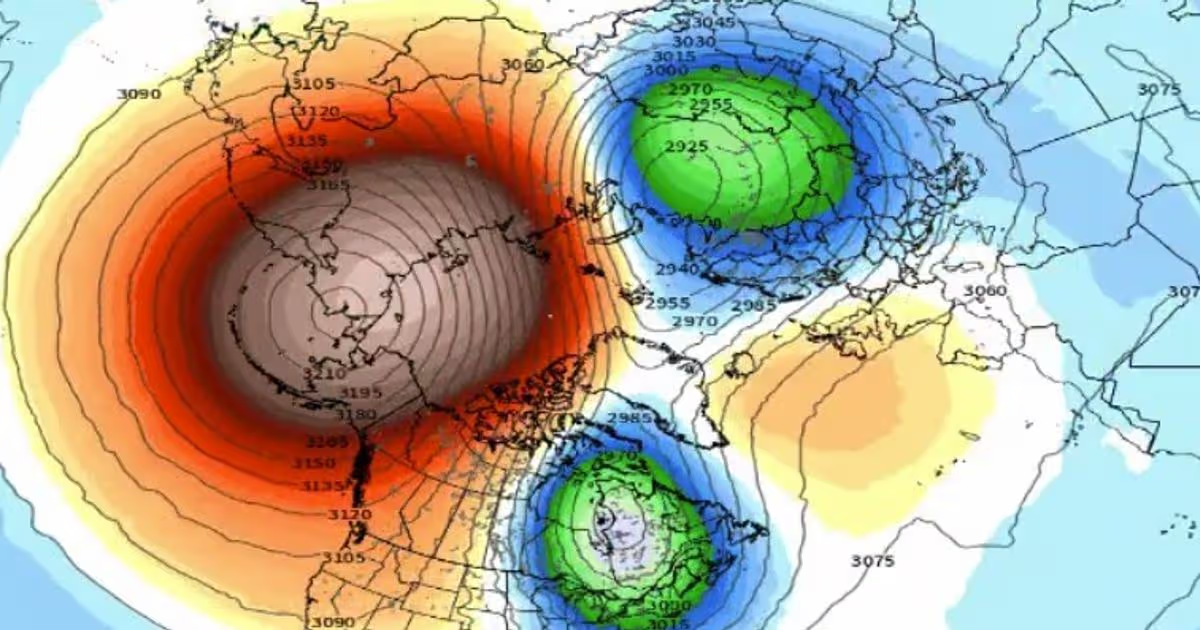
Recent forecasts from the National Weather Service indicate that there is a 50-50 chance of a polar vortex split occurring this winter. When such a split happens, it can result in two distinct lobes of cold air. One lobe may remain centered over the Arctic, while the other drifts south, potentially leading to cooler temperatures and increased snowfall in affected areas.
Previous polar vortex splits have resulted in severe cold outbreaks, as seen in the winter of 2013-2014 when much of the U.S. experienced extreme temperatures and heavy snowfall. Meteorologists are closely monitoring atmospheric conditions, including stratospheric temperatures and wind patterns, to predict if and when a split might occur.
Potential Impacts
If a polar vortex split does occur, regions of the Midwest and Northeast U.S. could face prolonged cold spells and significant snowfall. Such conditions could disrupt travel, impact heating costs, and pose health risks for vulnerable populations. Forecasters advise residents in these areas to prepare for winter weather by staying informed about updates and taking necessary precautions.
Conclusion
The potential for a polar vortex split is a reminder of the complex interplay between atmospheric phenomena and seasonal weather patterns. As scientists continue to improve their predictive models, understanding these dynamics will be critical for anticipating winter weather extremes. For now, monitoring the forecast closely and being prepared for sudden changes in weather will be essential for those in areas potentially affected by the polar vortex split.