
Introduction
The National Weather Service (NWS) has issued several dense fog advisories across various regions in the United States, signifying the importance of understanding this weather phenomenon. Dense fog can reduce visibility significantly, posing risks for drivers and pedestrians alike. Awareness about these advisories is crucial to ensure safety on the roads and in the community.
Current Dense Fog Advisories
As of recently, multiple states are under dense fog advisories due to stagnant weather patterns contributing to reduced visibility levels. States including California, Texas, and parts of the Northeast have reported visibility dipping as low as one-quarter mile in areas affected by the fog. These advisories are often issued during the early morning and late-night hours when temperatures drop and humidity rises, leading to fog formation.
Impact on Travel and Safety
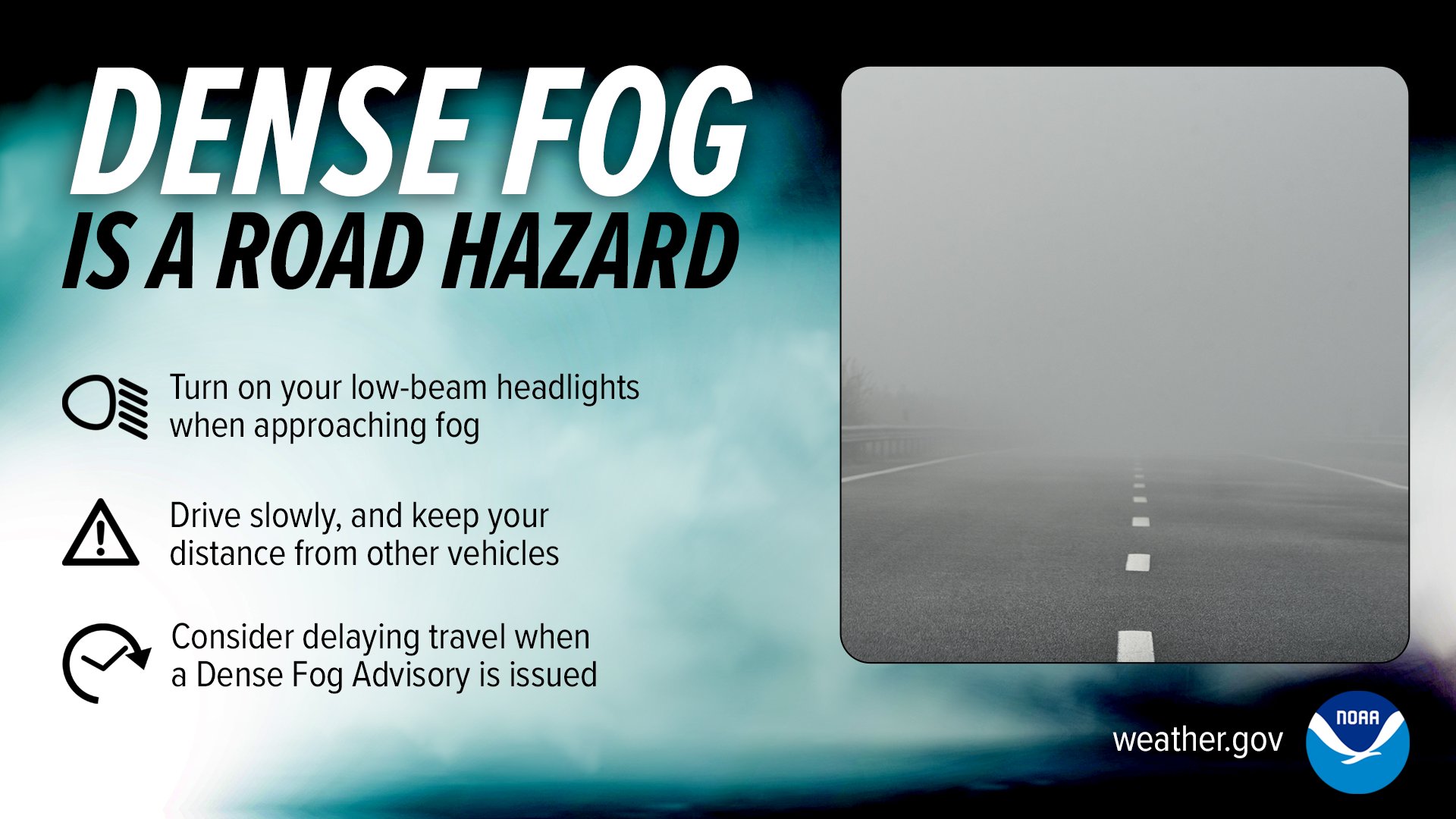
Travelers are being urged to exercise caution if they must drive during these conditions. The NWS recommends that drivers slow down, increase following distance, and use low-beam headlights to navigate through fog safely. Road conditions can become hazardous quickly due to the unpredictability of fog, and even local airports can experience delays as flights become grounded or diverted. Additionally, pedestrians are advised to remain vigilant, wearing reflective clothing and avoiding crossing streets in low visibility.
Forecasts and Weather Patterns
According to meteorologists, the occurrence of dense fog advisories may persist in certain areas as high-pressure systems dominate, leading to clear skies at night which cools rapidly, forming conditions ideal for fog development. As warmer temperatures approach with the change of seasons, the likelihood of these advisories may decrease; however, intermittent fog will still be possible, mainly in rural and low-lying areas.
Conclusion
In summary, understanding the implications of dense fog advisories is vital for personal safety and effective travel planning. As conditions continue to fluctuate with the weather, staying updated on alerts from the NWS and adhering to safety protocols is imperative. Forecasts indicate a gradual transition towards milder weather patterns may alleviate these concerns, but vigilance remains key in the meantime. The community must come together to prioritize safety and preparedness during adverse weather conditions.