
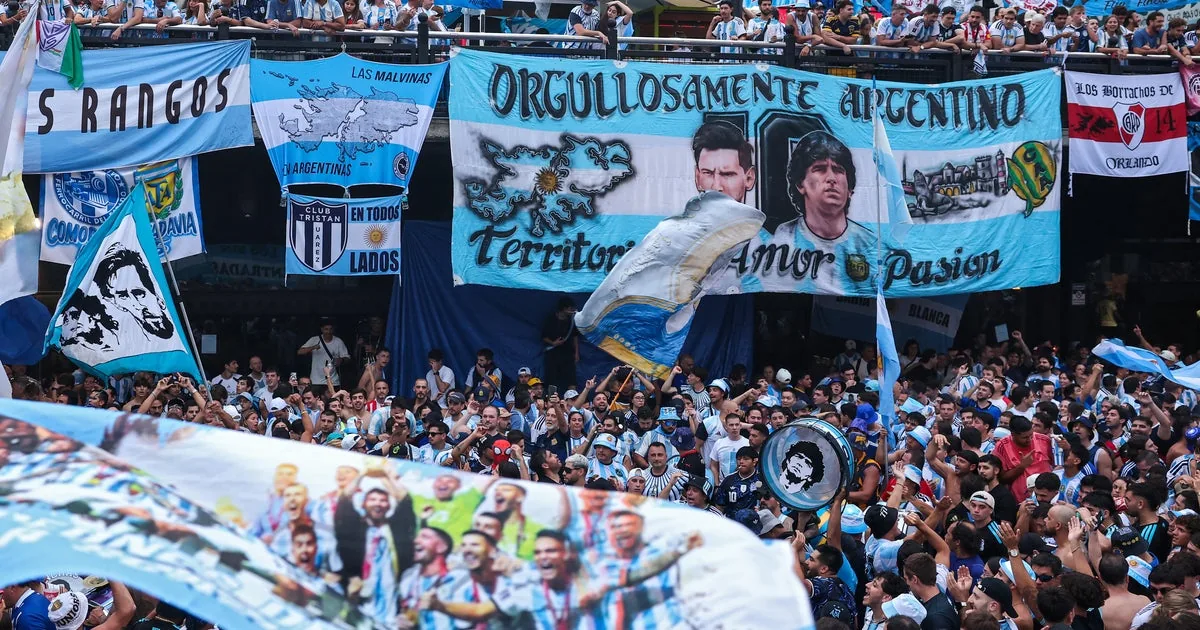
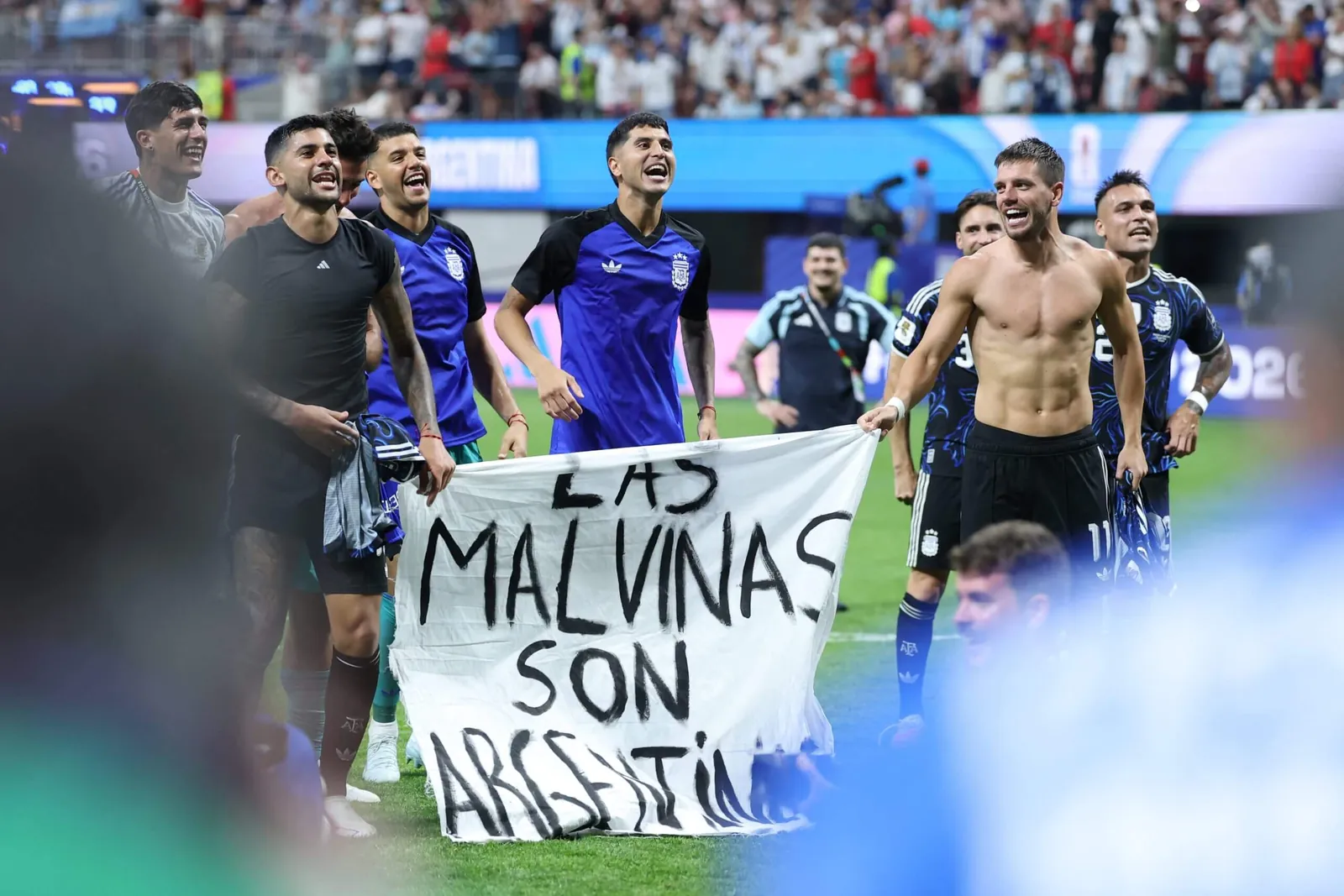
The Argentinian national soccer team could face sanctions from FIFA after players displayed a controversial banner referencing the Falkland Islands following their semi-final victory over England. The incident occurred after Argentina secured a 2-1 comeback win, with players celebrating on the pitch at Mercedes-Benz Stadium in Atlanta.
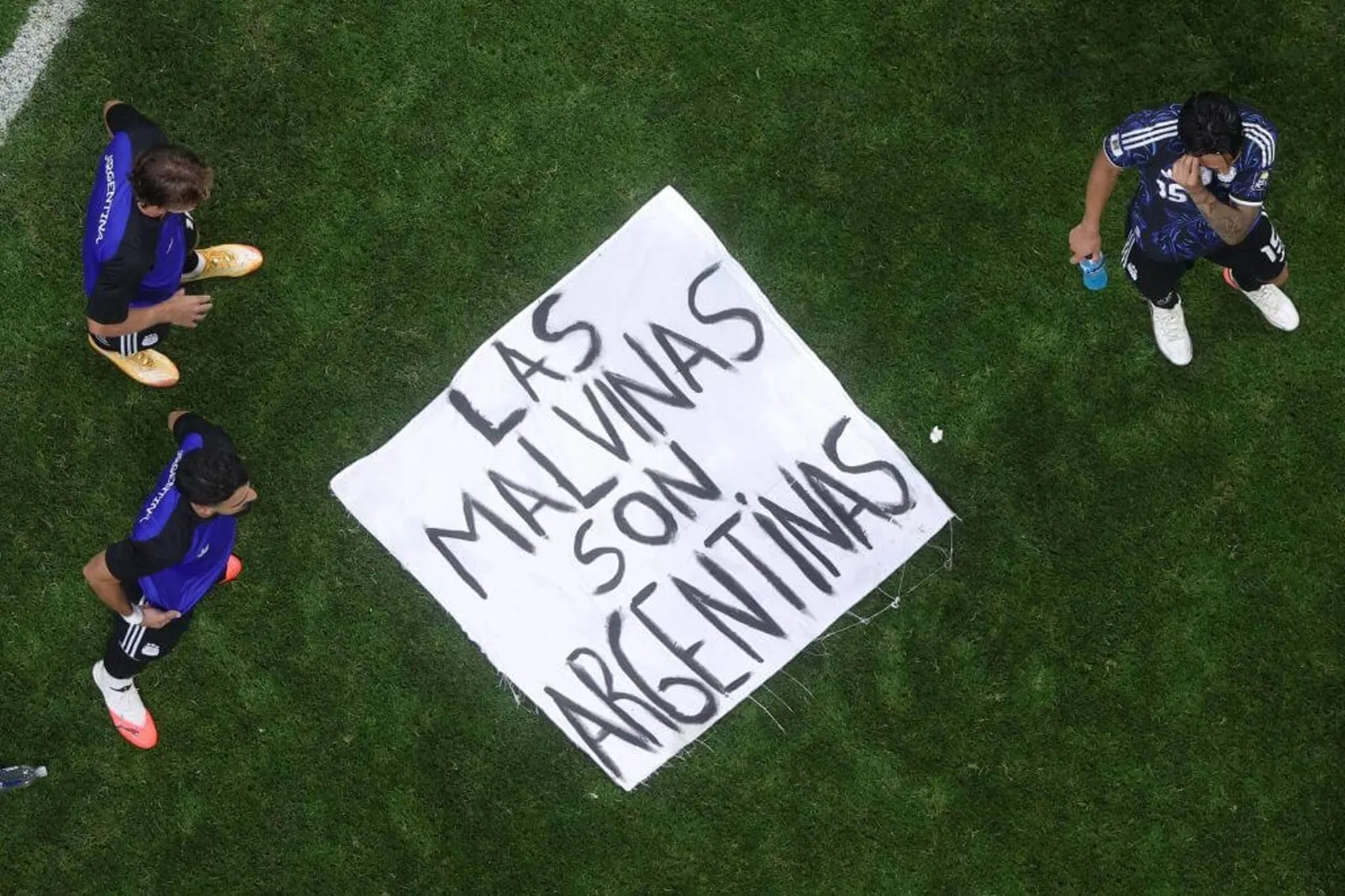
The banner, which read “Las Malvinas son Argentinas” (Malvinas are Argentinian), was held up by several players, including Giovani Lo Celso, Lisandro Martínez, and Nicolas Otamendi. Lo Celso was seen holding the banner before laying it face up on the field. It is not clear whether the banner was brought into the stadium by the players or obtained from supporters in the crowd.
Potential Rule Violations
The display of the banner may violate FIFA’s stadium code of conduct for the 2026 World Cup. This code prohibits materials of a political, offensive, or discriminatory nature, including banners, flags, and apparel, that contain wording or symbols aimed at discrimination against a country or group based on political opinion or other grounds.
Additionally, the International Football Association Board (IFAB), which sets the laws of the game, has clear rules against political messaging on the field. IFAB’s rulebook states that player equipment “must not have any political, religious or personal slogans, statements or images.” Violations can lead to sanctions for the player and/or the team by the competition organizer, national football association, or FIFA.
FIFA has a history of penalizing similar actions. In 2014, the Argentine Football Association was fined for a similar display involving a banner with the same text, “Las Malvinas son Argentinas.” At that time, FIFA cited a breach of its rules on “political action” and team misconduct.
Historical Context of the Dispute
The Falkland Islands, known as Las Malvinas in Argentina, are a British overseas territory in the South Atlantic. Argentina claims sovereignty over the islands, which have been under de facto British control since 1883, with the exception of a two-month period in 1982.
The dispute escalated into the Falklands War in 1982 when Argentina’s military government invaded the islands. The conflict lasted from April to June and concluded with an Argentine surrender and British forces regaining control. The war resulted in the deaths of 649 Argentine soldiers, 255 British troops, and three civilians.
Despite the military defeat, Argentina continues to assert its claim, amending its constitution in 1994 to reflect this. Residents of the islands have held referendums on sovereignty, with a significant majority voting to remain under British rule in both 1986 and 2013.
The rivalry between England and Argentina extends beyond the soccer field, often intertwined with the historical context of the Falklands War. Past matches, such as the 1986 World Cup quarterfinal, have been marked by this tension. In that match, Diego Maradona scored a controversial goal, later describing it as “a little with the head of Maradona, and a little with the hand of God,” and as a symbolic revenge against the English.
Next Steps for FIFA
FIFA has not yet commented on whether it will take action against the Argentinian team. The organization typically waits for match reports to be submitted before making a decision, and there is no specified timeframe for such assessments. It also remains unclear if the English Football Association will file any complaints regarding the incident.
Any decision by FIFA is likely to be closely scrutinized, particularly amidst ongoing discussions regarding potential favoritism towards Argentina and its prominent player, Lionel Messi. Argentina’s vice-president, Victoria Villarruel, shared posts on social media platform X referencing the islands and stating, “The Malvinas are Argentine! They banned us from bringing them to the stadium, but they forgot that we carry them in our blood and in our hearts.”
Argentina, the reigning world champion, is scheduled to play Spain in the final at MetLife Stadium on Sunday.
Source: forbes.com