
Introduction
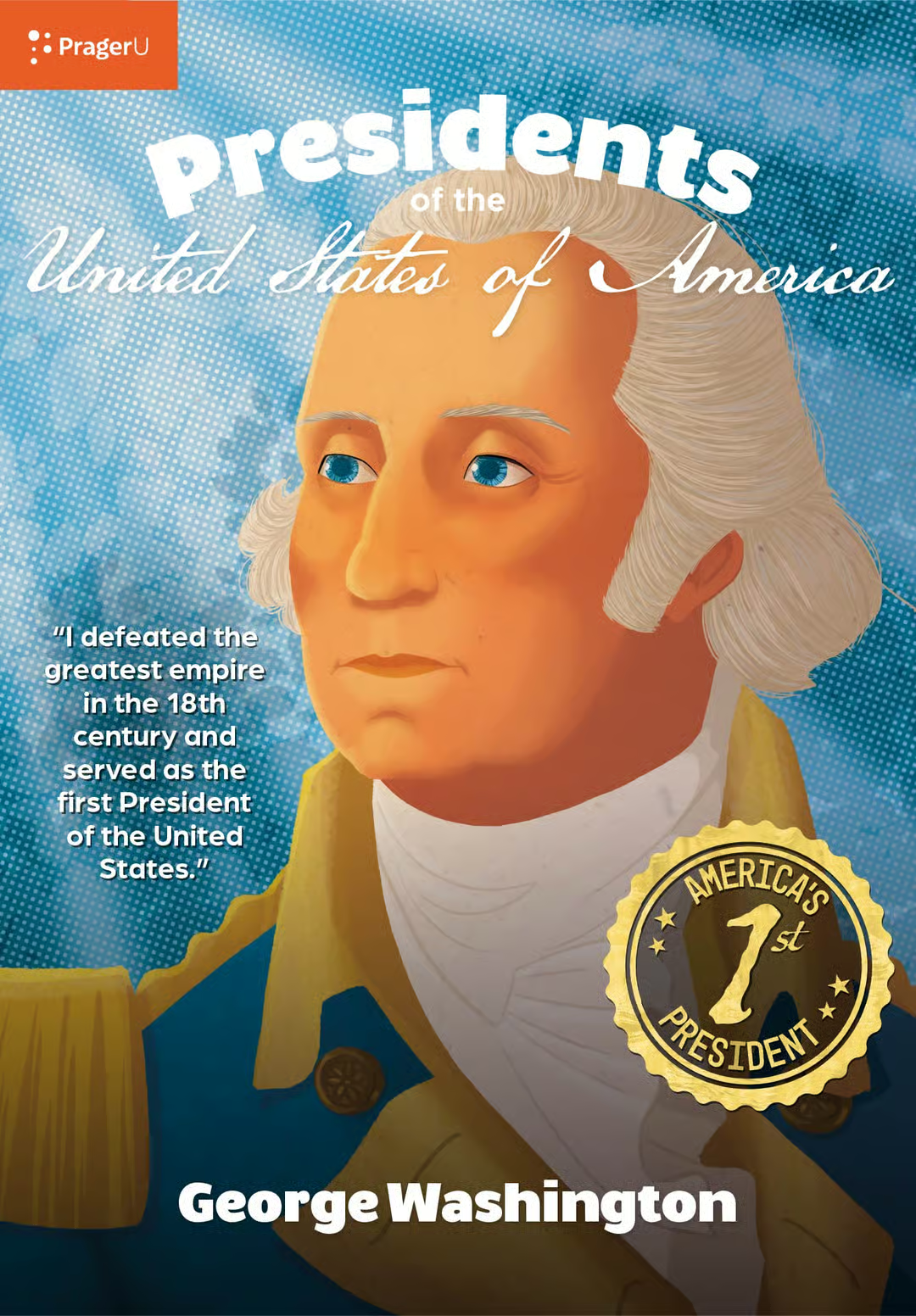
George Washington, known as the Father of His Country, played a crucial role in shaping the United States of America. His leadership during the American Revolutionary War, coupled with his presidency, established a framework for the nation’s governance and identity. As we approach significant anniversaries related to Washington’s life, it is imperative to reflect on his contributions, values, and the lessons they hold for contemporary society.
Washington’s Revolutionary Role
Washington was appointed as the commander of the Continental Army by the Second Continental Congress in 1775. His strategic leadership was instrumental in achieving victory against British forces. The most notable moments during his military career include the surprise attack at Trenton and the decisive victory at Yorktown in 1781. These triumphs not only secured American independence but also solidified Washington’s reputation as a revered leader.
Presidency and Foundations of Governance
After the war, Washington was unanimously elected as the first President of the United States in 1789. His presidency set numerous precedents, including the establishment of a cabinet and the protocol for future presidents. Washington’s Farewell Address in 1796 warned against political factions and foreign alliances, principles that continue to resonate in modern politics. His insistence on a government based on unity and the rule of law laid the groundwork for democratic governance.
Legacy and Relevance Today
Washington’s legacy extends beyond his military and political achievements. He championed values such as integrity, resilience, and public service. As current events reflect political polarization and complex global challenges, Washington’s vision for a united and strong America remains relevant. Educational programs and commemorations continually highlight his influence on American values and leadership.
Conclusion
George Washington’s impact on the United States is profound and multifaceted. His dedication to democracy and the rule of law created a foundation that has allowed the nation to grow and adapt through centuries of change. Understanding his life and principles invites us to ponder how we can embody the same spirit of resilience and unity in our contemporary society. As we reflect on his enduring legacy, it serves as a reminder of the great responsibility of leadership and civic engagement in today’s world.