
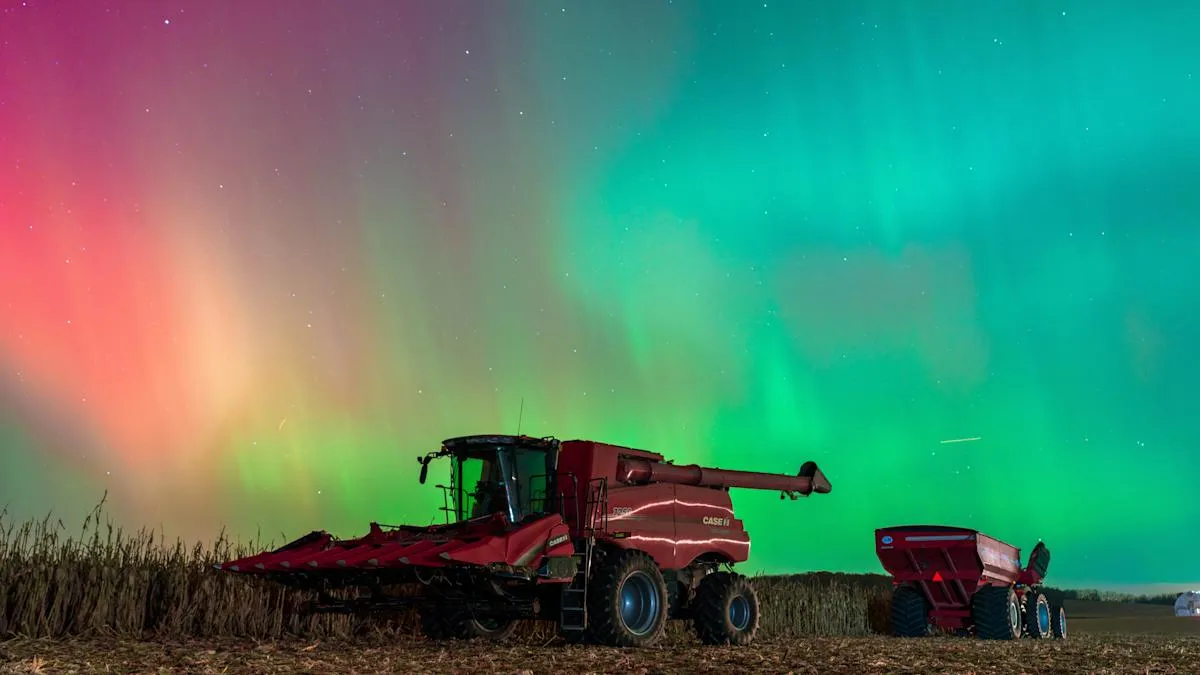
Changing Expectations for Aurora Viewing
Historically, the best opportunities to view the aurora borealis have been linked to specific times of the year, with March often cited as the peak month for sightings. This is attributed to a higher number of geomagnetically active days associated with the vernal equinox. However, the recent announcement from NOAA has shifted expectations dramatically, as a strong G3 geomagnetic storm is predicted to occur on December 9, 2025, following a significant coronal mass ejection from the sun just days earlier.
A Decisive Moment: The G3 Storm
The NOAA’s Space Weather Prediction Center has issued a geomagnetic storm watch, forecasting that auroras could be visible from late Monday night into Tuesday morning, and potentially again on Tuesday night. This storm, classified as G3, indicates that the auroras may reach further south than usual, with visibility expected in several states including Alaska, Washington, Oregon, Idaho, Montana, and many others across the Midwest and Northeast.
Immediate Effects on Aurora Visibility
As the storm approaches, the excitement among skywatchers is palpable. Caitlin Kaiser, a meteorologist, noted that parts of the Great Lakes, Midwest, and Northeast will have the best chances of witnessing the northern lights. However, she cautioned that thick cloud cover could hinder visibility in other areas. “If you do head out either night, make sure to bundle up! Most of the area will see temperatures dropping well below freezing,” she advised, emphasizing the need for preparation amidst the cold.
Expert Perspectives on the Shift
Experts have pointed out that the auroras are caused by fast-moving solar wind impacting the Earth’s magnetic field. This recent storm follows a ‘full-halo’ coronal mass ejection that occurred on December 6, 2025, which is a significant contributor to the current geomagnetic activity. According to NASA solar physicist David Hathaway, the data collected over 75 years indicates that March typically offers the best conditions for aurora visibility, yet this December event presents a unique opportunity for enthusiasts and casual observers alike.
Weather Conditions and Visibility Uncertainties
Despite the promising forecasts, uncertainties remain regarding the visibility of the auroras. Factors such as weather conditions and cloud cover will play a crucial role in determining how many people will actually be able to see the lights. The exact locations for visibility may vary based on local conditions, and details remain unconfirmed.
Looking Ahead: Future Aurora Events
In addition to the current storm, NOAA has already issued a geomagnetic storm watch for March 6, 2026, predicting that auroras may again be visible farther south than usual. This pattern suggests that solar activity could continue to provide opportunities for aurora viewing in the coming months, particularly around significant solar events like the vernal equinox.
The aurora borealis NOAA watch has generated significant interest as a strong G3 geomagnetic storm approaches, promising spectacular displays of the northern lights across the northern U.S. As observers prepare for this rare event, the interplay of solar activity and weather conditions will ultimately determine the visibility of these natural wonders.