
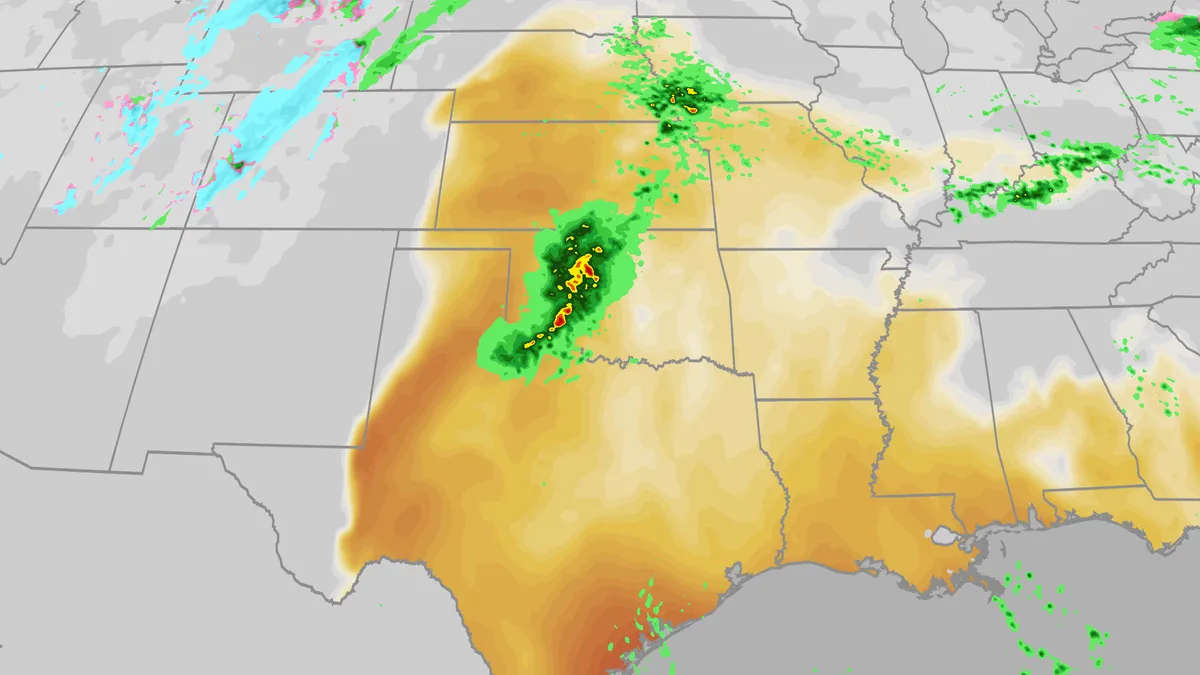
What is happening with the weather radar across the Central and Eastern U.S.?
Severe weather is underway across the Central and Eastern U.S., raising concerns about the potential for tornadoes, damaging winds, and large hail. Meteorologists are closely monitoring the situation using advanced weather radar technology to track these severe weather patterns.
As of March 5, 2026, the Southern Plains, Midwest, Mississippi Valley, and Ohio Valley regions are particularly vulnerable to these severe weather events. The National Weather Service has issued warnings and alerts, emphasizing the importance of staying informed and prepared.
What factors are contributing to the severe weather?
Key meteorological factors include the measurement of Convective Available Potential Energy (CAPE), which indicates the amount of instability in the atmosphere, and wind shear, the change in wind speed or direction with height. These elements are critical in the development of severe storms.
In addition to tornadoes, rainfall and flood reports are being tracked, with severe storm reports updated frequently to provide the latest information to the public.
What are the current conditions in specific cities?
In South Florida, high temperatures are expected to reach a warm 84 degrees Fahrenheit, accompanied by breezy conditions. Meanwhile, Chicago is experiencing a significant weather shift, with a 7-day forecast indicating a drop in temperatures. The high in Chicago is expected to reach 63 degrees on Saturday, followed by a warmer 70 degrees on Monday before plummeting to 61 degrees on Tuesday.
Heavy rain is anticipated in Chicago on Tuesday, with temperatures dropping to the 40s by Wednesday. This dramatic change in weather is part of a larger pattern of severe weather that is expected to last for several days.
What should residents do?
Residents in affected areas are advised to stay tuned to local weather updates and heed any warnings issued by authorities. The unpredictable nature of severe weather necessitates preparedness and vigilance.
Details remain unconfirmed regarding the exact impact of these storms, but the situation is evolving rapidly. Meteorologists continue to analyze data from weather radar to provide accurate and timely updates to the public.