
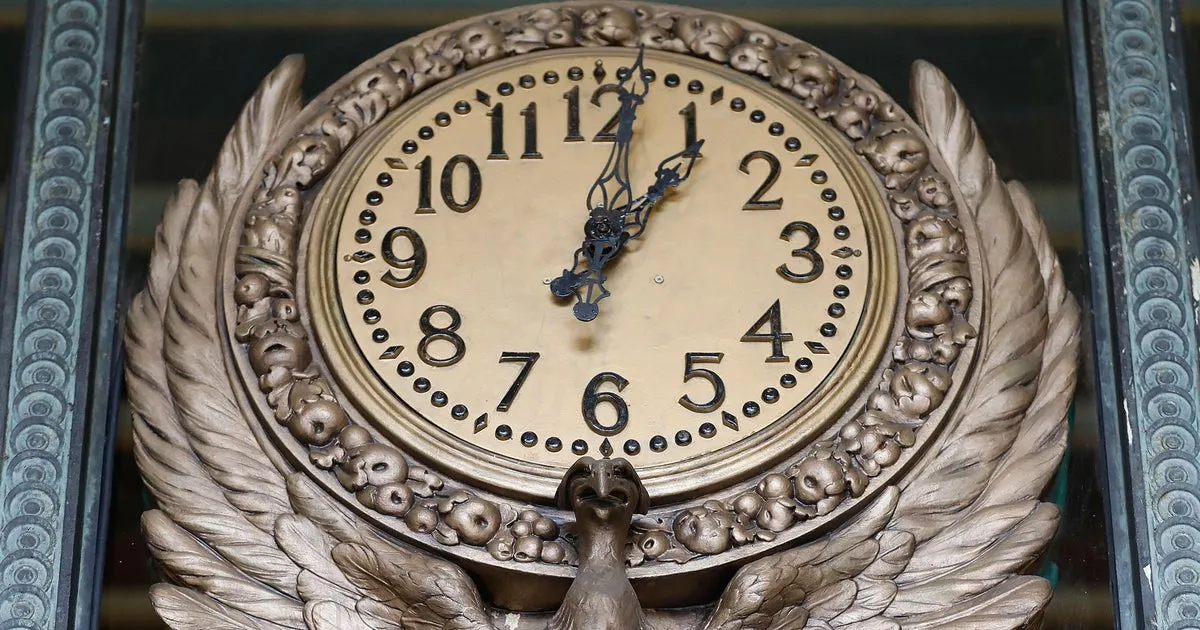
Daylight Saving Time Begins
“Most Americans will ‘fall back’ to standard time at 2 a.m. local time on the first Sunday of November,” a spokesperson from the U.S. Department of Transportation stated. This change marks the beginning of Daylight Saving Time (DST) for 2026, which started on Sunday, March 8, at 2 a.m. local time.
As the clocks sprang forward one hour, many Americans lost an hour of sleep. This annual adjustment is observed in most parts of the United States, with the notable exceptions of Hawaii and most of Arizona. The shift aims to provide extra sunlight during the spring, summer, and fall seasons, enhancing daylight hours for various activities.
Historically, Daylight Saving Time was first adopted in the U.S. in 1918 during World War I as a measure to conserve fuel. Since 2007, the start date for DST has been set on the second Sunday of March, aligning with the changing seasons.
In 2026, Daylight Saving Time will be in effect for a total of 238 days, concluding on November 1. This means that many regions will experience a shift in their sunrise and sunset times. For instance, in Boston, sunrise will occur at 7:08 a.m. after the time change, compared to 6:09 a.m. before the adjustment. Similarly, sunset will shift from 5:41 p.m. to 6:42 p.m.
Despite its intended benefits, the annual clock changes remain deeply unpopular among Americans. A recent YouGov poll indicated that two-thirds of respondents favor the permanent elimination of Daylight Saving Time. This sentiment reflects a growing frustration with the disruption caused by the time changes.
Interestingly, many Americans wrongly attribute the push for Daylight Saving Time to farmers. In reality, the practice was designed to optimize daylight for various sectors, not specifically agriculture.
As the nation adjusts to the time change, bars in Indiana, for example, can serve alcohol starting at 4 a.m. due to the DST regulations. This aspect of the time change highlights the broader implications of the clock adjustment on daily life.
Looking ahead, the next significant change will occur in November when clocks revert back to standard time. Until then, Americans will continue to adapt to the longer daylight hours provided by Daylight Saving Time.