
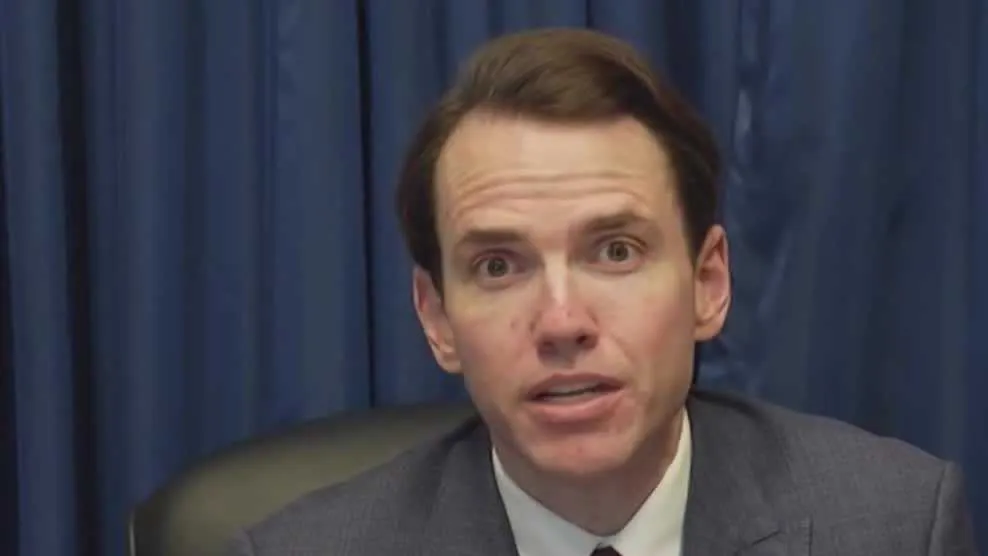
Political Landscape Before Kiley’s Decision
Before Kevin Kiley’s recent announcement, he was a member of the Republican Party, representing California’s 6th Congressional District. Elected as a Republican, Kiley was part of a narrow Republican majority in the House, which held 217 seats compared to the Democrats’ 214, with three vacancies. His position was seen as secure within the party framework, and expectations were that he would continue to align with Republican values and policies.
The Decisive Moment
On March 9, 2026, Kiley announced his departure from the Republican Party, effective immediately, stating that he would serve as an independent. This decision came in the wake of frustrations regarding partisanship and the inability of both major parties to collaborate effectively. Kiley expressed his discontent with the hyper-partisanship in Congress, saying, “It is no secret I’ve been frustrated, at times disgusted, by the hyper-partisanship in Congress.” His announcement included plans to run in California’s newly drawn 6th Congressional District as an independent, a move that reflects a growing trend among politicians seeking to distance themselves from party lines.
Immediate Effects on Political Dynamics
Kiley’s switch to independent status complicates the already narrow majority held by House Speaker Mike Johnson and the Republican Party. With Kiley now serving as the only independent member of the House of Representatives, the Republican count drops to 217 seats. This shift not only alters the dynamics within the House but also raises questions about the future of bipartisan cooperation. Kiley’s criticism of the redistricting process and its impact on representation has resonated with many constituents who feel their voices are not adequately represented.
Expert Perspectives and Historical Context
Political analysts note that Kiley’s situation is emblematic of the challenges faced by incumbents in the wake of redistricting wars, which have left many scrambling to salvage their political careers. The last independent to serve in the House was Rep. Justin Amash of Michigan, who left the Republican Party in 2019. Kiley’s decision to caucus with the Republican Party for the remainder of his term indicates a strategic move to maintain some level of influence while distancing himself from the party’s more extreme elements.
Broader Implications for Governance
Kiley’s departure from the Republican Party also highlights broader issues within American governance, particularly regarding the handling of significant issues such as government shutdowns and healthcare costs. Kiley has been critical of the government’s handling of these matters, emphasizing the need for a more collaborative approach to governance. His frustrations echo a sentiment shared by many voters who are increasingly disillusioned with partisan politics.
Looking Ahead
As Kiley embarks on his new role as an independent, the implications for California’s political landscape and the House of Representatives remain to be seen. His unique position may allow him to bridge gaps between the two major parties, but it also raises questions about the effectiveness of an independent voice in a highly polarized environment. Kiley’s future actions will be closely monitored as he navigates this new chapter in his political career.
Kiley’s transition to independent status marks a significant shift in California’s political dynamics, reflecting a growing frustration with partisanship and the challenges of representation. As the only independent member of the House, he may have the opportunity to influence bipartisan dialogue, but the path ahead is fraught with uncertainty.