
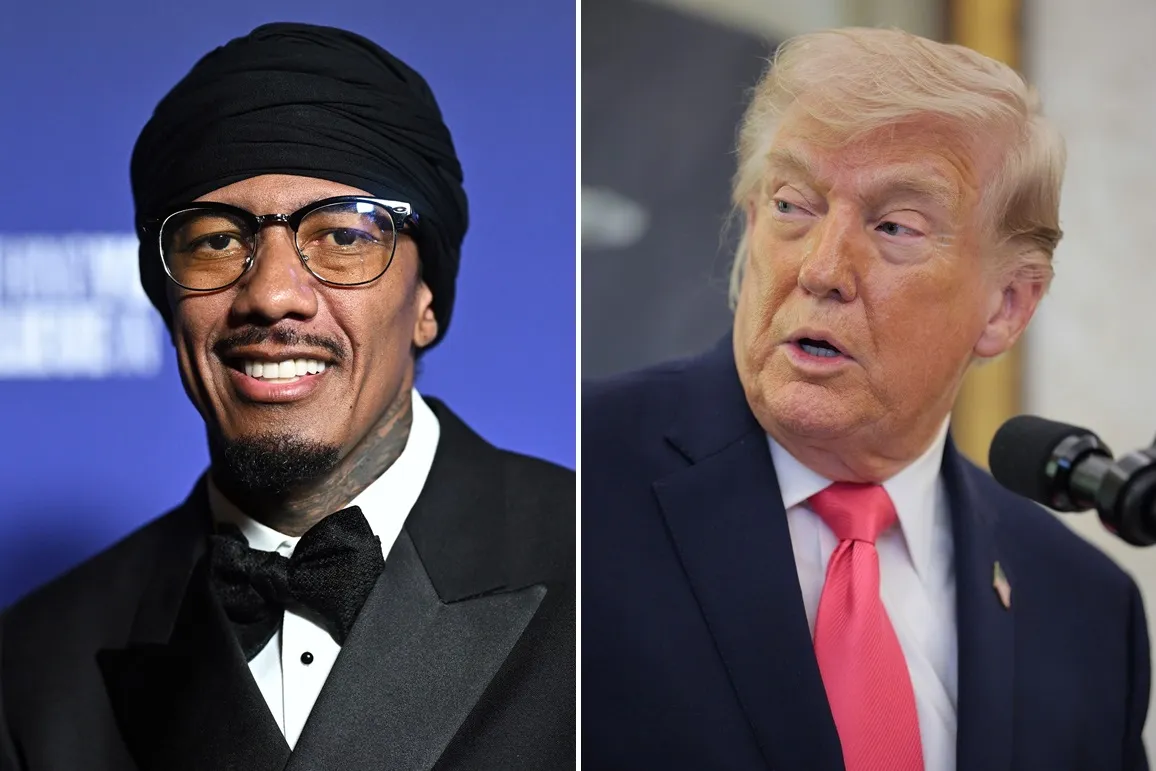
In recent years, Nick Cannon has been known for his entertaining persona, but his political views have taken a surprising turn. Previously, many expected him to align more closely with the Democratic Party, given his public persona and advocacy for social justice. However, a recent episode of his podcast, “The Big Drive,” aired on March 28, 2026, revealing a stark departure from these expectations.
During the episode, Cannon made headlines by labeling the Democratic Party as the “party of the KKK,” a statement that reflects a historical perspective on the party’s ties to racism and segregation. He argued that many people are unaware of this history, stating, “People don’t know that the Democrats are the party of the KKK.” This assertion contrasts sharply with the typical narrative that positions the Democratic Party as the champion of civil rights.
Moreover, Cannon expressed agreement with Amber Rose, who claimed that Republicans care more about people of color. This sentiment is particularly striking given the Republican Party’s historical association with the abolition of slavery under Abraham Lincoln. Cannon noted, “The Republican Party, under Abraham Lincoln, freed the slaves,” further complicating the usual political discourse.
In a bold declaration, Cannon stated, “I f*** with Trump,” praising the former president for “cleaning house” and fulfilling his promises. This endorsement of Trump is a significant shift, as many in the entertainment industry have been critical of the former president’s policies and rhetoric.
Cannon also referenced the thoughts of W.E.B. Du Bois, asserting that both major political parties are essentially the same, saying, “There’s no such thing as two parties. It’s just one evil party with two different names.” This perspective challenges the binary view of American politics and suggests a deeper disillusionment with the system.
The implications of Cannon’s statements are profound, as they may resonate with a segment of the population that feels disenfranchised by both parties. His willingness to voice these opinions publicly could influence his audience’s perceptions and political engagement.
As Cannon and Rose discussed their conservative views, it became evident that their positions are not merely reactions to current events but are rooted in a broader critique of the political landscape. This shift in Cannon’s political stance invites further discussion on the evolving nature of political identity in America.
Details remain unconfirmed regarding the potential impact of Cannon’s statements on his career and public image, but they undoubtedly add a new layer to his already complex persona.