
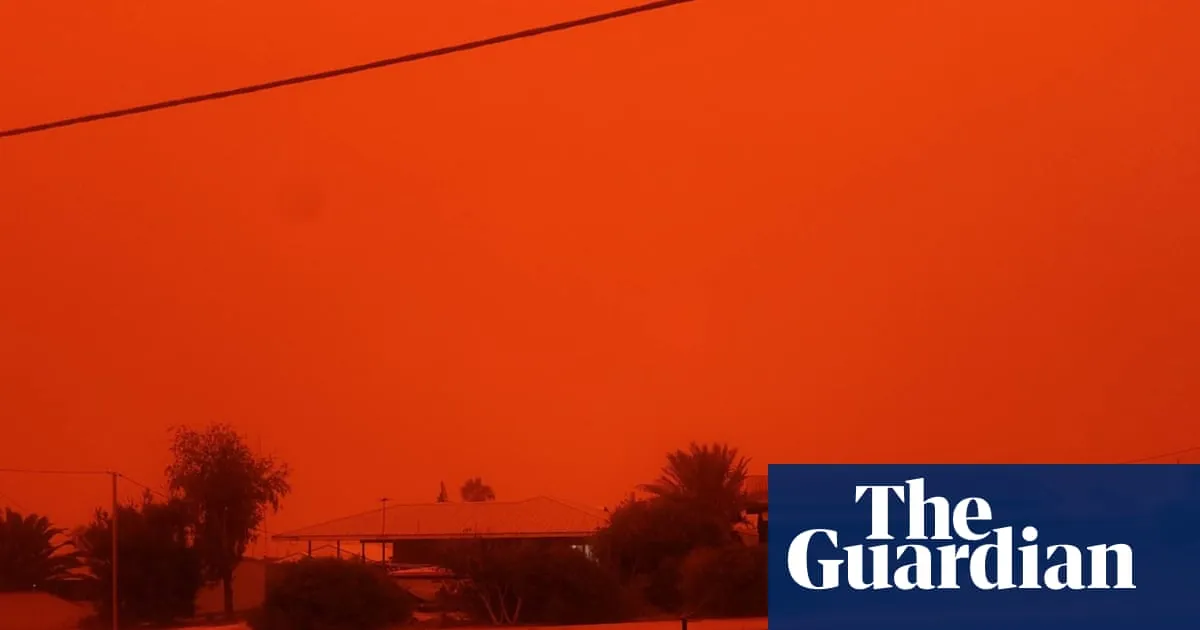
On March 27, 2026, the coastal region of Shark Bay in Western Australia experienced a dramatic weather event as Tropical Cyclone Narelle made landfall. Just before the cyclone arrived, locals witnessed an astonishing sight: the sky turned blood red, creating an eerie atmosphere.
The phenomenon was attributed to an iron-infused dust storm that swept through the area, contributing to the unusual coloration of the sky. High winds and rust-red, iron-rich soils played a significant role in this striking visual, which was captured in numerous videos shared online, showcasing streaks of fiery orange and red.
Reports indicate that the event lasted for several hours, leaving residents in awe. One local from the Shark Bay Caravan Park described the scene as “incredibly eerie outside, and everything is covered in dust. Not a lot of wind yet.” This vivid display was a precursor to the cyclone’s arrival.
Narelle’s landfall marked a significant moment in Australian meteorological history, as it became the first storm system in over 20 years to make landfall in three of Australia’s states and territories. The cyclone crossed into Western Australia roughly 900 kilometers north of Perth, impacting a wide area.
Jessica Lingard, a local resident, noted how Narelle whipped through the landscape, picking up dust and pushing it through places like Shark Bay ahead of the cyclone. This combination of natural elements created a striking visual spectacle that many will not soon forget.
As the cyclone progressed, the effects of the storm were felt across the region, with authorities monitoring the situation closely. The unusual red sky served as a stark reminder of the power of nature and the complex interactions between weather systems and local geography.
Currently, the situation remains dynamic as recovery efforts begin in the aftermath of the cyclone. Residents are assessing the damage and preparing for potential further weather challenges.
The events surrounding Tropical Cyclone Narelle and the accompanying red sky phenomenon are significant not only for the immediate impact on the community but also for the broader understanding of climate patterns in Australia. This sequence of events highlights the importance of preparedness and awareness in the face of natural disasters.