
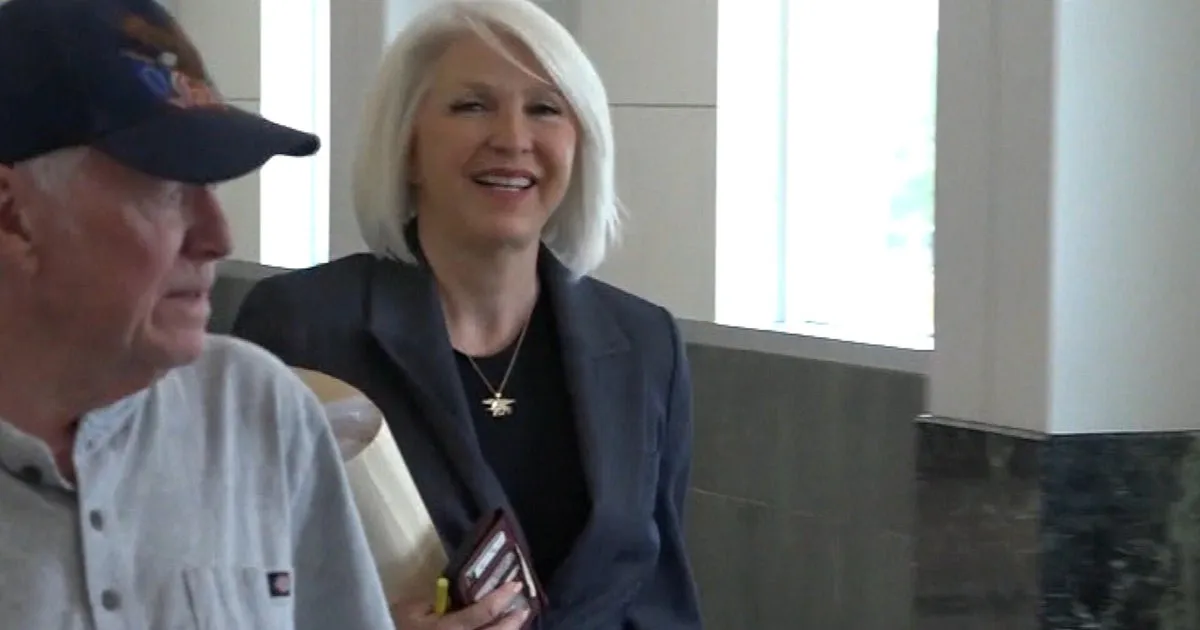
Tina Peters, the former clerk in Mesa County, Colorado, was convicted of election interference for allowing unauthorized access to voting machines following the 2020 presidential election. In October 2024, she was sentenced to serve over eight years in state prison for orchestrating a security breach of her county’s election system in 2021. However, the Colorado Court of Appeals has recently upheld her felony conviction but ordered a re-evaluation of her sentence.
The appeals court determined that the lower court improperly considered Peters’ exercise of free speech during her sentencing. Judge Ted Tow noted, “The trial court obviously erred by imposing sentence at least partially based on Peters’ protected speech.” This ruling has sparked discussions about the balance between free speech and accountability in public office.
Peters is currently serving a nine-year prison term after being convicted of state crimes related to her actions, which were rooted in conspiracies about the 2020 election. The court has also rejected the notion that Donald Trump has the authority to pardon her state crimes, emphasizing the independence of the judicial process.
Colorado Attorney General Phil Weiser remarked, “Whatever happens with her sentence, Tina Peters will always be a convicted felon who violated her duty as Mesa County clerk, put other lives at risk, and threatened our democracy. Nothing will remove that stain.” This statement underscores the gravity of Peters’ actions and their implications for public trust in electoral processes.
As of now, Peters has served 540 days of her sentence, and the appeals court found that she is no longer in a position to engage in the conduct that led to her conviction. Observers note that her case has become a cause celebre in the election conspiracy movement, highlighting ongoing tensions surrounding election integrity and accountability.
Jared Polis, the Governor of Colorado, commented on the challenges posed by Peters’ case, stating, “This case has been very challenging and a true test of our resolve as a state to have a fair judicial system, not just for people we agree with but a fair system for Coloradans that we vehemently disagree with.” This reflects the broader implications of the case for the judicial system in Colorado.
Looking ahead, the re-evaluation of Peters’ sentence could set important precedents regarding the treatment of public officials who engage in election-related misconduct. While the court’s decision affirms the right to free speech, it also reinforces the accountability expected from those in positions of public trust.
As developments unfold, the legal community and the public will be watching closely to see how this situation evolves and what it means for future cases involving election integrity.