
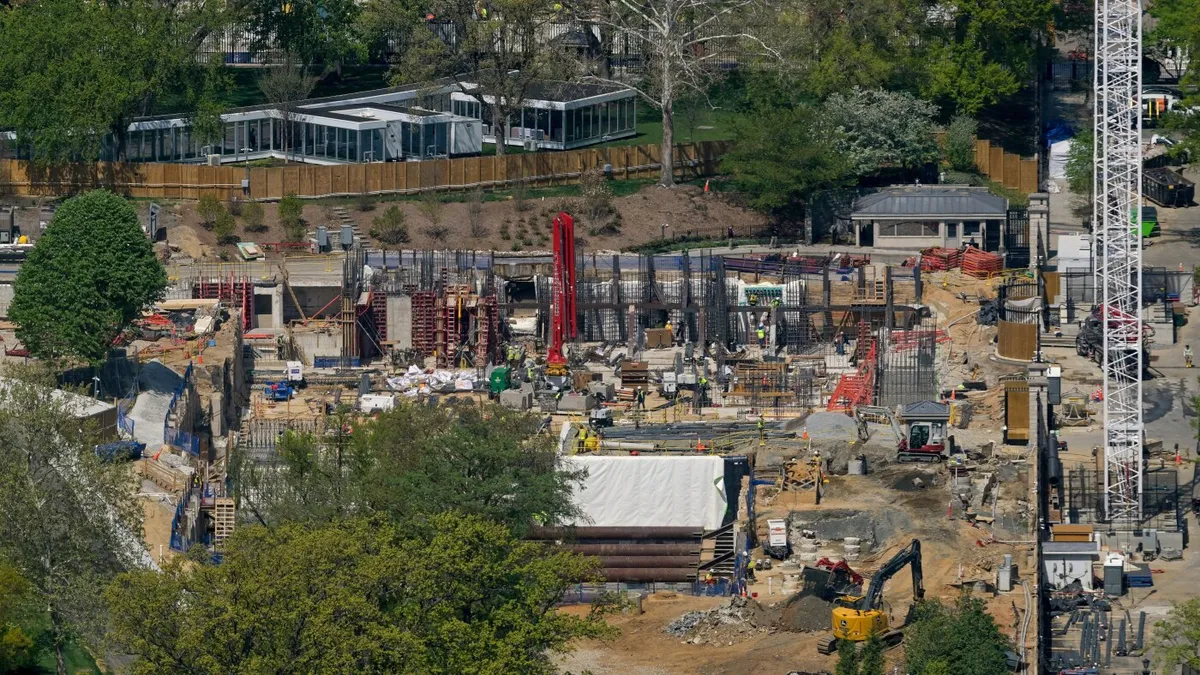
As of April 11, 2026, the Trump administration is actively pursuing the construction of a new ballroom at the White House, a project that has faced significant legal hurdles. The U.S. Court of Appeals for the District of Columbia Circuit recently ruled that construction can continue until April 17, 2026, providing a temporary reprieve from a lower court’s order that halted the project.
The controversy began when U.S. District Judge Richard Leon issued a ruling that paused the construction, citing the likelihood of success for the preservationist group challenging the project due to a lack of congressional approval. The ballroom, which is expected to seat 1,000 guests and cost a minimum of $300 million, has been a top priority for Trump since he took office.
In February, the Commission of Fine Arts, predominantly composed of Trump appointees, approved the ballroom’s construction. However, the National Trust for Historic Preservation has raised concerns about the project’s impact on the historic significance of the White House. Carol Quillen, a representative of the National Trust, stated, “The National Trust remains committed to honoring the historic significance of the White House.”
In response to the legal challenges, the Trump administration has argued that halting construction poses national security risks, particularly as the project includes bomb shelters, military installations, and a medical facility. Trump himself emphasized the importance of the project, noting, “The military is building a big complex under the ballroom.”
The appeals court’s recent decision, which was passed by a 2-1 vote, allows construction to proceed temporarily, marking a significant victory for the Trump administration in this ongoing legal battle. The administration is now seeking to extend the suspension of the lower court’s order for an additional two weeks.
Judge Leon acknowledged the complexities involved, stating, “Halting an ongoing construction project may raise logistical issues.” Meanwhile, National Park Service lawyers have stressed that “time is of the essence!” as the deadline for construction approaches.
The ballroom project was initiated following the demolition of the East Wing in October, which was intended to make room for the new facility. As the situation develops, uncertainties remain regarding the necessity of certain aspects of the ballroom’s construction for ensuring the safety and security of the underground national security upgrades. Details remain unconfirmed.
With an expected completion date in the summer of 2028, the future of the Trump White House ballroom construction remains a focal point of discussion in Washington, D.C., as stakeholders navigate the legal and logistical challenges ahead.