
“Tonight, truth prevailed over lies. Today, we won because Hungarians didn’t ask what their homeland could do for them — they asked what they could do for their homeland,” declared Péter Magyar, the newly elected leader of Hungary, following his victory over Viktor Orbán. This statement encapsulates the sentiments of a nation that has witnessed a dramatic political shift after 16 years of Orbán’s rule.
On April 12, 2026, in Budapest, Hungary, the election results revealed a significant change in the political landscape. Orbán’s Fidesz party garnered only 37% of the vote, while Magyar’s Tisza party claimed a decisive 53%. The election saw a record turnout of nearly 80%, a testament to the public’s engagement and desire for change.
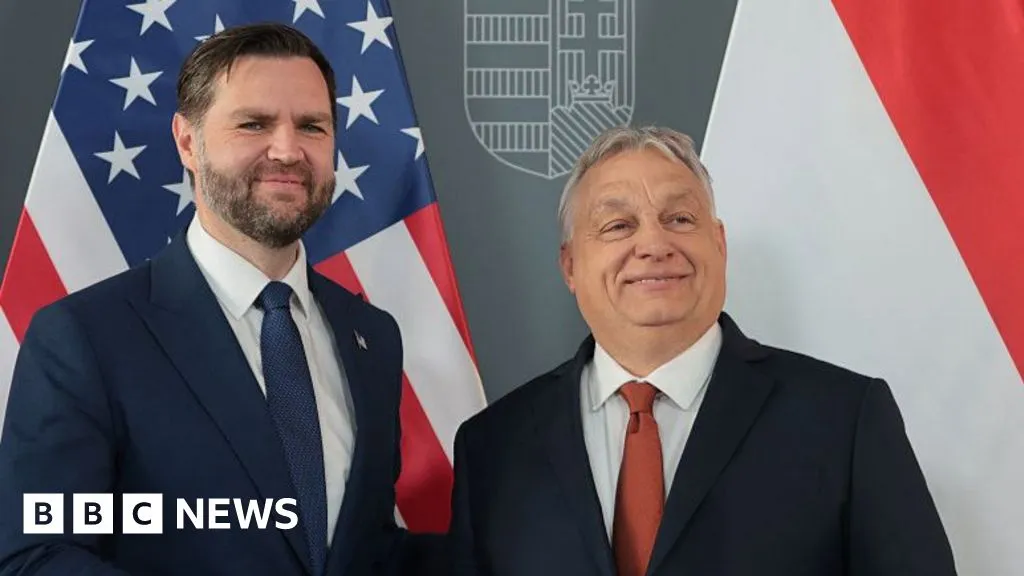
Prior to the election, JD Vance, a prominent figure in American politics, had urged Hungarians to support Orbán, stating, “We have got to get Viktor Orbán reelected as prime minister of Hungary, don’t we?” Vance’s visit aimed to bolster Orbán’s campaign, reflecting the international interest in Hungary’s political dynamics. However, the support from foreign allies was not enough to secure Orbán’s position.
Orbán’s tenure has been marked by accusations of undermining democracy and media freedom, which have strained Hungary’s relationship with the European Union. His government has frequently exercised its veto power within the EU, notably blocking €90 billion and $104 billion in loans. These actions have led to increasing criticism from both domestic and international observers.
As the results rolled in, it became clear that Magyar, a former loyalist to Orbán, had successfully positioned himself as a candidate for change. With Tisza winning 94 out of 106 voting districts, the implications of this election are profound. Orbán’s defeat not only alters the political dynamics within Hungary but is also expected to resonate throughout the EU, where his policies have often been at odds with broader European values.
In his concession speech, Orbán stated, “We are going to serve the Hungarian nation and our homeland from opposition.” This marks a significant transition for a leader who has been a close ally of both Donald Trump and Vladimir Putin, and whose policies have often aligned with far-right movements globally. His government has notably refused to assist Ukraine amid the ongoing Russian invasion, further complicating Hungary’s position in European politics.
The aftermath of this election will likely lead to a reevaluation of Hungary’s role within the EU and its approach to international relations. As Péter Magyar steps into leadership, many are watching closely to see how he will navigate the challenges ahead, particularly in terms of restoring Hungary’s democratic institutions and rebuilding relationships with the EU.
As Hungary embarks on this new political chapter, the echoes of Orbán’s long-standing influence will undoubtedly linger. The nation stands at a crossroads, with the potential for significant reform and a renewed commitment to democratic principles. The coming months will be crucial in determining the direction of Hungary’s future.