
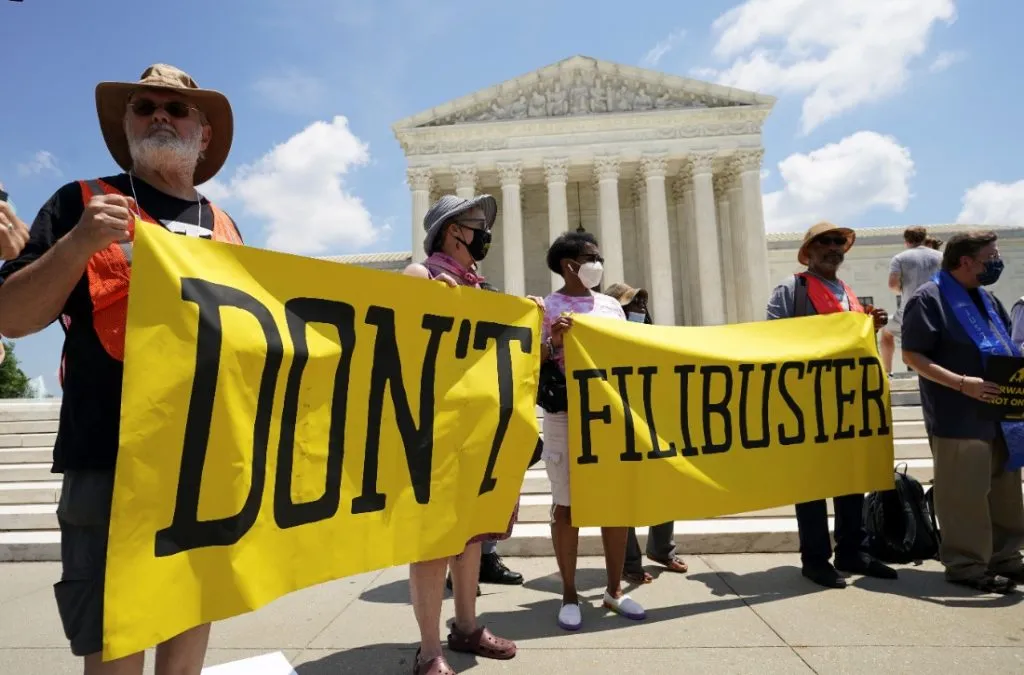
Many GOP senators are refusing to eliminate the Senate filibuster, even as former President Donald Trump calls for its abolition. Janet Mills, who is running for Senate, has proposed a reform that would require senators to speak on the floor to maintain a filibuster, a move that echoes Trump’s demands but faces significant opposition.
The current filibuster mandates a 60-vote threshold for legislation to pass in the Senate, a rule that has been a flashpoint for partisan conflict. Mills’ proposal for a talking filibuster aims to increase accountability and transparency in the legislative process. “Washington is broken, and Maine people are paying the price,” Mills stated, highlighting her frustration with the current state of governance.
However, the National Republican Senatorial Committee has warned that Mills’ changes could push a radical agenda, further polarizing the already contentious political landscape. Critics, including Senate Minority Leader Chuck Schumer, have labeled the proposed SAVE America Act as “Jim Crow 2.0,” reflecting the deep divisions over voting rights and legislative processes.
Trump’s suggestion to eliminate the filibuster altogether has garnered little support within the Senate, indicating a reluctance among many GOP senators to abandon this long-standing procedural tool. Despite this, the debate surrounding the filibuster continues to intensify, with Mills’ adversarial relationship with Trump underscoring the broader ideological battle at play.
As the political landscape evolves, observers are closely watching how these discussions will unfold. Mills’ confrontations over issues like transgender athlete policies further complicate her relationship with Trump and his supporters. “Janet Mills is saying the quiet part out loud: If she goes to Washington, she will use every tool at her disposal to push her radical anti-Trump agenda on Americans,” remarked Samantha Cantrell, a Republican strategist.
Details remain unconfirmed regarding the potential outcomes of Mills’ proposal and its reception among Senate Republicans. The filibuster’s future remains uncertain as both sides prepare for a contentious battle over its reform and implications for future legislation.