
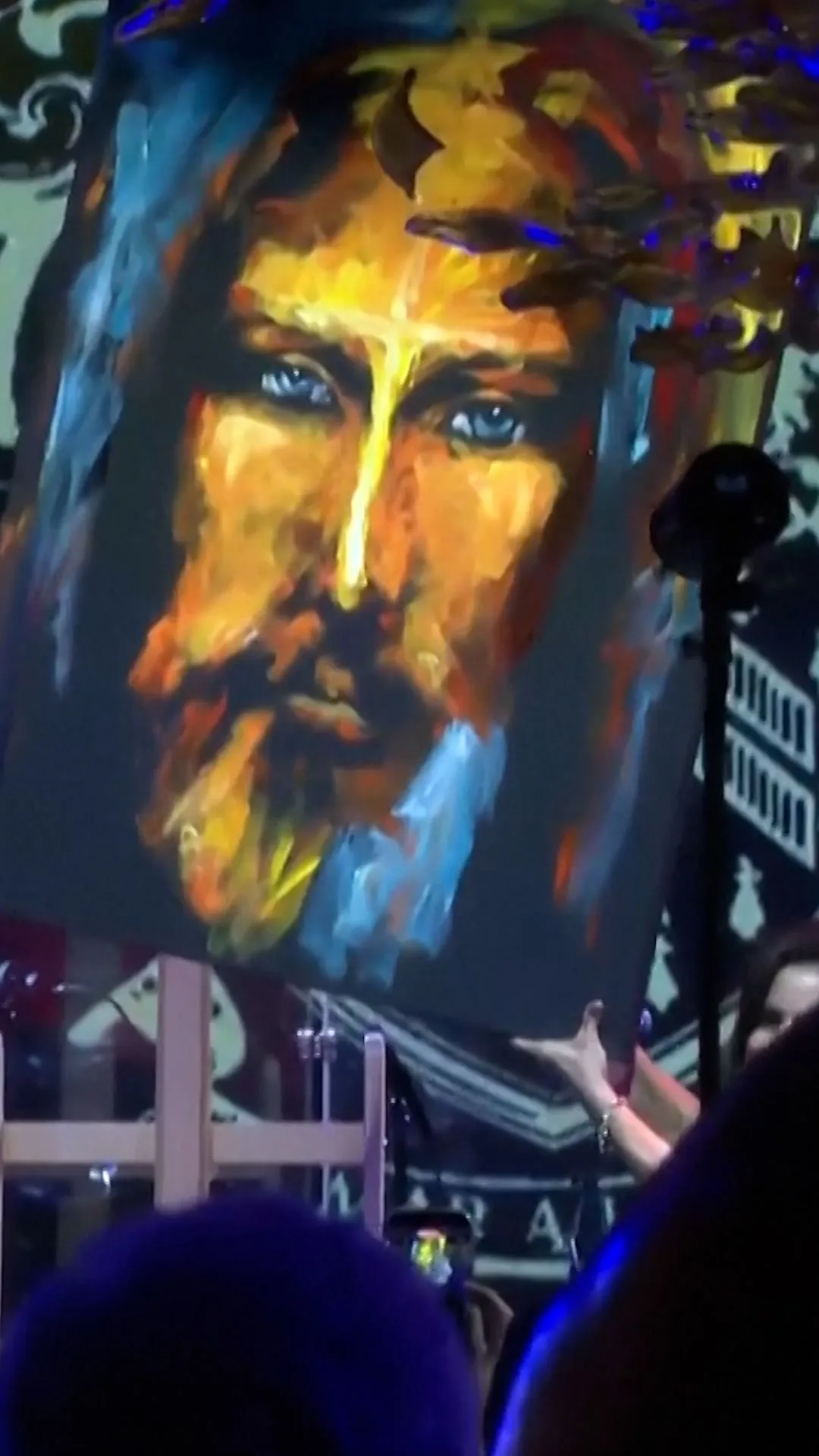
In a provocative move, former President Donald Trump posted an AI-generated image on his Truth Social platform on April 13, 2026, depicting himself as a Christ-like figure. The image, which was intended to symbolize his role as a healer and leader, was deleted approximately 13 hours after its initial posting amid widespread backlash.
Trump claimed that the image represented him as a doctor and was related to the humanitarian efforts of the Red Cross. However, the post quickly drew criticism from various quarters, including church leaders, conservatives, and Democrats, who found the portrayal inappropriate and offensive.
In the wake of the post, tensions between Trump and the Vatican have been highlighted, particularly with Pope Leo XIV. Trump criticized the Pope, labeling him as ‘weak on crime’ and ‘terrible for foreign policy.’ This criticism has not gone unnoticed, with Archbishop Paul S Coakley stating that the Pope is not a politician but rather a figure who speaks for the care of souls.
Italian Prime Minister Giorgia Meloni also condemned Trump’s remarks about the Pope, calling them ‘unacceptable.’ The backlash continued with conservative activist Riley Gaines criticizing the image for lacking humility, while Megan Basham described the post as ‘OUTRAGEOUS blasphemy’ and called for Trump to apologize.
Despite the controversy, Trump’s support among Christian voters remains significant, with 56% of Catholics backing him in the 2024 election. This support may have emboldened Trump to make such bold statements, as he has previously shared an image portraying himself as pope following the death of Pope Francis.
Bishop Robert Barron has also joined the chorus of voices calling for Trump to apologize for his statements regarding the Pope. The situation reflects a growing divide between the White House and the Vatican, with tensions building over various policies in recent months.
As reactions continue to unfold, many are left questioning the implications of Trump’s actions on his political strategy and relationship with religious voters. The incident raises important discussions about the intersection of faith and politics in contemporary America.