
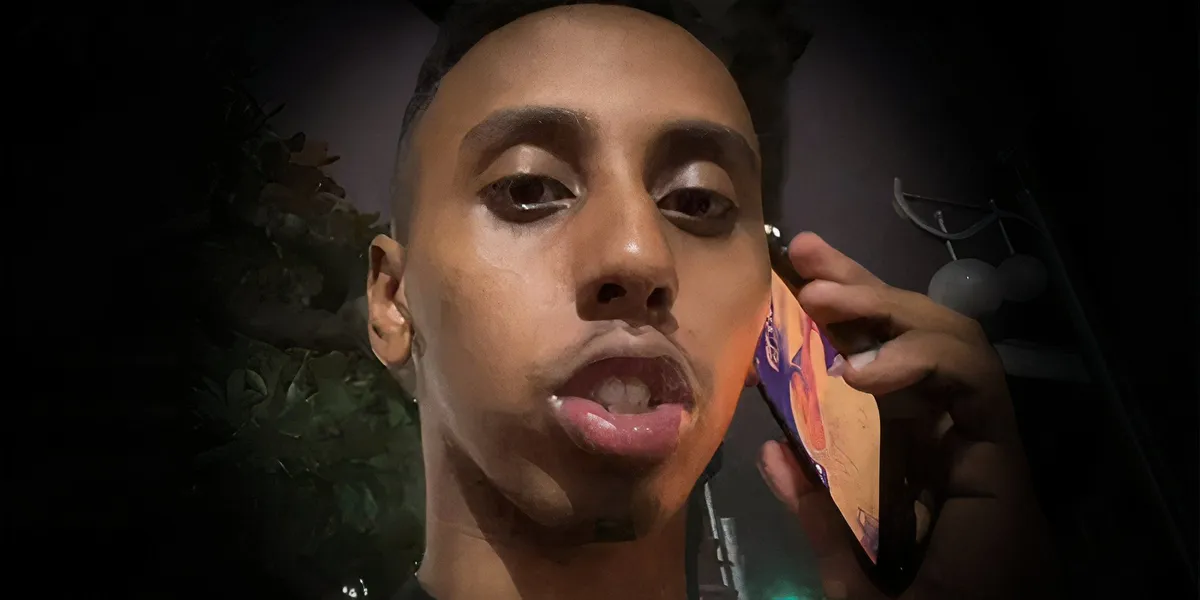
In a significant legal development, Johnny Somali, a 25-year-old content creator whose real name is Ramsey Khalid Ismael, was sentenced to six months in prison by a South Korean court on April 15, 2026. He was found guilty of public nuisance and distributing artificial intelligence-generated sexual content, a ruling that underscores the legal challenges surrounding online content in South Korea.
The court’s decision follows an incident in October 2024, when Somali uploaded a video of himself kissing a statue memorializing comfort women, a sensitive topic that has historically strained relations between South Korea and Japan. This act, deemed disrespectful, led to his indictment in November 2024.
During the court proceedings, a representative from the Seoul Western District Court stated, “The court has sentenced him to six months in prison.” The ruling also included a 20-day detention period following his sentence, reflecting the court’s stance on the seriousness of his actions.
Somali’s actions were described by the court as a repeated offense against unspecified members of the public, aimed at generating profit through YouTube. The court emphasized that he distributed this content in blatant disregard of Korean law.
In addition to his prison sentence, Somali has been banned from leaving South Korea and will be barred from working at institutions serving minors and people with disabilities for five years after his release. This aspect of the ruling highlights the court’s concern for the potential impact of his actions on vulnerable populations.
Somali expressed remorse during the proceedings, stating, “I was remorseful and wanted to apologize to the people of Korea.” His statement reflects a recognition of the cultural sensitivities involved in his case.
The case has drawn attention not only for its legal implications but also for its connection to the ongoing diplomatic tensions surrounding statues commemorating comfort women, which have become symbols of historical grievances between South Korea and Japan.
As the situation develops, reactions from the public and officials are expected to continue, particularly regarding the broader implications of Somali’s actions on societal norms and legal standards in South Korea. The case serves as a reminder of the complexities involved in navigating cultural sensitivities in the digital age.