
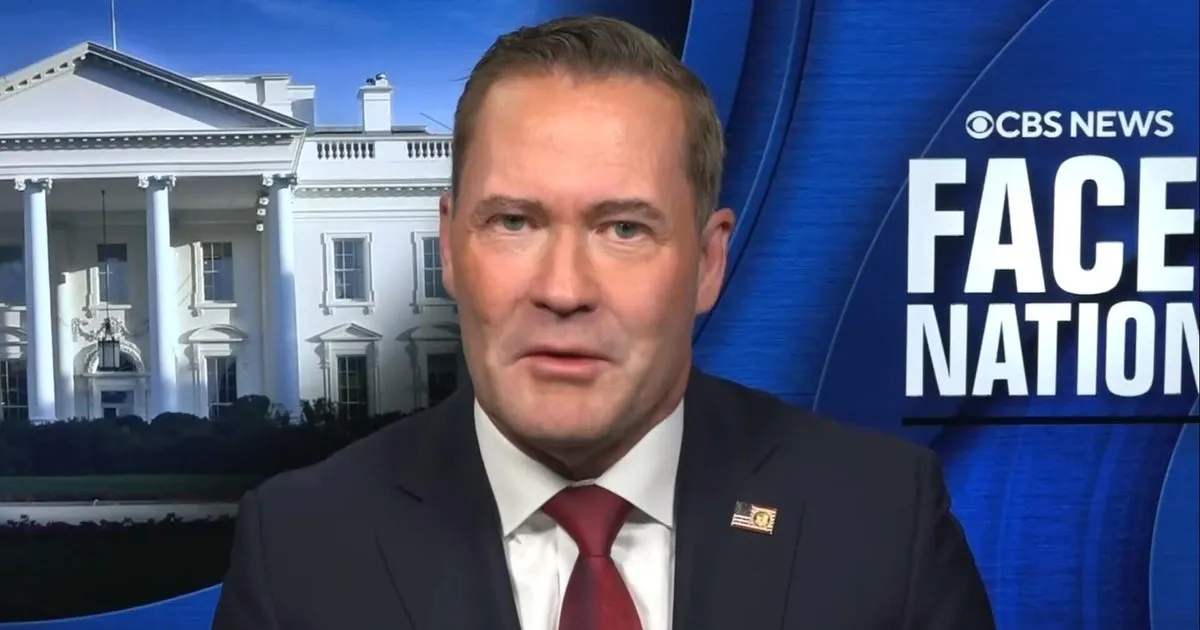
“The U.S. is ‘never going to take an approach of trust’ with Iran,” said Mike Waltz, the U.S. ambassador to the United Nations. This stark declaration encapsulates the current American strategy towards Tehran, one marked by skepticism and an unwavering commitment to pressure.
Waltz’s comments come at a time when Iran finds itself increasingly isolated on the world stage. The U.S. has been relentless in its efforts to confront Iranian influence, enforcing a blockade through naval operations while simultaneously conducting a maximum pressure campaign aimed at crippling Iran’s economy. This approach has resulted in what Waltz described as a situation where “Iran’s never been more isolated.”
But why does this matter now? The backdrop is crucial: since the Iranian Revolution in 1979, relations between the U.S. and Iran have been fraught with tension and conflict. The recent escalation of hostilities, including accusations that Iran has attacked civilian infrastructure, has only intensified these long-standing issues.
Waltz elaborated further on the implications of this strategy, stating, “The president’s objectives and red lines have been very clear. It cannot and will not ever have a nuclear weapon.” This statement underscores not just a policy but a firm resolve that defines American engagement with Iran moving forward.
The Iranian economy is reportedly in freefall—a fact that adds weight to Waltz’s assertions about their leadership being in disarray. He remarked, “The Iranian command and control and government is in absolute disarray because of the devastating attacks across its leadership.” This suggests that internal strife may be as significant as external pressures.
That context matters because it illustrates how the U.S. aims to leverage Iran’s vulnerabilities while maintaining a hardline stance against any potential nuclear development. A recent U.N. resolution condemning Iran’s actions was joined by 135 nations, signaling widespread international support for the U.S.’s position.
As we look ahead, one must consider what this means for future diplomatic engagements with Tehran. Will there ever be room for negotiation under such conditions? Details remain unconfirmed regarding any forthcoming discussions, but one thing is clear: trust remains absent from this equation.
In summary, Mike Waltz’s comments reflect a broader strategy that prioritizes pressure and isolation over diplomacy with Iran—an approach likely to shape U.S.-Iran relations for the foreseeable future.