
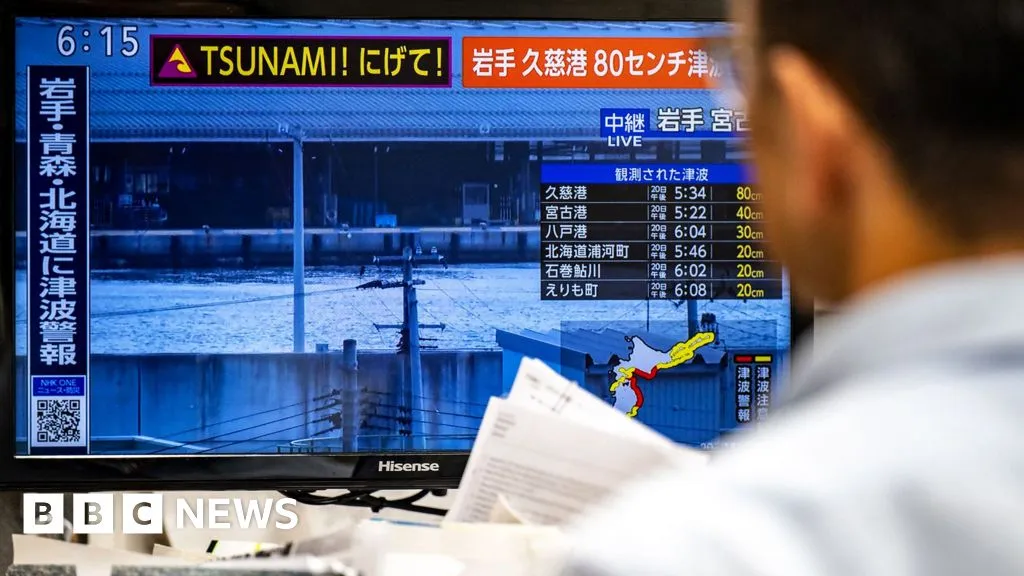
A 7.7 magnitude earthquake struck off northern Japan on April 20, 2026, causing immediate concern for the safety of residents and infrastructure. The quake, which occurred at around 4:53 p.m. Japan time, was measured at a depth of 19 kilometers and triggered a short-lived tsunami alert. This event has reignited fears reminiscent of the devastating March 2011 disaster that claimed over 22,000 lives.
Two people were injured in the recent quake—both from falls as buildings shook. While injuries are unfortunate, they could have been much worse. The earthquake sparked a tsunami that reached about 80 centimeters at Kuji port and a smaller wave of 40 centimeters recorded elsewhere in Iwate prefecture.
That context matters because it underscores the ongoing seismic risks in this region. Japan’s geographical position makes it particularly vulnerable to earthquakes, with a 1% chance of a megaquake occurring within the week following this incident. Such statistics compel both citizens and authorities to stay vigilant.
In response to the quake, Shinkansen bullet trains connecting Tokyo and northern Japan were temporarily suspended—a critical transport link that illustrates how quickly daily life can be disrupted by natural disasters.
The U.S. Geological Survey corroborated the quake’s strength at 7.4 magnitude, slightly lower than Japan’s measurement but still significant enough to warrant caution. Fortunately, the Nuclear Regulation Authority reported no abnormalities at nearby nuclear power plants, easing some fears about potential nuclear incidents.
Prime Minister Sanae Takaichi emphasized governmental readiness: “The government will do our utmost in case of an emergency.” This statement reflects a broader commitment to disaster preparedness that has evolved since previous calamities.
Japan’s Meteorological Agency cautioned residents against complacency—”Tsunami waves are expected to hit repeatedly. Do not leave safe ground until the warning is lifted.” Such warnings highlight not just immediate dangers but also long-term challenges posed by aftershocks and secondary hazards.
As we process these events, uncertainties linger regarding aftershocks and their potential impact on already vulnerable areas. Details remain unconfirmed about any further developments or additional risks that might arise in the coming days.