
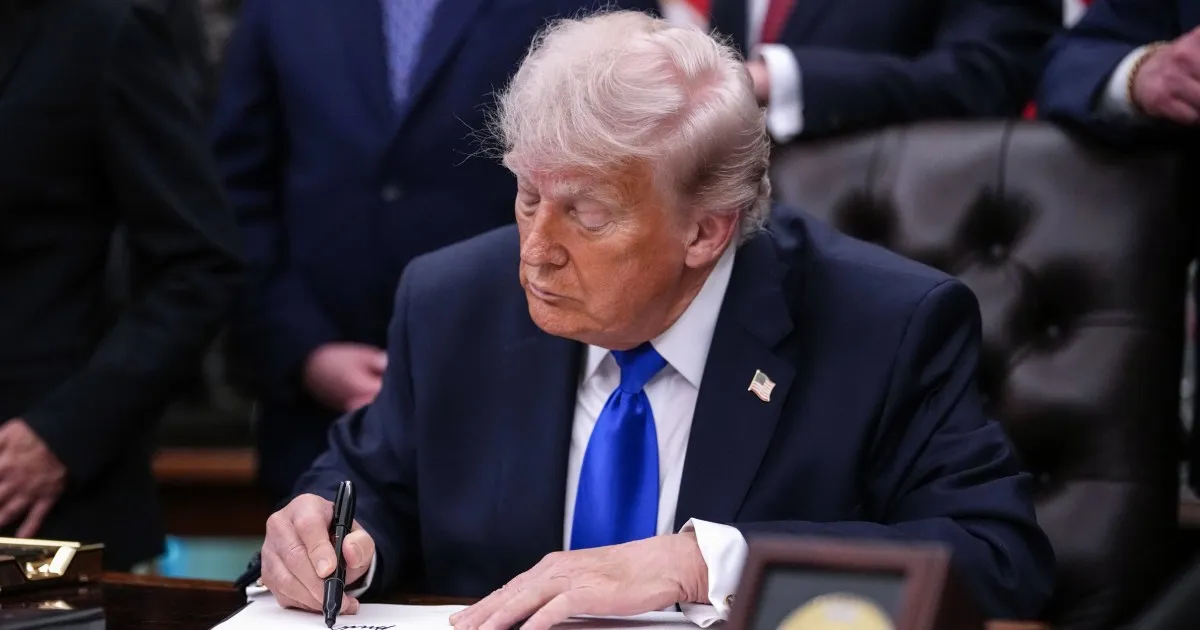
On April 30, 2026, President Donald Trump signed an executive order aimed at expanding access to retirement plans for workers whose employers do not provide one. This initiative seeks to address the significant retirement coverage gap affecting approximately 50 million people in the United States.
The executive order directs the Treasury Department to establish an online marketplace for retirement plans called TrumpIRA.gov. This platform intends to simplify access to various retirement savings options such as 401(k) plans, traditional IRAs, and Roth IRAs.
Saver’s Match program details:
- The Saver’s Match program will offer a maximum match of $1,000 for single filers and $2,000 for married couples filing jointly.
- To qualify for the maximum match, single filers must earn less than $20,500, while those earning up to $35,500 will receive smaller matches.
- The Saver’s Match will be available starting next year for low- and moderate-income workers making less than $35,500.
This initiative has garnered attention from various stakeholders. Trump remarked, “For millions of Americans who lack employer-sponsored plans, this will be really revolutionary because they’ll be covered.” Meanwhile, Kevin Hassett from the administration expressed optimism about working with Congress to expand eligibility for the Saver’s Match beyond current income limits.
The executive order also mandates that IRA providers listed on TrumpIRA.gov maintain low administrative costs—capped at 0.15% of account balances. This could potentially make retirement savings more accessible and affordable for many.
Observers note that last year, 87% of individuals without access to a workplace retirement plan indicated they would save more if they could benefit from a matching contribution. This highlights the potential impact of the Saver’s Match program.
The administration anticipates that around 32.3 million workers could enter the retirement savings system under a federal auto-enrollment plan as part of these efforts.