
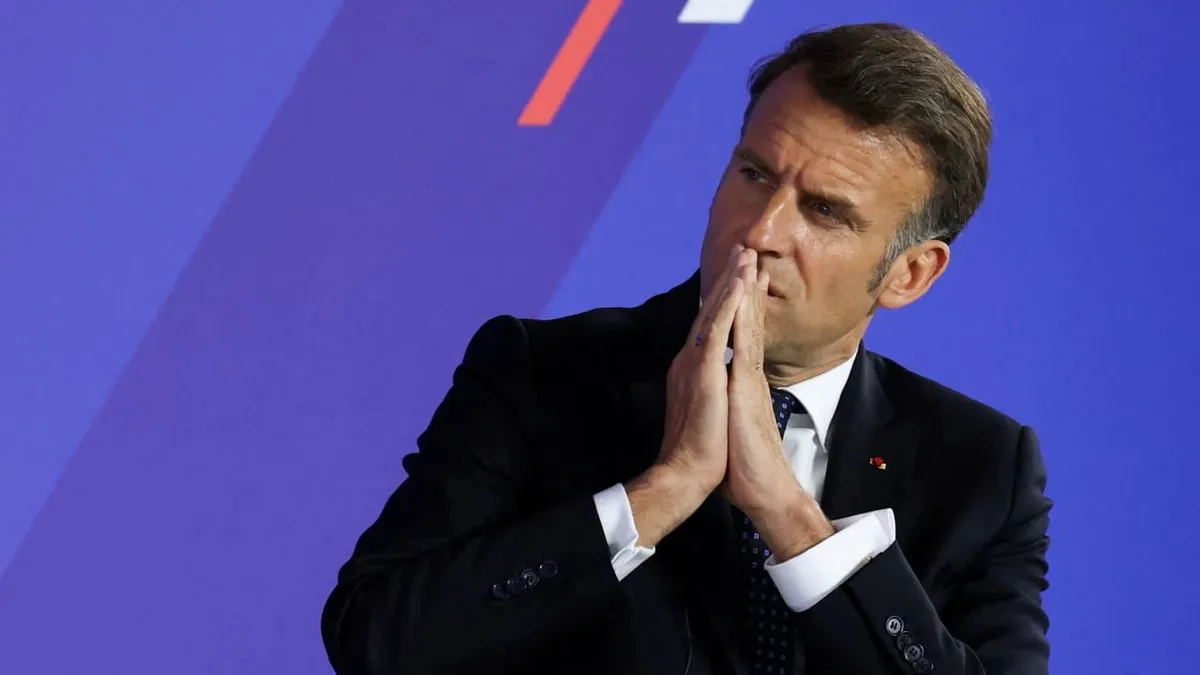
“We’re not responsible for the past, but we are responsible for the present and future,” said Dieudonné Boutrin, reflecting a sentiment growing among many in France as President Emmanuel Macron faces increasing pressure to address the nation’s historical legacy of slavery.
This demand for accountability is particularly urgent given France’s role in the transatlantic slave trade, where it kidnapped and enslaved about 13% of an estimated 13 to 17 million Africans trafficked across the Atlantic. Despite being the first country to recognize slavery as a crime against humanity in 2001, recent actions—or lack thereof—have drawn criticism. For instance, France abstained from a UN vote that described the transatlantic slave trade as the “gravest crime against humanity.” This abstention raises questions about France’s commitment to addressing its colonial past.
That context matters because it highlights a broader conversation about reparatory justice. Many argue that acknowledging historical injustices isn’t enough; concrete actions must follow. Jean-Marc Ayrault, a former French Prime Minister, emphasized that “France must not be seen to be ‘sleeping through’ this key moment in history.” The urgency is palpable as societal tensions rise amid increasing racism and calls for human rights reform.
The inauguration of the Mast of Fraternity and Memory in Nantes stands as a testament to this struggle. At a height of 18 meters, it commemorates the legacy of slavery but also serves as a reminder of ongoing inequalities, especially in regions like the French Caribbean, where food prices have surged by 30% to 42% compared to mainland France.
Macron announced plans for a joint commission with Haiti to examine reparations, with conclusions expected by the end of 2023. Yet, skepticism remains. Marie-Annick Gournet pointed out, “If there are no actions to redress that issue then it’s just a void law.” Meanwhile, in 2023, France’s highest court rejected demands for state reparations for descendants of enslaved people, leaving many disillusioned.
The path forward is fraught with challenges. Activists and scholars alike urge Macron not only to acknowledge these historical injustices but also to take meaningful steps toward reparatory justice. As Pierre Guillon de Princé stated, “Faced with the rise of racism in our society, I felt a responsibility not to let this past be erased.” This responsibility weighs heavily on Macron’s shoulders as he navigates domestic pressures while addressing international relations involving nations like Israel and Iran.
The ongoing discourse surrounding reparations signals a critical moment in France’s reckoning with its past. As discussions continue and expectations mount, many await decisive actions from Macron that could redefine how France confronts its historical legacy.