
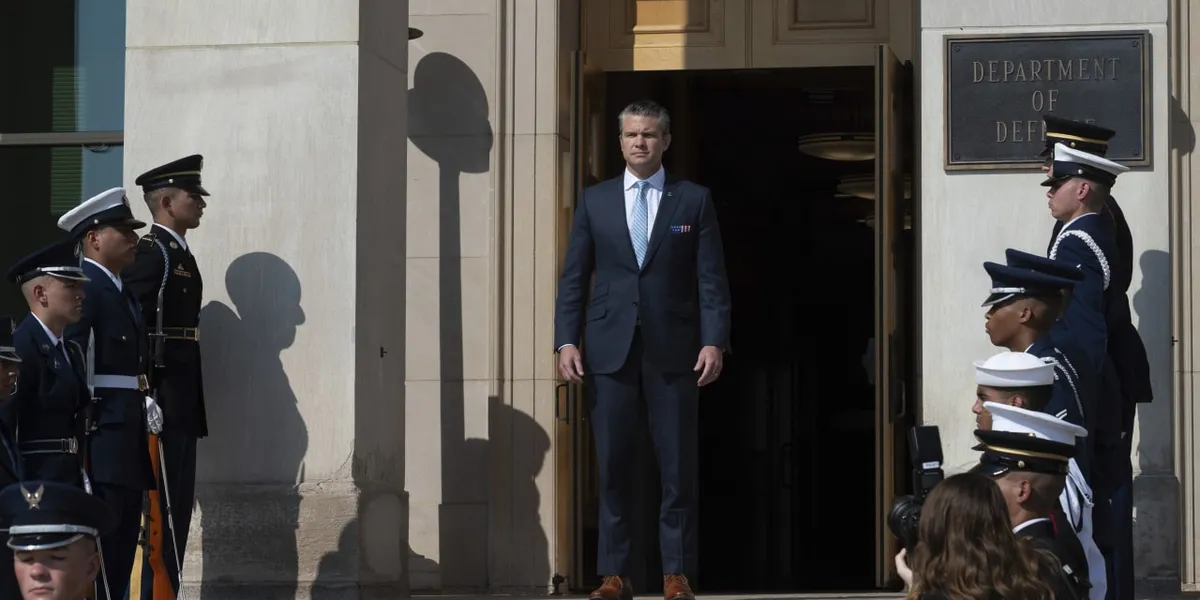
Pete Hegseth’s aggressive consolidation of power at the Pentagon has culminated in the immediate removal of Navy Secretary John Phelan on April 22, 2026. This dramatic shift raises significant concerns about the erosion of military oversight in favor of political control.
Hegseth’s actions are not isolated. He recently fired Army Chief of Staff Gen. Randy George and has been accused of orchestrating a “land grab” over critical decisions regarding submarine and shipbuilding contracts, as noted by Phelan himself. Observers report that Hegseth now feels “more confident than ever” in his position.
This consolidation of authority has effectively stripped military leaders of their power, transferring it entirely to political appointees. A U.S. official remarked, “All the power has been taken away from the uniforms and 100 percent gone to the political appointees.” This transformation could fundamentally alter how military decisions are made.
Hegseth’s tenure has coincided with broader Pentagon reforms aimed at restoring a more traditional warrior ethos while pushing back against diversity, equity, and inclusion initiatives. Pentagon spokesperson Sean Parnell stated that Hegseth aims to refocus the military on lethality and combat readiness.
This context matters because it reflects a significant trend within the Trump administration’s approach to defense leadership — one that prioritizes loyalty and political alignment over traditional military hierarchy.
As Hegseth continues to shape the Pentagon’s future, analysts are closely watching how these changes will impact weapons procurement and overall military strategy. The implications are profound, potentially affecting everything from defense budgets to international relations.
Currently, Hung Cao serves as Acting Secretary of the Navy, taking over amid this tumultuous environment. The speed with which Phelan was ousted — just minutes after his complaints reached higher-ups — underscores a new reality where dissent may not be tolerated.
The stakes are high. As the Pentagon navigates this shift toward political control, questions loom about how these changes will affect U.S. military readiness and global standing.