
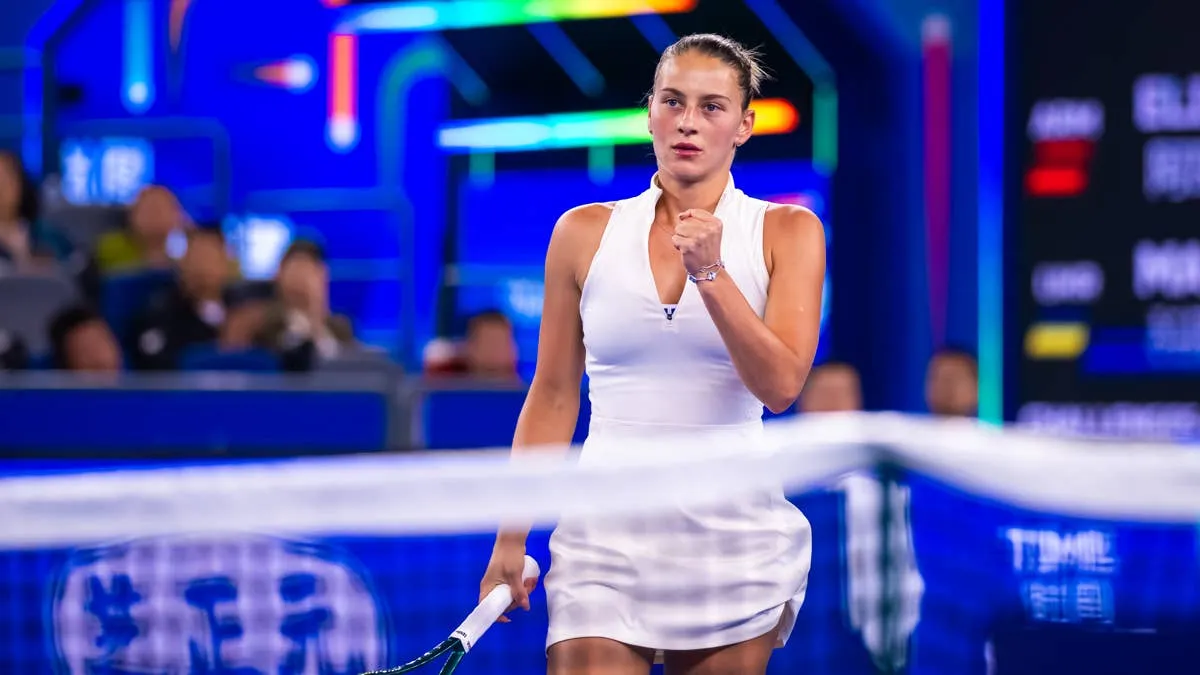
Marta Kostyuk recently claimed her first WTA 1000 title at the Madrid Open on May 1, 2026, but her victory has been marred by controversy. After defeating Mirra Andreeva with a score of 6-3, 7-5, Kostyuk faced backlash for not congratulating her opponent. This decision stems from her ongoing protest against Russian and Belarusian players due to the war in Ukraine.
Kostyuk has maintained a policy of not shaking hands with players from these countries since the invasion began in 2022. Her stance highlights the intersection of sports and politics, raising questions about sportsmanship and personal beliefs in competitive environments. But what does this mean for the broader context of Ukrainian tennis?
Following her victory, Kostyuk stated, “You cannot be neutral in this. These ‘no war’ statements — they hurt me because they have no substance.” This reflects her deep emotional connection to the conflict and its impact on athletes from Ukraine.
Observers noted that while Kostyuk celebrated her biggest title to date, her victory speech drew criticism for failing to acknowledge Andreeva. One commentator remarked, “Marta not even mentioned Mirra… that’s the difference between a class person and a bad person.” Such remarks underscore the polarized views surrounding sportsmanship in light of geopolitical issues.
Kostyuk’s mother, Talina Beiko, a former professional player herself, coached her until recently. The support from family has been crucial during these challenging times. After winning at the WTA 250 Rouen Open just before Madrid, Kostyuk’s triumph in Spain marks a significant milestone in her career.
Now ranked world No. 15 following this victory, she aims to build on this momentum as she continues competing on the WTA Tour. Her signature backflip celebration after winning is a testament to her joy and passion for the sport—a move she first performed at age 15.
The conversation around Kostyuk’s actions raises critical discussions about athlete activism and its implications in sports today. As more athletes take stands on social issues, how will this shape future competitions?