
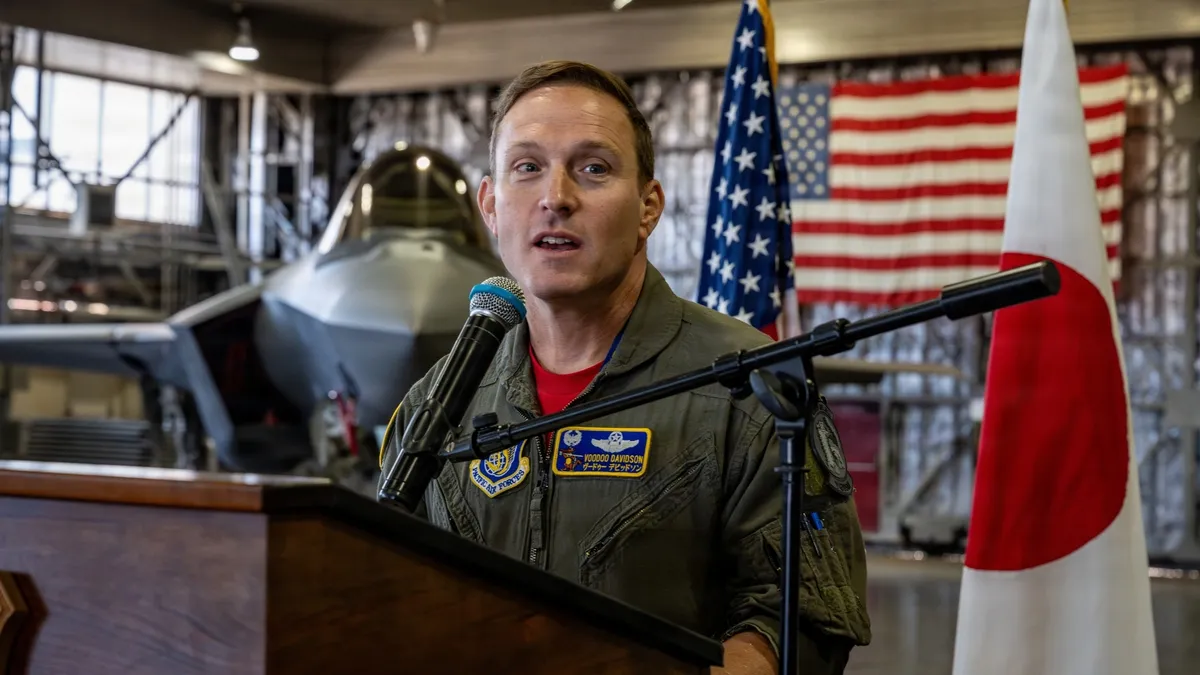
The 35th Fighter Wing recently celebrated a milestone with the induction of F-35A Lightning II stealth fighters at Misawa Air Base, Japan, on April 24, 2026. This significant event enhances U.S.-Japan defense cooperation and marks a pivotal step in military modernization efforts in the Indo-Pacific region.
This transition is not just about acquiring new aircraft; it symbolizes a strategic shift. The 35th Operations Group began this conversion from F-16 Fighting Falcons to F-35As on March 28, 2026, replacing 36 older jets with 48 advanced models. The upgrade aims to bolster tactical reach and operational capacity.
That context matters because Misawa Air Base is now the first Pacific Air Forces installation in the Western Pacific to receive the F-35A. This unique position allows both the U.S. Air Force and Japan Air Self-Defense Force to operate these advanced fighters side by side—an unprecedented collaboration that underscores the strength of the U.S.-Japan alliance.
Col. Paul Davidson emphasized that the core mission remains unchanged: “As we bring the F-35 into the fight, our core purpose remains unchanged: to strengthen the U.S.-Japan alliance, protect the force and safeguard a free and open Indo-Pacific.” This commitment reflects a long-standing partnership that has lasted for 74 years.
Moreover, Japan has committed to purchasing 147 F-35 aircraft, reinforcing its defense capabilities alongside its ally. The F-35A boasts improved stealth and longer flight ranges compared to its predecessor, providing enhanced situational awareness crucial for operations in contested environments.
The transition is part of a broader $10 billion modernization program announced by the Pentagon in 2024. This program includes activating the 35th Munitions Squadron in mid-2024 to support the new fleet, which consists of approximately 225 airmen dedicated to this effort.
Still, uncertainties linger regarding how quickly these new capabilities will be fully integrated into operations. The effectiveness of these upgrades will depend on various factors, including training timelines and operational readiness.
As military dynamics evolve in this volatile region, credible deterrence requires both cutting-edge capabilities and effective deployment. Christopher Allison aptly noted that “in a region this volatile, credible deterrence requires both cutting-edge capabilities and the resolve to deploy them effectively.”
The induction of these stealth fighters represents not just an upgrade in technology but a reaffirmation of commitment between two nations working together for regional stability. The future holds promise as both forces adapt to meet emerging challenges in the Indo-Pacific.