
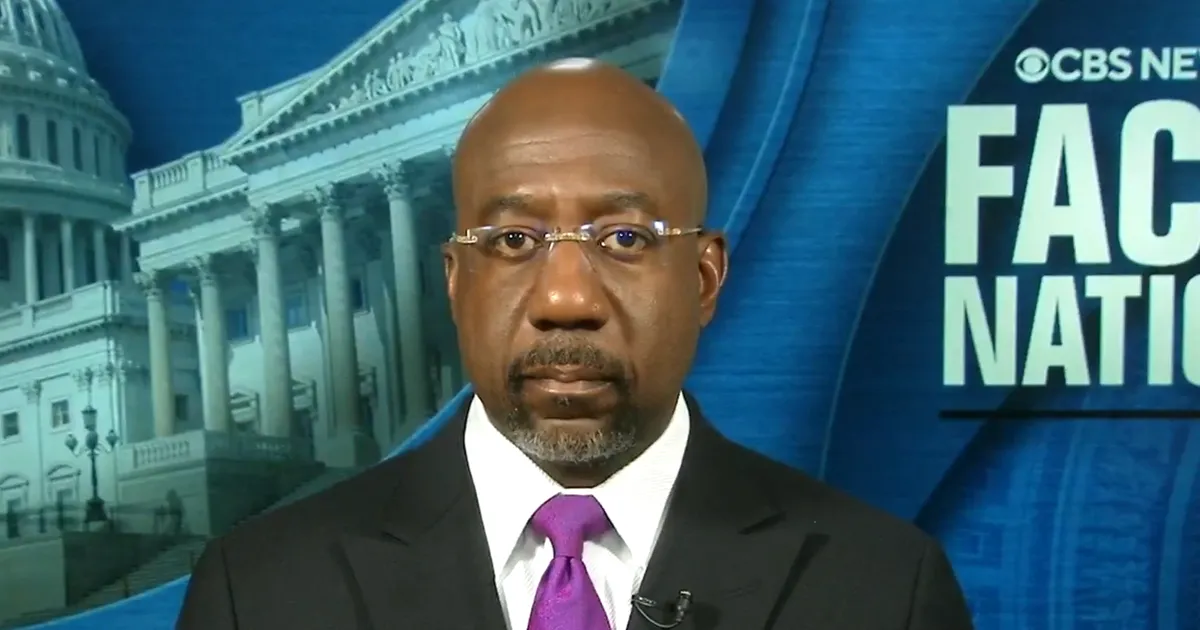
Senator Raphael Warnock has raised alarms over a recent Supreme Court ruling, claiming it poses a significant threat to minority voting rights. This decision could exacerbate partisan redistricting battles across the country, particularly affecting how electoral maps are drawn.
The Supreme Court’s ruling has narrowed the application of Section 2 of the Voting Rights Act, which previously helped protect against racial discrimination in voting. Now, challenging electoral maps on these grounds will require proof of intent—an often nearly impossible standard to meet.
Warnock described the decision as a “massive and devastating blow” to democracy, emphasizing its potential impact on minority voters in the South. He stated that this ruling could empower states to redraw district lines in ways that dilute the voting power of these communities.
That context matters because it ties into a broader trend of gerrymandering—where political parties manipulate district boundaries for electoral advantage. Warnock has been a vocal advocate for banning partisan gerrymandering to ensure fairer elections.
In his remarks, he noted, “The court, sadly, poured fuel on this redistricting arms race.” His words reflect a growing concern among Democrats that Republican governors in several states may seize this opportunity to redraw congressional maps favorably.
Moreover, the Supreme Court’s decision follows a contentious redistricting battle initiated by former President Donald Trump’s political team, which has further complicated the landscape of election laws nationwide.
Looking ahead, Warnock has introduced legislation aimed at eliminating partisan gerrymandering altogether. He believes that protecting voting rights is essential for maintaining democracy and ensuring that every vote counts equally.
As discussions continue around these issues, observers are keenly watching how state legislatures will respond to this ruling. The fear is that without strong protections in place, minority voters could face even greater challenges in exercising their rights at the polls.