
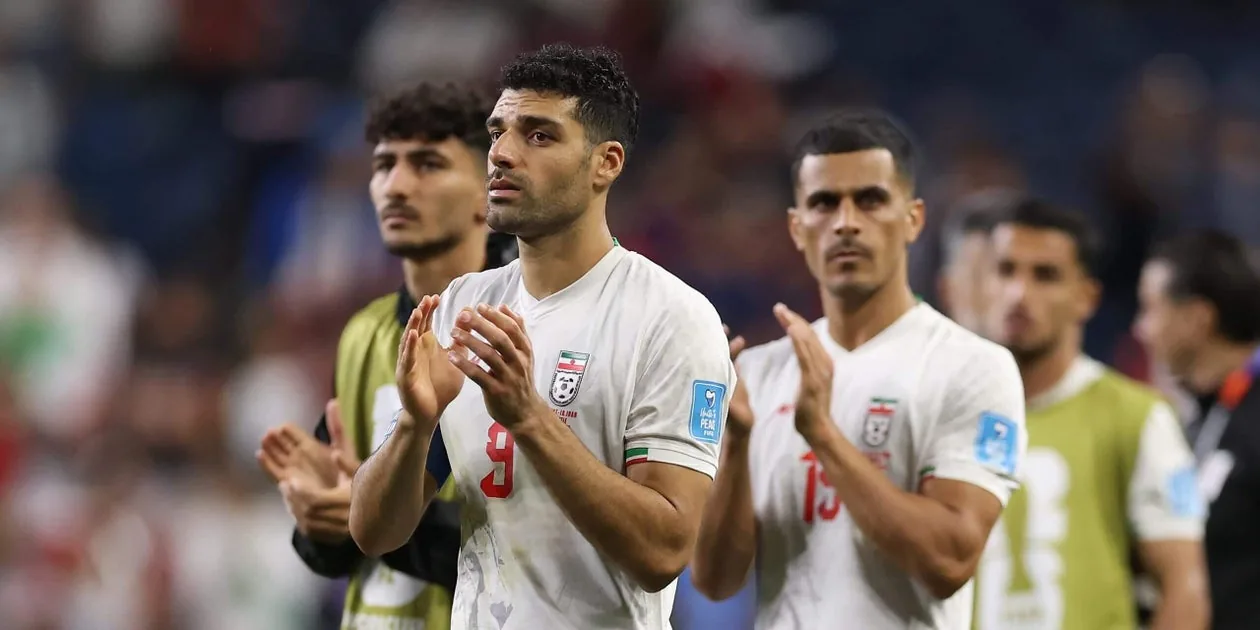
The head of homeland security for the United States expressed satisfaction following Iran’s elimination from the World Cup. Markwayne Mullin, secretary of the Department of Homeland Security, stated he “danced a happy dance” when Iran was no longer in the tournament. He also mentioned that he might have “sung a song or two” after their visas were pulled, allowing them to leave US soil.
Iran’s journey in the tournament concluded after they missed advancing from the group stage due to goal difference. Their hopes were dashed when a potential stoppage-time winning goal against Egypt was disallowed for a marginal offside call. Despite a 1-1 draw with Egypt on Saturday, Iran still had a slim chance to qualify as one of the best third-placed teams.
However, their elimination was confirmed on Sunday after Algeria and Austria played to a 3-3 draw. Mullin noted that Iran was the team that required the most attention from his department, stating, “There wasn’t a single team that we had to spend more time dealing with than Iran.”
Travel restrictions and team frustrations
Throughout their participation, Iran faced significant travel restrictions. Initially, they were only permitted to enter the US the day before their first two matches and had to depart on the same day as the game, due to their visa terms. Their training base was relocated from Arizona to Tijuana, Mexico, before the tournament commenced.
These restrictions were somewhat eased for their final group match in Seattle, allowing the team to arrive two days in advance. However, they were still required to return to Tijuana immediately after the match. Iran coach Amir Ghalenoei criticized the arrangements, stating that the US, as a co-host of the World Cup alongside Canada and Mexico, had “treated us very unfairly.” He also claimed his squad received “less than half” of the necessary training window for preparation.
Mehdi Taremi, Iran’s captain, echoed these sentiments, remarking, “This kind of tension undermines the joy of the World Cup. I felt the tension from the first moment we arrived.” The team’s experience was further complicated by issues such as four of 15 Iranian staff members initially being denied visas, though they were later granted travel rights after appealing to the State Department.
Even after some visa issues were resolved, Taremi and assistant coach Saeed Alhoei were reportedly held up by US authorities at Tijuana airport, delaying the team’s departure for their match in the Pacific Northwest. This led Taremi to describe their experience as a “disaster World Cup.”
FIFA’s involvement and political backdrop
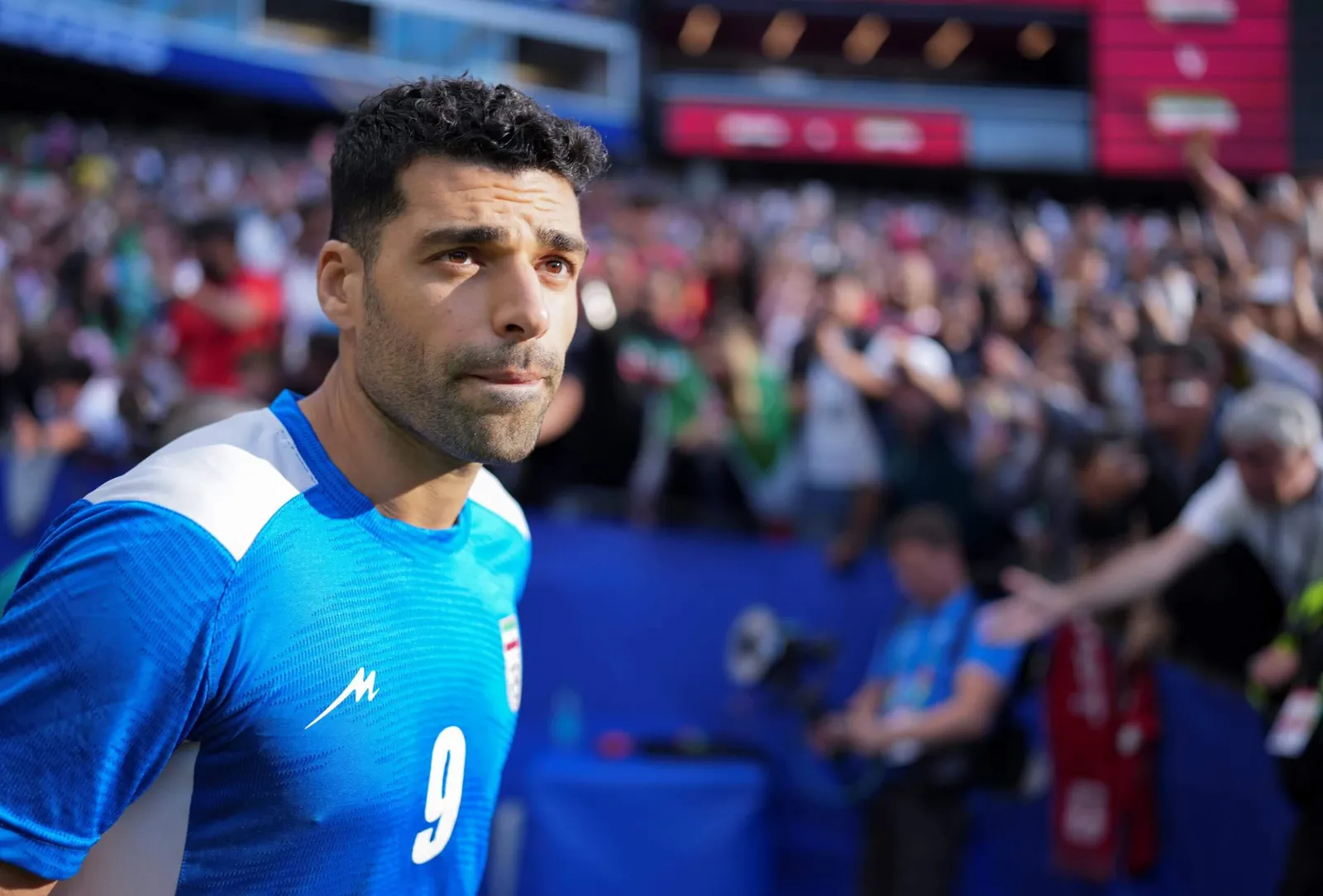
FIFA president Gianni Infantino visited Iran’s dressing room after their opening 2-2 draw with New Zealand at SoFi Stadium in Inglewood. He conveyed a message to the players, stating, “You are sending a strong message to the entire world… you are showing to the world. So, thank you very much.” He also offered to play for the team if they needed an attacker, a comment that was perceived as being in poor taste given the team’s ongoing visa and travel difficulties.
Infantino’s attempts to reassure the team were ultimately seen as ineffectual by some. Taremi later recounted Infantino’s words, noting the irony as the group stage was nearing its end amidst their logistical challenges. The team’s stay in the tournament was marked by complexities and complications, including emotional protests both by and against the team.
The political tensions stemming from military actions in February between the US and Israel and Iran cast a shadow over their participation. Talks before the finals led to a solution where Iran relocated its training base from Tucson, Arizona, to Tijuana. However, a communication battle persisted between the nations throughout the tournament.
On June 6, Iranian players and essential support staff were issued visas for the World Cup. An administration official stated that the government would not allow the system to be abused to facilitate the entry of terrorists into the United States. Some Iranian Football Federation officials, including secretary-general Hedayat Mombeini and vice-president Mehdi Mohammad Nabi, were among those initially denied visas.
One staff member, who had attended five previous World Cups without issue, was blocked from watching matches in the US and had to remain in Tijuana. Despite these challenges, some players reportedly felt that the visa denials for wider staff did not significantly impact the squad. The team’s captain, Mehdi Taremi, a veteran of three World Cups, expressed the tension he felt, stating, “I have felt tension — we don’t have the same beautiful experience as previously, of peace and joy, for every country.”
Internal divisions and fan reactions
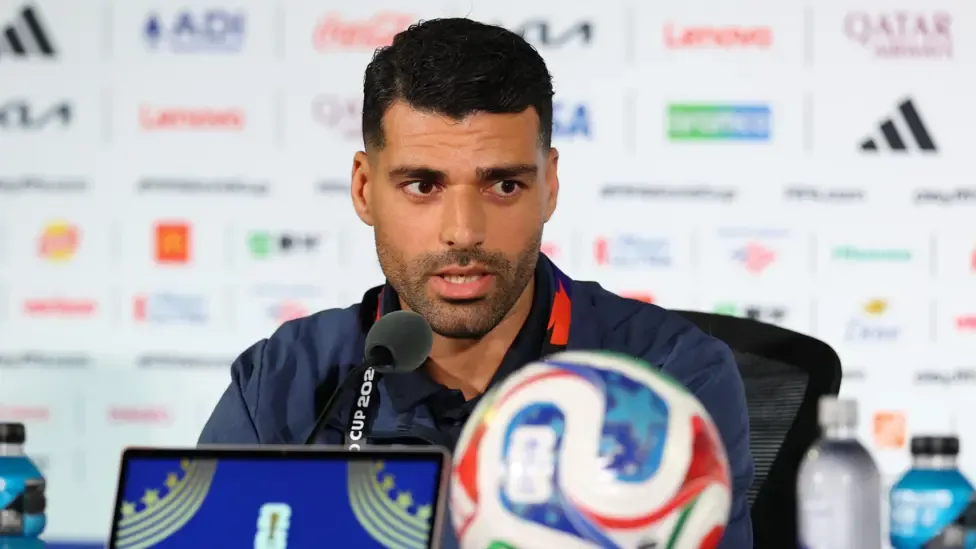
The team also faced internal divisions and mixed reactions from their fanbase. Sardar Azmoun, a prominent player, was reportedly excluded from the squad after a social media post perceived as critical of the Iranian government. Coach Ghalenoei expressed a wish for Azmoun’s presence, and reports indicated the forward wanted to play but was required to publicly apologize to the Iranian regime to be selected, which he declined to do.
There were also claims that some players, particularly more experienced individuals, were included in the squad due to their perceived closeness to the regime. The split among fans was evident at Iran’s training session near LA Galaxy’s home stadium, where protesters chanted outside, advocating for a new government in Iran. One woman, who wished to remain anonymous to protect her family, stated that her group was targeting the team to show they did not support players who they believed represented the regime.
She indicated that they would boo if the team scored and during the anthem, aiming to create a challenging atmosphere in Los Angeles. Conversely, another individual was observed chanting in favor of the Iranian government via a megaphone. This internal turmoil was further highlighted by a case heard in the Los Angeles County Superior Court, where FIFA sought to block fans from bringing pro-revolution flags into SoFi Stadium, arguing they constituted political expression and could incite disturbances.
The dramatic conclusion to Iran’s World Cup journey saw their hopes of progression extinguished when Sasa Kalajdzic equalized for Austria, three minutes after Riyad Mahrez’s 93rd-minute goal for Algeria had briefly given them hope.
Source: bbc.com