
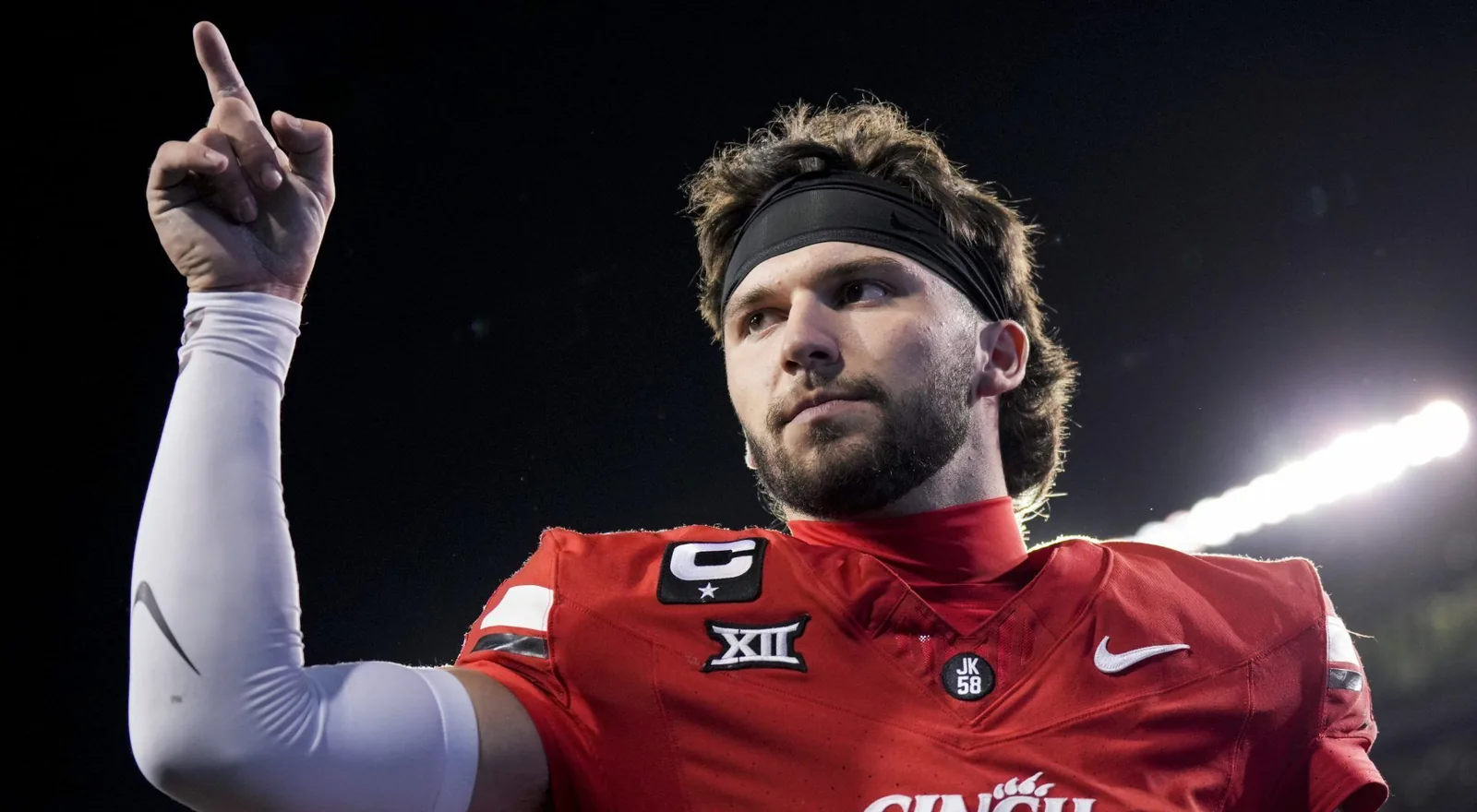
Sorsby’s Path to the NFL
Quarterback Brendan Sorsby will not pursue legal action against the NFL and will instead be eligible for the 2027 NFL Draft. This decision follows the league’s rejection of his petition to enter the supplemental draft and a subsequent settlement reached between the NFL, the NFL Players’ Association, and Sorsby. The agreement resolves legal claims concerning the league’s decision not to hold a supplemental draft this offseason.
Sorsby’s journey to professional football has been complicated by his gambling activities during his college career. He played four collegiate seasons, splitting his time between Indiana and Cincinnati, before transferring to Texas Tech in January. His college statistics include 7,208 passing yards, 60 touchdowns, and 18 interceptions, along with 22 rushing scores and 1,295 rushing yards.
The gambling activities came to light after his transfer to Texas Tech, leading Sorsby to admit himself into a residential treatment program for gambling addiction in April. The NCAA initially declared him ineligible to play college football in 2026. Although a temporary injunction on June 8 allowed him to serve a two-game suspension, Sorsby later dropped his lawsuit against the NCAA to pursue the supplemental draft.
League’s Stance on Gambling and Integrity
The NFL’s decision not to hold a supplemental draft this year, a right afforded by the collective bargaining agreement, effectively blocked Sorsby’s immediate entry into the league. In a letter to Sorsby, Larry Ferezani, general counsel of the NFL’s Management Council, stated that Sorsby’s petition failed to demonstrate accountability and used litigation to avoid the consequences of a likely suspension. The league expressed discomfort with the ethical concerns presented by Sorsby’s application, particularly given the limited time to investigate the extent of his gambling violations.
Matthew Wein, who runs the newsletter “Secure Stakes,” noted that the NFL’s actions highlight the rapid changes in the gambling industry, college sports eligibility rules, and integrity issues. He suggested that the league was hesitant about how the public would react to any hypothetical situation involving Sorsby on the field, given his past. Wein believes that enough people within the league had concerns about the situation, leading them to take time to consider how to handle it, as Sorsby is likely not the last person to face such an issue.
The Canadian Football League also announced on June 26 that it would not allow Sorsby to sign with any teams or be placed on their negotiation lists, citing concerns over his gambling activities. This collective stance from major leagues underscores a broader message regarding player conduct and integrity.
John Holden, an associate professor of business law and ethics at Indiana University Kelley School, indicated that the NFL prefers to avoid involvement in college sports eligibility disputes. He views Sorsby’s case as an opportunity for the league to make a point without affecting a union member, effectively sending a stern warning to college players that the league has the authority to enforce its rules.
As part of the settlement, Sorsby will be allowed to participate in normal pre-draft processes, such as the Senior Bowl, holding a pro day, and going on team visits. While the NFL will not discipline Sorsby for his known misconduct in college, which included making bets worth at least $90,000, it reserves the right to investigate his conduct further and consider past transgressions for any future violations.
Sorsby released a statement acknowledging his actions: “I accept 100% responsibility for my actions. I did not have control of my gambling problem and it took getting caught for me to realize that, but it was truly the best thing that could’ve happened to me.” He emphasized his commitment to recovery and preparing for the 2027 draft. The agreement effectively imposes a de facto one-year suspension across all levels of football for Sorsby, making him ineligible to sign an NFL Player Contract until after the completion of the 2027 NFL Draft.
Looking Ahead to 2027
Wein, whose background is in policy, does not anticipate drastic rule changes or guideline adjustments as a direct result of Sorsby’s case. He suggests that it will prompt internal discussions within the NFL on how to address similar situations in the future and what rules need to be in place for athletes like Sorsby.
The widespread legalization of mobile sports gambling has led to increased scrutiny and discipline for players regarding integrity concerns. In April 2024, the league reinstated five players who had served indefinite suspensions for gambling on the NFL while members of the league. Other high-profile cases include Detroit Lions wide receiver Jameson Williams, who received a six-game ban for gambling on other sports, and Tennessee Titans wideout Calvin Ridley, who sat out a year in 2022 for placing bets on his former team, the Atlanta Falcons.
The NFL stated that no players were suspended for gambling during the 2024 season prior to the start of the 2025 campaign. Sorsby’s legal team, led by sports attorney Jeffrey Kessler, initially indicated that the league’s decision violated the collective bargaining agreement, but Sorsby ultimately decided not to pursue further legal action.
Sorsby will focus on his recovery and preparation for entry into the NFL via the 2027 NFL Draft, as confirmed by a memo sent to all clubs.
Source: eu.usatoday.com