
Cyclists face extreme heat conditions
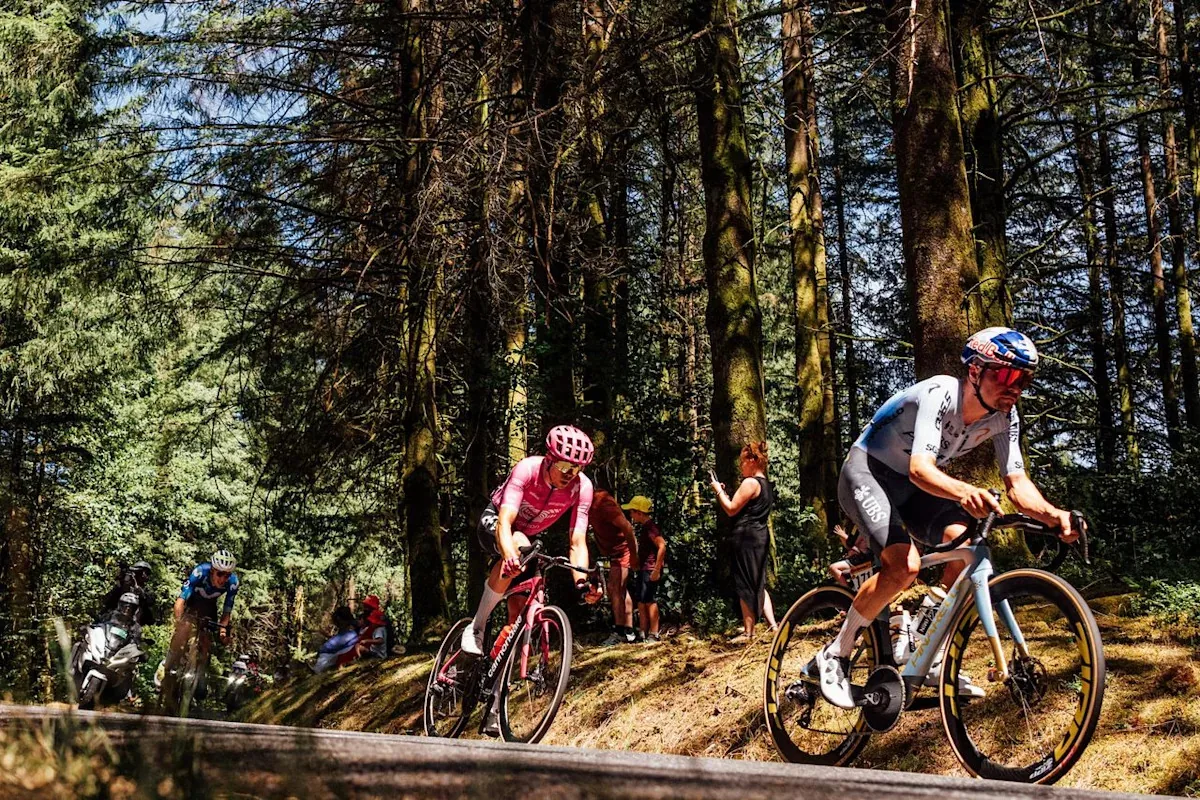
Tadej Pogacar has advocated for significant alterations to the professional cycling calendar, particularly regarding races held in July and August. His comments follow a day of intense temperatures during the Tour de France, where the ninth stage was shortened due to extreme heat. Mathieu van der Poel secured victory in this stage, which ran from Malemort to Ussel, with Tom Pidcock finishing third.
Pogacar, a four-time winner of the Tour de France, suggested that if he had the authority, he would reschedule the entire calendar to avoid racing in hot regions during the peak summer months. He acknowledged that such a change is beyond his control. The Slovenian rider also proposed earlier start times for stages, noting that a suggestion to begin at 10 AM was made, but he believes this would not sufficiently mitigate the heat, as riders would still finish in high temperatures.
He indicated that starting stages at 8 AM or 9 AM, or even earlier, would be necessary. While acknowledging the inconvenience, Pogacar suggested that athletes could adapt to waking early to compete. The undulating ninth stage to Ussel, featuring three steep climbs in the final 80 kilometers and nearly 2,700 meters of altitude gain, was shortened due to the heatwave. Despite the reduction in distance, the demanding pace and terrain had considerable effects on many riders in the peloton.
Van der Poel’s stage victory and rider strategies
Mathieu van der Poel, riding for Alpecin-Premier Tech, timed his attack effectively to win the hilly ninth stage in a sprint finish. He was part of a group of four vying for the victory, accelerating with approximately 650 feet remaining to hold off Tobias Johannessen and Tom Pidcock. All three riders recorded a time of 3 hours, 27 minutes, 51 seconds. This win marked Van der Poel’s third career stage victory in the Tour de France.
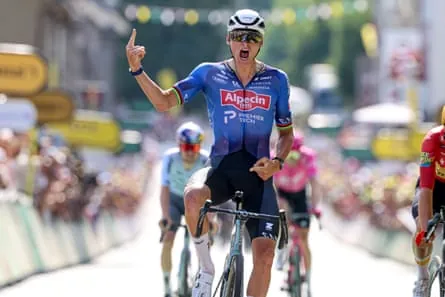
Van der Poel mentioned that the intense heat at the start of the Tour had depleted his energy, making recovery difficult in the initial days. He felt that the ninth stage was the first time he had the necessary strength to compete for a win. His extensive background includes multiple victories in one-day classics and Cyclo-cross world championship titles, and he is also a former world road race champion. His maternal grandfather, Raymond Poulidor, was a notable French cyclist who competed in the 1960s and 1970s.
Pogacar, the defending champion, maintained his overall lead, finishing six seconds behind Van der Poel in a group that included two-time champion Jonas Vingegaard. Pogacar’s overall lead over Vingegaard is 2 minutes, 42 seconds, with his teammate Isaac del Toro in third place, 3 minutes, 27 seconds behind. The 96-mile stage from Malemort to Ussel in central France was shortened by about 18 miles due to the extreme heat. This undulating stage was well-suited for versatile riders known as “baroudeurs.”
Calls for calendar reform and rider welfare
The challenges posed by the heatwave have led to calls for more comprehensive measures to protect rider well-being. The Professional Cyclists Association (CPA) emphasized the need for full implementation of the extreme weather conditions protocol. The CPA echoed Pogacar’s sentiments, stating that summer race start times must be adjusted to safeguard athlete health. They also called for discussions with all stakeholders during the winter to find solutions before the summer of 2027.
Riders have been employing various methods to cope with the heat, including ice vests, ice socks, and cold drinks. Beyond the finish line in Ussel, many riders immediately sought ice baths in team vans, sometimes using paddling pools and tin baths, in an effort to rapidly lower their core temperatures. Some teams, like Paul Seixas’s Decathlon CMA CGM team, are utilizing portable cryotherapy units that travel with the team to aid recovery by reducing body temperature and promoting sleep.
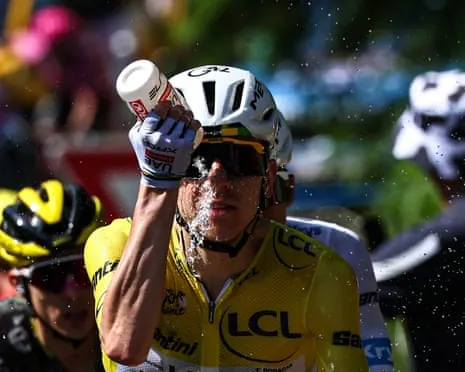
Tiesj Benoot, a teammate of Seixas, described his experience with cryotherapy, noting that he sat in a capsule at minus 120 degrees for about three minutes, finding it even more intense than an ice bath. Despite the stage being shortened, Benoot felt it made little difference, as riders had already endured eight days of similar heat. He suggested that while the shortening might be a statement, other measures would be more beneficial.
Christian Prudhomme, the Tour director, stated that an earlier start for the stage to Ussel was not logistically feasible. He noted that waking riders at 5 AM is challenging, even though it already occurs for anti-doping controls. The upcoming rest day on Monday is expected to provide some relief from racing in the heat, but temperatures are predicted to remain in the high 30s into the middle of next week, offering little comfort to those already struggling.
Source: theguardian.com