
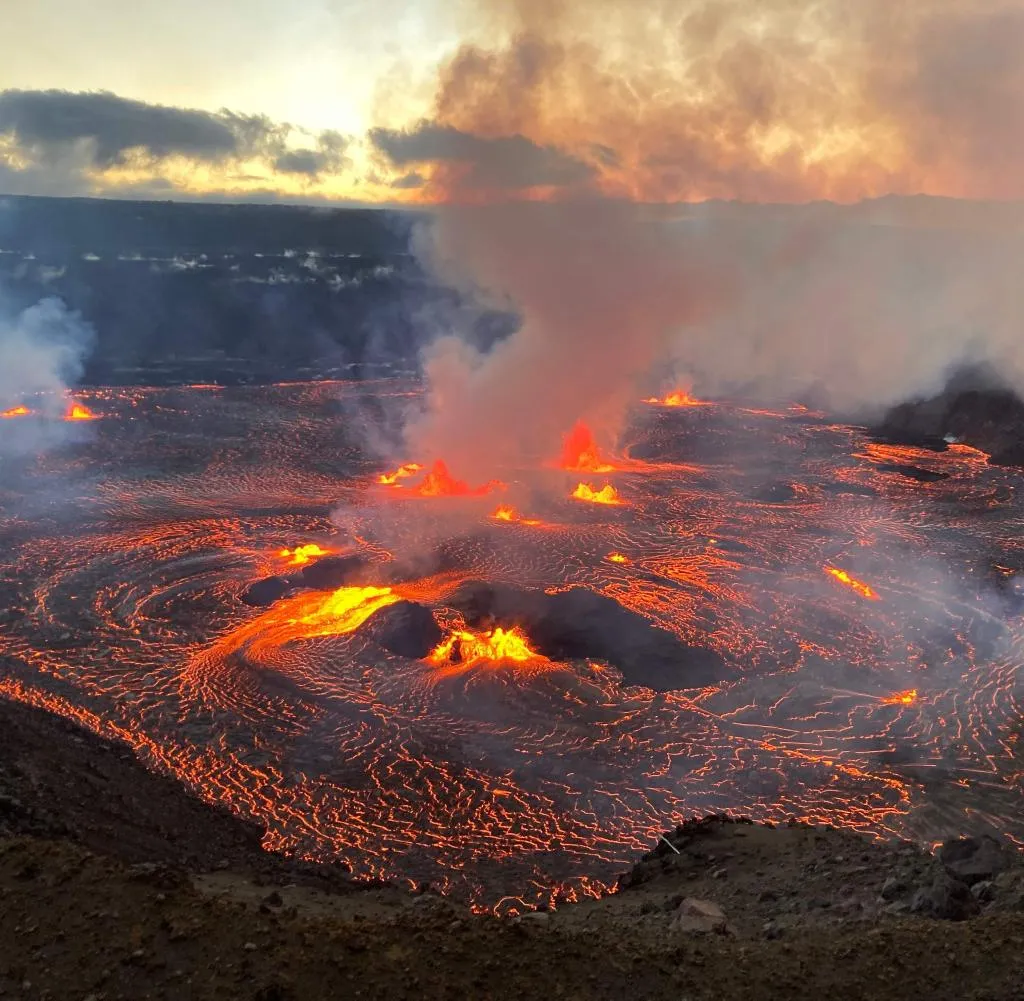
Kilauea Eruption: Breaking Development
On March 10, 2026, Kilauea, one of the world’s most active volcanoes located in Hawai‘i Volcanoes National Park, erupted, marking the beginning of Episode 43. The eruption commenced at 9:17 a.m. local time, with lava fountaining reaching heights of 1,150 feet from the south vent and 1,000 feet from the north vent. The Hawaiian Volcano Observatory has classified the alert level as warning, and the aviation color code is red, indicating hazardous conditions.
Immediate Circumstances
As the eruption unfolded, tephra fallout began at approximately 9:50 a.m., with reports of football-sized tephra pieces falling onto roadways. The lava flows have already covered about one-third of the Halemaumau crater floor. An ashfall warning has been issued for Hawai‘i Volcanoes National Park and surrounding areas, with expectations of more than a quarter-inch of ash accumulation. Highway 11 has been closed between mile markers 24 and 40 due to dangerous conditions, further complicating access to the area.
Kilauea has a long history of eruptions, making it a focal point for volcanologists and tourists alike. The current eruption is confined to Halemaumau crater within Kilauea’s summit caldera, and it follows a previous episode that lasted for 10 hours of continuous fountaining. The Hawaiian Volcano Observatory has noted that light, variable winds near the vents could lead to unpredictable spread of volcanic gases and debris into neighboring communities.
Official Statements and Public Reactions
In response to the eruption, the Hawaii County Civil Defense Agency has issued warnings to residents, stating, “A Volcano WARNING means a hazardous eruption is imminent, underway, or suspected.” They have advised residents to seal windows and doors, protect electronics, and cover air intakes and open water sources. The National Weather Service has also urged caution, recommending that individuals avoid driving and remain indoors unless absolutely necessary. Sensitive individuals affected by volcanic gases should shelter indoors or leave the area.
Current Conditions and Safety Measures
As of now, tephra accumulation has been reported to reach up to 3 inches in diameter in areas such as Volcano Village and Mauna Loa Estates, while Royal Hawaiian Estates has seen tephra fallout of about 0.5 inches in diameter. Residents are advised to take precautions seriously, especially those living in proximity to the park. The eruption has produced ash plumes that have reached an altitude of 25,000 feet above sea level, raising concerns about air quality and visibility.
Looking Ahead
With the eruption still ongoing, the situation remains dynamic. Authorities are closely monitoring the activity, and updates will be provided as more information becomes available. The Hawaiian Volcano Observatory continues to assess the situation and will inform the public of any changes in the alert level or additional safety measures that may be required.
As Kilauea continues to erupt, the focus remains on ensuring public safety and monitoring volcanic activity. The community is urged to stay informed and heed the warnings issued by local authorities. Details remain unconfirmed as the situation develops.