
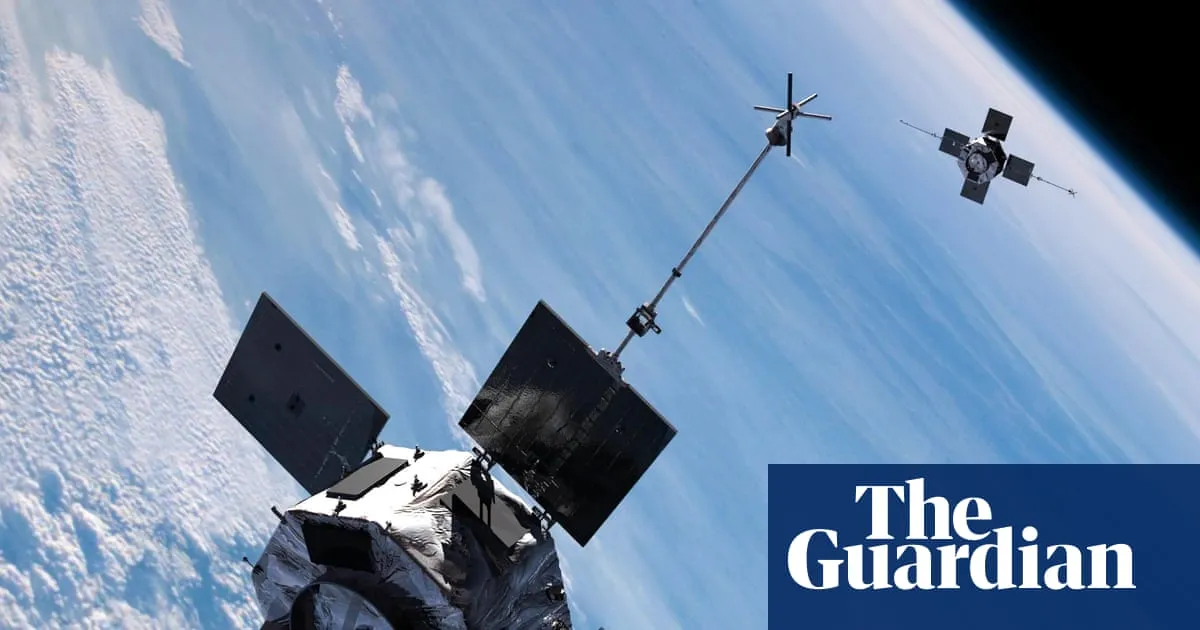
Background on the Van Allen Probes
The Van Allen Probe A and its twin, Van Allen Probe B, were launched by NASA on August 30, 2012, to study the Van Allen radiation belts surrounding Earth. These satellites were instrumental in advancing our understanding of the complex interactions between solar activity and the Earth’s magnetosphere. However, the mission for Van Allen Probe A officially ended in 2019 when it ran out of fuel, leading to concerns about its eventual re-entry into the Earth’s atmosphere.
Upcoming Re-Entry Details
NASA has announced that the Van Allen Probe A is expected to re-enter Earth’s atmosphere on March 10, 2026, at approximately 7:45 p.m. EDT. This development comes earlier than initially predicted; the original forecast for re-entry was around 2034. Increased solar activity has accelerated the satellite’s descent, prompting NASA to closely monitor the situation.
Safety Concerns and Risk Assessment
As the date approaches, safety concerns have been raised regarding the potential for debris from the satellite to cause harm. NASA estimates that the chance of harm to a person on Earth is approximately 1 in 4,200. Mark Matney, a NASA official, emphasized, “The odds that you will be hit are one in several trillion, so quite low for any particular person.” This assessment aims to reassure the public as the satellite’s re-entry draws near.
Expected Behavior During Re-Entry
Most of the Van Allen Probe A is expected to burn up upon re-entry into the atmosphere. However, some components may survive the intense heat and pressure. Experts note that satellite re-entries are fairly common and rarely pose any real danger to people on Earth. About 71% of the Earth’s surface is covered by water, which further reduces the likelihood of debris causing harm.
Monitoring and Future Predictions
NASA, in collaboration with the U.S. Space Force, will continue to monitor the re-entry and update predictions as necessary. Observers are particularly focused on the uncertainty surrounding the exact location where any surviving fragments might land. Details remain unconfirmed, but officials are committed to providing timely updates to ensure public safety.
The impending re-entry of the Van Allen Probe A serves as a reminder of the complexities involved in space exploration and satellite management. While the risk to individuals is low, NASA and other agencies are taking precautions to monitor the situation closely. As the date approaches, further information will be made available to the public regarding the re-entry and any potential impacts.